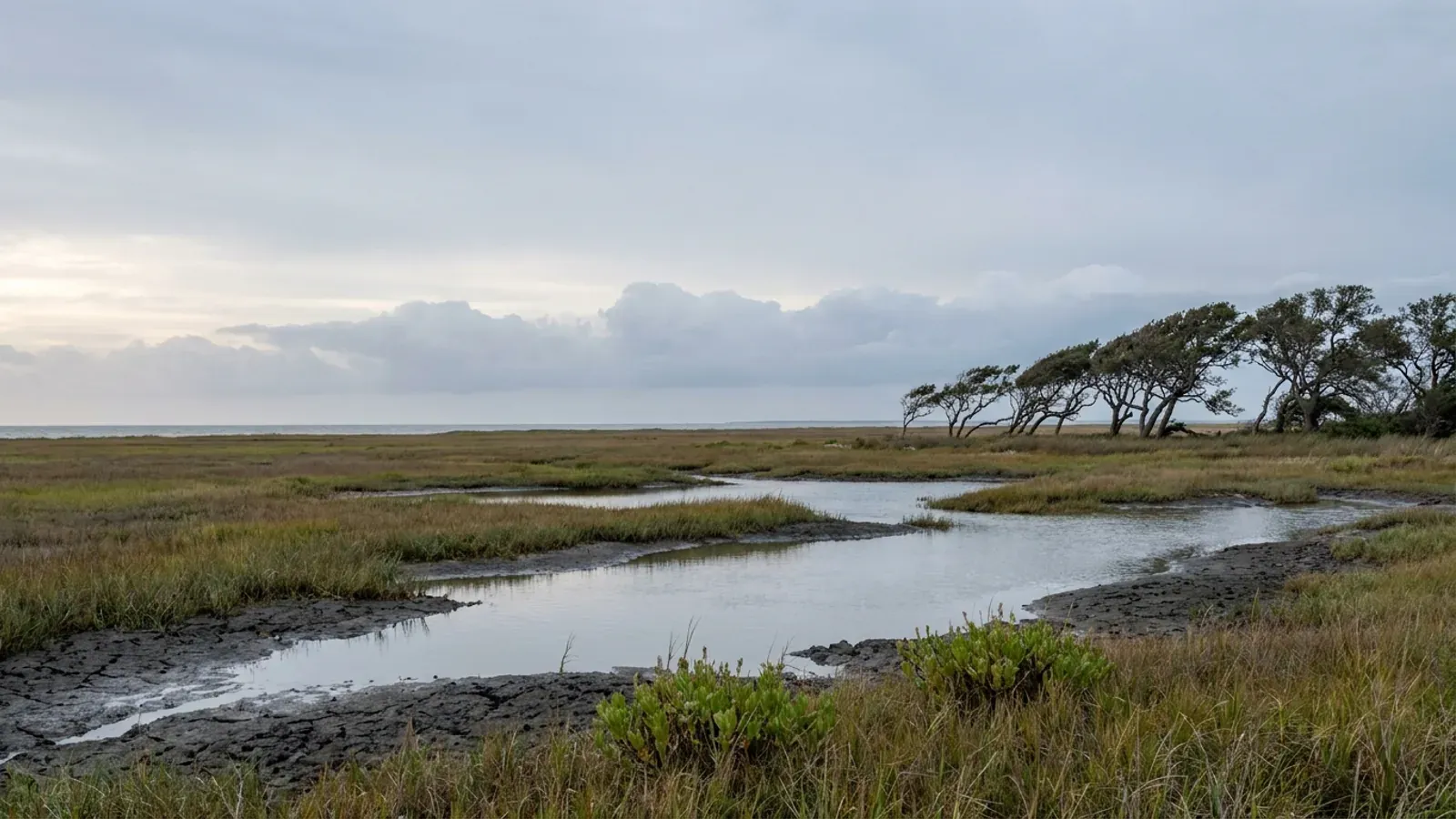
Barndominium Builders in Chambers County, TX
Chambers County is where two Texas building stories land on the same acre. The county has adopted no residential building code, so on unincorporated land nobody reviews or inspects the structure of your house. And the whole county sits inside the Texas Department of Insurance windstorm catastrophe area, where the 2024 IRC and 2024 IBC set what construction has to meet before TWIA will insure it. Those are two regimes with two purposes, run by different bodies at different counters, and out here nothing connects them. Meanwhile the county is filling up from both ends at once, Houston and Baytown to the west and the Mont Belvieu petrochemical corridor in the middle, and the unincorporated area is growing faster than the towns are. The ground is clay from the first spade, the water table is shallow, and a third of the county is bay.
Chambers County at a glance
- County
- Chambers County
- Population
- 57,594
- Where we build
- Jefferson County, Liberty County, Beaumont
- Site visits
- Site walks booked anywhere in Chambers County
ZIPs 77514, 77523, 77560, 77580, 77597, 77661, 77665
Building conditions in Chambers County
What actually changes from one Texas jurisdiction to the next: who issues the permit, whether the residential code is enforced there at all, what the structure has to be engineered to, and what the ground is like. These are the numbers your drawings have to satisfy.
Texas Department of Insurance, Adopted Building Codes (tdi.texas.gov/wind/adopted-codes.html, page dated 23 April 2026) and designated catastrophe area county list; TWIA Coverage and Eligibility page; Insurance Code sec. 2210.003
28 TAC sec. 5.4013, adopted by commissioner order; TDI Adopted Building Codes page, effective 1 April 2026; Chambers County Permitting page
Texas Insurance Code secs. 2210.258(b) and 2210.2515; TWIA Windstorm Certification page; TDI, What you need to know about windstorm inspections
Chambers County Permitting page (chamberscountytx.gov/261) and Residential Building Review Process; Commercial and Residential Development Fee Schedule, Commissioners Court 14 May 2019
Order Adopting Rules of Chambers County for On-Site Sewage Facilities, adopted 24 June 2025, secs. 9(A) to 9(C); TCEQ executive director order, OSSF No. 620040, issued 9 October 2025
U.S. Census Bureau, Population Estimates Vintage 2025, co-est2025-alldata.csv and sub-est2025.csv
Also worth knowing before you build in Chambers County
- Freeboard is two feet, and it reaches the 500-year floodplain
- The county's floodplain regulations apply to all areas of special flood hazard as well as those in the 500-year floodplain, which is wider than most Texas counties regulate. New residential construction must have its lowest floor, including all essential electrical, heating, ventilation, plumbing and air conditioning equipment and duct work, elevated at least two feet above the base flood elevation or one foot above the 500-year floodplain elevation, whichever is higher. An engineer, architect or land surveyor certifies it. Enclosures below the lowest floor need a non-conversion agreement filed with the deed and are subject to annual inspection.
- The county fire code exempts the short-term rental and catches the business shop
- Chambers adopted the 2021 International Fire Code on 14 January 2025, with the 2021 IBC by reference, under Local Government Code chapter 233. It reaches commercial establishments, public buildings and multifamily of four or more units, so a house you live in is outside it, and it goes further and says so: Airbnb and temporary vacation rentals consisting of a single-family dwelling originally constructed as a single-family dwelling shall not be regulated by this code. What does pull you in is the outbuilding. Section 105.2.4.1 reaches any commercial building, structure or operation located in a residential subdivision, including those which store items or inventory related to a business, and conversions of single-family dwellings, and those permits issue only on approval of the Commissioners Court.
- The engineer requirement here is about wind, not clay
- Everywhere else in Texas a private dwelling can be built without a licensed engineer. Occupations Code section 1001.056(c)(1) switches that exemption off for anyone providing engineering design or inspection services necessary to comply with windstorm certification standards under Subchapter F, chapter 2210 of the Insurance Code. The legislature carved the coast out by name in 2009. The TDI rule then sets out the engineered route in terms: the inspector verifies that the work conforms to a sealed design by a Texas-licensed professional engineer. Separately, the county's floodplain rules require an engineer, architect or land surveyor to certify the finished floor elevation.
- Clay from the first spade, and a water table you can reach with a post-hole digger
- The five largest soil map units in Chambers County are all clay or silty clay, and units named clay cover about 55 percent of the survey area. This is not a place where the surface hides what is underneath. The Beaumont series reads 52.7 percent clay in the top five inches and 57.1 percent below it; League reads 48.5 percent at the surface and 60.1 percent at depth. Their taxonomic names end in -erts, which is the Vertisol order, the shrink-swell clays. Beaumont's seasonal high water table sits about five inches down in January, and Harris clay, the single largest map unit in the county, is mapped very poorly drained, hydric and frequently flooded.
- The ten-acre platting exemption is not self-executing
- State law does not let the county require a plat when every lot is over ten acres, or for agricultural, ranch, wildlife management or timber use, or where all lots go to relatives within the third degree. Chambers accepts all of that and then adds a step. The owner gives the County Engineer written notice of the intent to divide, names the exception relied on and provides a sketch, and for the county's own additional exceptions swears an affidavit setting out the basis, subject to penalties of perjury, with copies of the deeds. The county may also require restrictions running with the land. One county exception is worth knowing early: a tract whose boundary has not changed since 21 February 1985 may be sold whole without platting.
- Who your septic authority actually is
- TCEQ's authorised agent register names the Chambers County Authorized Agent for the entire county except the cities of Anahuac and Beach City. Beach City holds its own record for its city limits. Old River-Winfree holds a record too, but its area served reads administered by Chambers County, so the city is the agent on paper and the county does the work. The county office is at 201-A Airport Road in Anahuac, on (409) 267-2702, and the register carries the county's current order as a download, which is how the order and the county's own published copy confirm each other.
- Mont Belvieu wired the two regimes together, and that is why they are separate
- Mont Belvieu adopted the 2024 International Residential Code by Ordinance No. 2026-002 on 12 January 2026, with a single amendment that only changes the code's title. Then it passed section 10-39, Windstorm inspections required, which makes a copy of the WPI-1 a condition of starting work and verification of the WPI-8 a condition of final building inspection, and applies the same wind-load requirement to accessory structures over 200 square feet. A city had to legislate to make the building permit and the windstorm certificate touch each other. Out in the unincorporated county nothing does that, so the two run on separate tracks and neither one tells you about the other.
- Only one jurisdiction in the county has adopted a residential code
- Anahuac is the county seat, and its Code of Ordinances section 150.01 lists the codes it has adopted: the 2018 International Mechanical, Plumbing, Energy, Fire, Fuel Gas, Property Maintenance and Existing Building Codes, and the 2017 National Electrical Code. Neither the International Residential Code nor the International Building Code appears on that list. Texas puts every municipality on the residential code as it existed in May 2012 as a statewide floor whatever the city adopts, so this is a fact about Anahuac's list rather than a vacuum. But it means Mont Belvieu is the only jurisdiction in Chambers County that has affirmatively adopted a residential edition of its own.
- A third of the county is water
- Chambers County covers 597 square miles of land and 274 square miles of water, so 31 percent of it is Galveston Bay, Trinity Bay and East Bay. What is left works out at about 57 people per square mile in the unincorporated area, which is the measure that matters when you are looking for acreage rather than a lot. For comparison, Montgomery County is 79 percent unincorporated and carries more than 590 people per square mile out there. Unincorporated share and rural are not the same thing, and Chambers is the genuine article.
Chambers County Floodplain Regulations, adopted 2015 and updated June 2025, Article 3 sec. A and Article 6 sec. B(1), citing Texas Water Code sec. 16.315
Chambers County Fire Code, Commissioners Court order adopted 14 January 2025, Exhibit A secs. 105.2.4.1 and 202 (Residential Group R-3 amendments)
Texas Occupations Code sec. 1001.056(c)(1); 28 TAC sec. 5.4622(1)(B); Insurance Code sec. 2210.2515(c); Chambers County Floodplain Regulations Article 6 sec. B(1)
USDA NRCS Soil Data Access, SSURGO survey area TX071 (Chambers County, Texas), mapunit, component, chorizon and cosoilmoist tables
2022 Chambers Subdivision Manual, June 2022, secs. A3.1 and A3.2, with the statutory exceptions at Local Government Code sec. 232.0015
TCEQ On-Site Activity Reporting System (OARS) authorised agent search, Chambers County, records 620040, 620041 and 620316
City of Mont Belvieu Code of Ordinances secs. 10-31 and 10-39 (Ord. No. 2026-002, 12 January 2026), codified through Supplement 17
City of Anahuac Code of Ordinances sec. 150.01 (last amended Ord. No. 2019-07-02, 8 July 2019); Local Government Code sec. 214.212(a)
U.S. Census Bureau TIGERweb, Chambers County (GEOID 48071), land area 1,546,824,084 sq m and water area 709,406,203 sq m; Population Estimates Vintage 2025
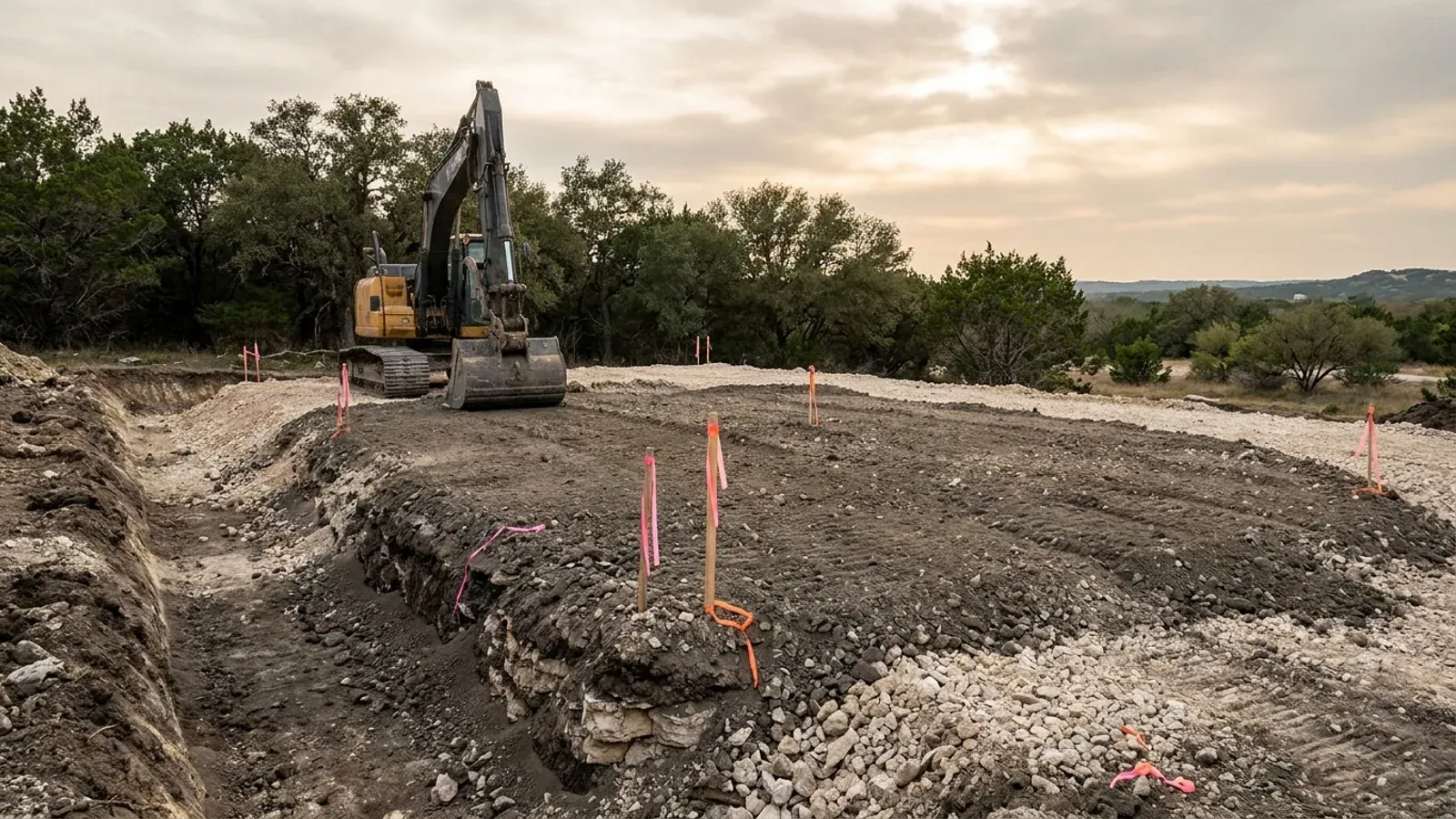
The expensive surprises are in the ground, not the building
What moves a Texas budget is usually below grade, and it is soil rather than rock: shrink-swell clay. The Blackland Prairie and the Gulf Coast clays move enough between a wet season and a dry one to drive the foundation design across the state's largest markets, which is why several DFW cities require an engineer's seal on the foundation of every new house. Those are the same conditions that decide whether a septic field passes its soil and site evaluation, so the grading plan, the foundation and the drainfield get resolved together rather than one at a time. We price the dirt before we price the building.
What we build in Chambers County
All nine of our services — kits, custom plans, post-frame and steel construction, site preparation, permitting and engineering, through to turnkey builds — are available across Chambers County. What a project costs depends far more on the parcel than on square footage, so we work from your land rather than from a rate card.
See what we buildWhat a build looks like
Three stages every Chambers County project passes through, from a raw parcel to a finished home. Site work first, because that is where the budget is decided.
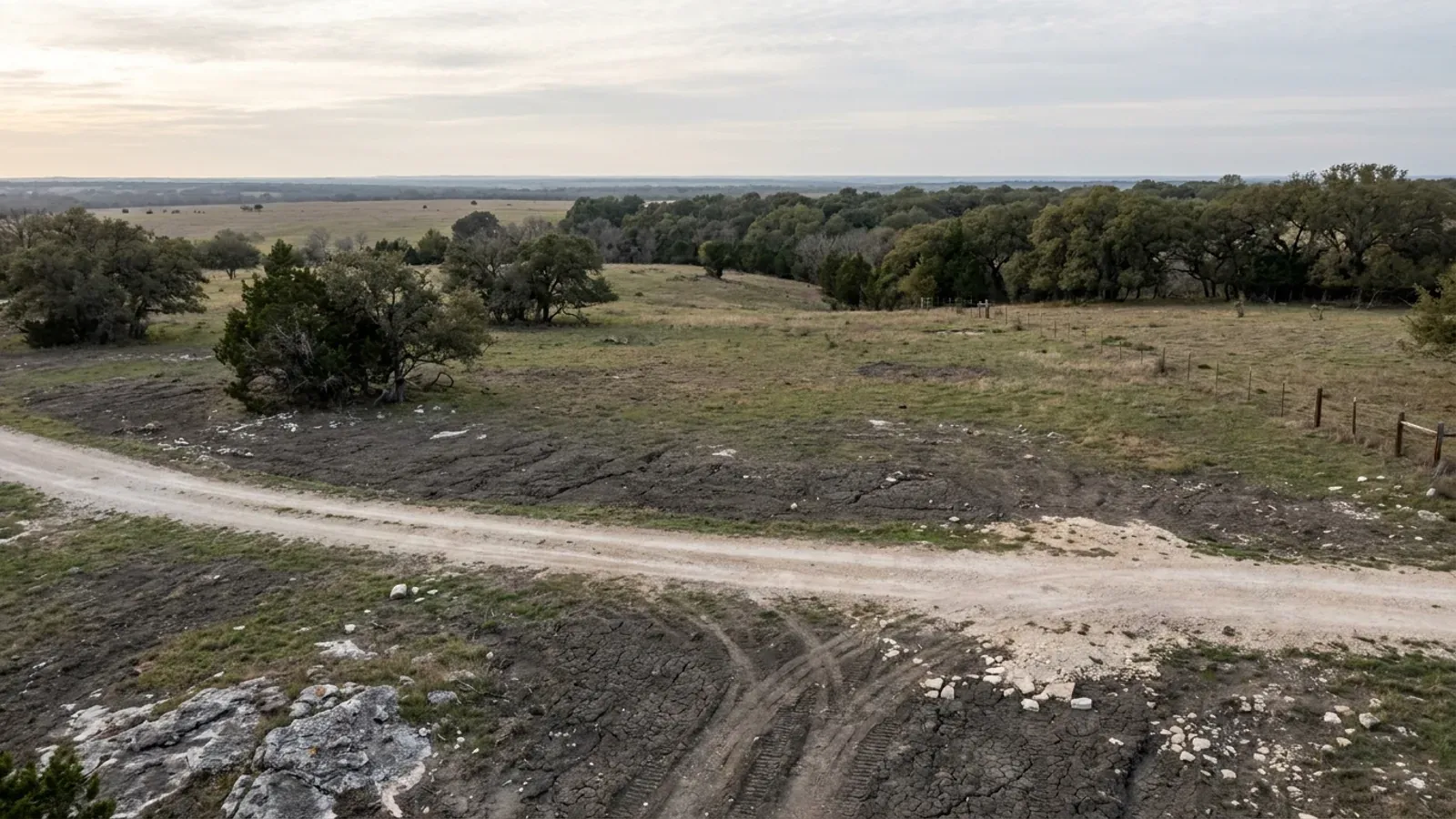
The parcel
Zoning, setbacks, flood zone and utility access get checked before anything is drawn.
Pad and permit
Clearing, grading and a compacted pad, while the submittal works through Chambers County.
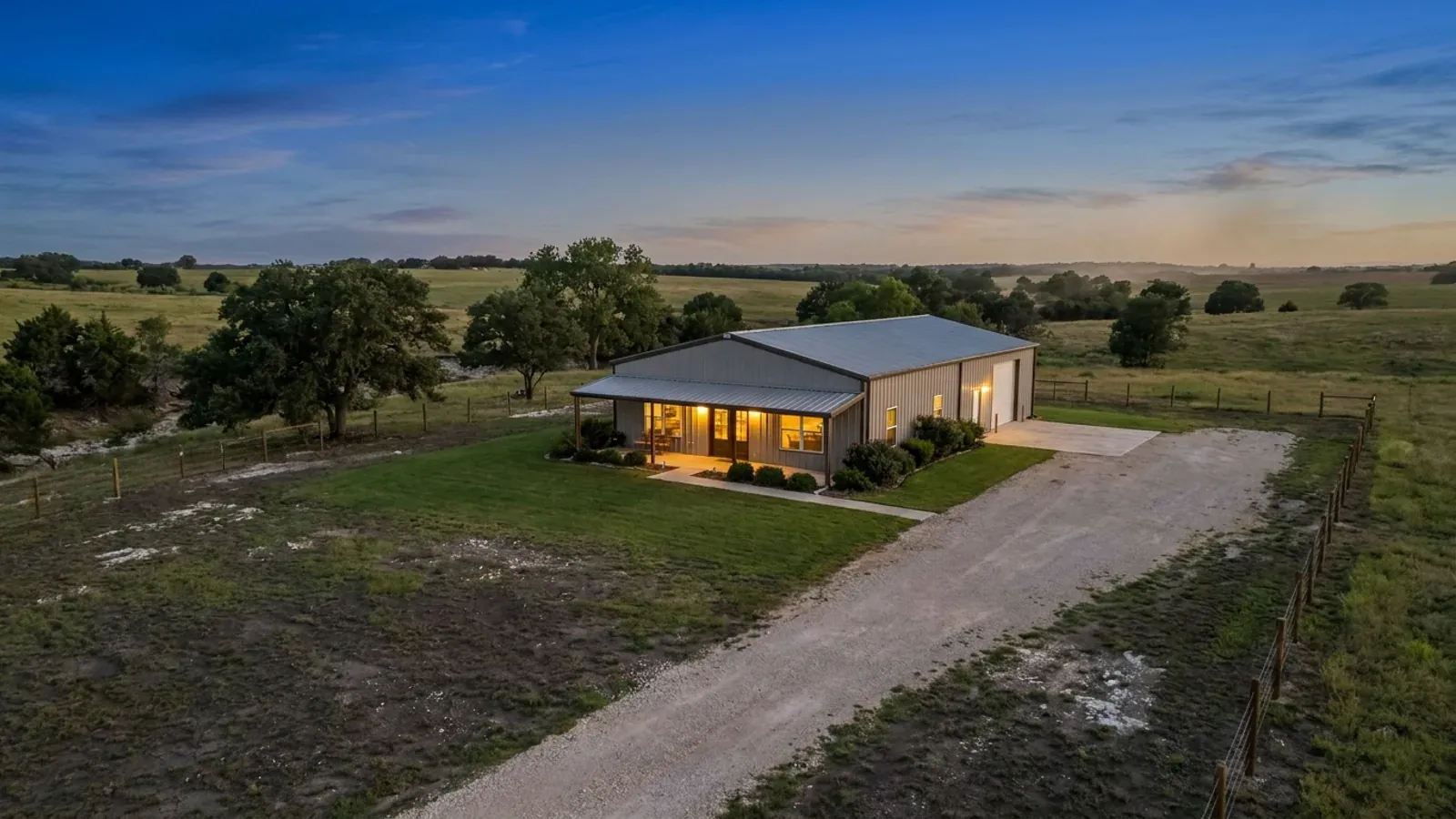
Frame to finish
Shell erected and dried in, then systems, insulation and interior finish through to CO.
Those are the rules for Chambers County. Tell us what you want to build and we will draw it to them.
Where we build around Chambers County
Chambers County and the rural land around it. The buildable acreage for a project this size usually sits outside the city limits, which is frequently what changes who issues your permit.
Keep reading
The questions that usually come next once you know what Chambers County allows.
Barndominium Cost Guide
Sourced per-square-foot ranges by tier and by size, with a calculator built on the same figures.
Read itIs It Legal in Texas?
Classification, zoning, the HOA gate, and why "nonresidential farm building" does not cover a home.
Read itHow Long Does It Take?
Census build-duration data, and what actually sets the permit clock where you are building.
Read itNearby areas we build in
Others we cover in this part of Texas. The permitting authority, the adopted design criteria and the zoning can all differ from one to the next.
Building in Chambers County: common questions
8 questions we get asked most often about building in Chambers County. If yours is not on the list, ask it directly.
Does a barndominium in Chambers County need a windstorm certificate?
There is no county building code. So what actually applies to my house?
What permits does the county actually require?
How big does the septic field have to be, and does the shop count?
Do I need an engineer?
I plan to rent it out or use part of it for my business. Does that change anything?
What is the ground like out there?
Is there still land to buy here?
Building in Chambers County?
Start with the plan. Tell us what you want to build and we will draw it, then confirm what Chambers County will actually let you put on the parcel and what wind load it has to meet. That conversation costs nothing.