Barndominium Builders in Potter County, TX
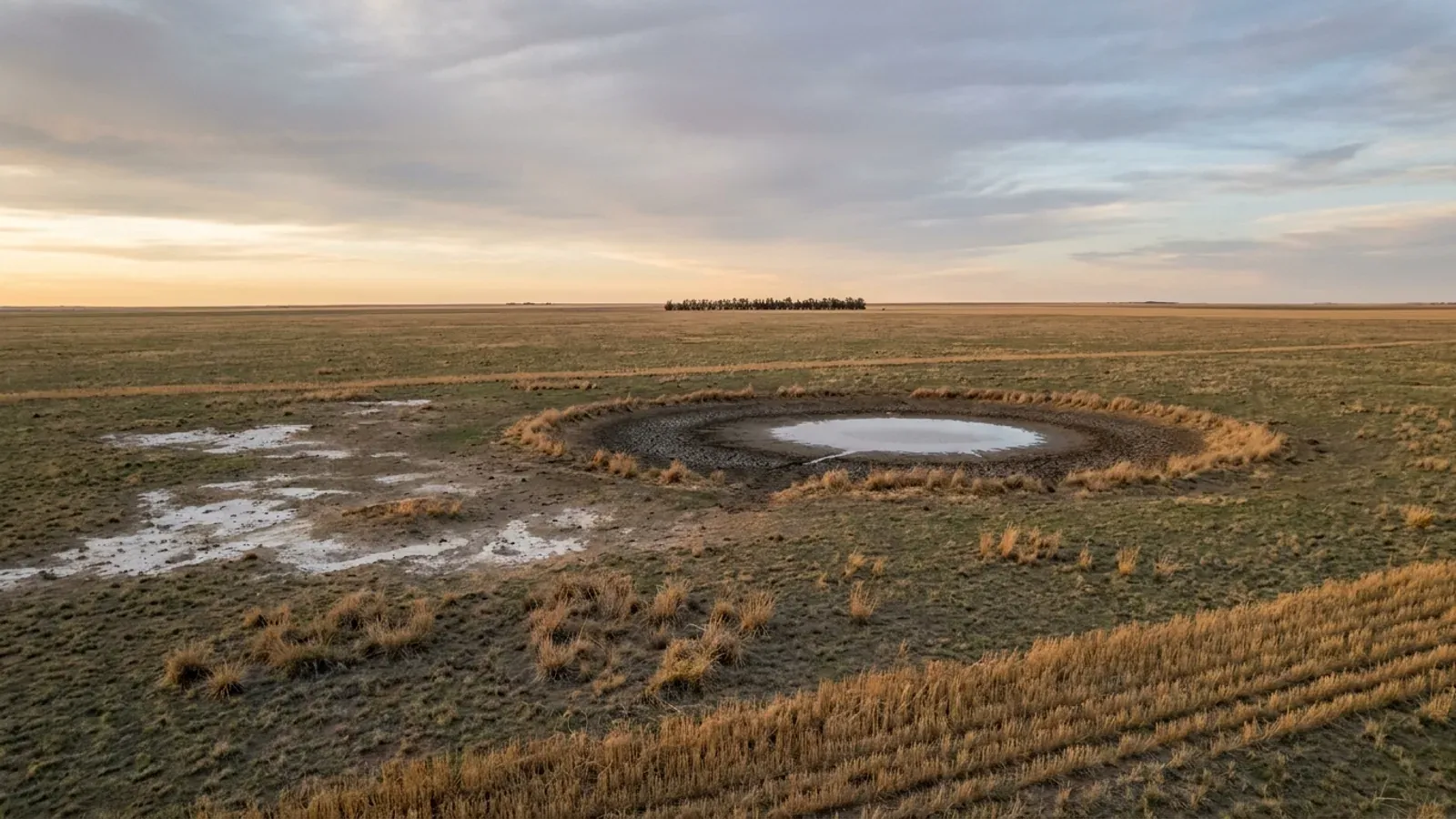
Potter County is the northern half of Amarillo plus 900 square miles of High Plains and Canadian River breaks, and the split between the two is the first thing to understand. Of the county's 114,453 people, 98,509 live inside Amarillo's city limits. That leaves 15,749 on unincorporated land — fewer than twenty to the square mile. This page is about that thin outer county, not the city. The ground is mostly caliche: the Potter soil series, named for this county, carries 69 percent calcium carbonate a foot down, which bears well and digs hard. But not all of it. Pullman on the flat tableland runs a plasticity index of 29 and the playa floors run 46, so the soil under your tract is a question rather than an assumption. What gates a build here is the septic authorisation, the plat if land is divided, a groundwater district that checks well spacing before drilling, and the restrictions recorded against the land.
Potter County at a glance
- County
- Potter County
- Population
- 114,453
- Where we build
- Amarillo, Randall County
- Site visits
- Site visits across Potter County, from Amarillo to the far side of the county
ZIPs 79010, 79058, 79098, 79101, 79102, 79103, 79104, 79106 and more
Building conditions in Potter County
What actually changes from one Texas jurisdiction to the next: who issues the permit, whether the residential code is enforced there at all, what the structure has to be engineered to, and what the ground is like. These are the numbers your drawings have to satisfy.
U.S. Census Bureau, Population Estimates Program, sub-est2025.csv, records for Potter County, Amarillo city (pt.), Bishop Hills town and Balance of Potter County — https://www2.census.gov/programs-surveys/popest/datasets/2020-2025/cities/totals/sub-est2025.csv; U.S. Census Bureau 2024 Gazetteer, counties and places national files
TCEQ On-Site Sewage Facility authorised agent search, county code 188, record 620389 for POTTER COUNTY AUTHORIZED AGENT — https://www6.tceq.texas.gov/oars/index.cfm?fuseaction=search.results (POST, CNTY_CD=188); Potter County Subdivision Regulations, Rev. 12-2023, section I
Potter County Subdivision Regulations, Rev. 12-2023, Order Adopting Revised Subdivision Regulations 11 December 2023, sections C.7(a) and H — https://www.co.potter.tx.us/upload/page/0174/docs/RB/PC%20Subdivision%20Regulations2.pdf
Rules of Panhandle Groundwater Conservation District, approved 9 July 2026, Rules 5.1(a), 5.1(b) and 8.1 — https://www.pgcd.us/rules; Panhandle Groundwater Conservation District Management Plan 2024–2029, amended 6 June 2024, district description and Potter County water-use multiplier
USDA NRCS Soil Data Access, SSURGO survey area TX375 (Potter County, Texas — note that Potter and Randall are both soil series names as well as county names), legend, mapunit, component and chorizon tables queried 1 September 2026 — https://SDMDataAccess.sc.egov.usda.gov/Tabular/post.rest
Texas Local Government Code secs. 233.061, 352.016 and 352.081; Government Code sec. 311.005(3); U.S. Census Bureau sub-est2025.csv 2020 estimates base for Potter, Randall, Moore, Hutchinson, Carson, Oldham and Lubbock counties; Potter County Fire and Rescue Department and Commissioners Court burn ban order of 7 July 2026 — https://www.co.potter.tx.us/page/Fire.Rescue.Dept
Also worth knowing before you build in Potter County
- The county publishes eight regulations, and none of them is a building code
- Potter County's home page carries a section headed County Regulations and Ordinances. It lists exactly eight documents: a Dangerous Wild Animal Regulation, a Dog Restraint Ordinance, Nuisance Abatement, Sexually Oriented Businesses, two sets of Tax Abatement Guidelines, a Request for Use of the county Trash Truck, and the Storm Water Management Criteria for Unincorporated Urbanized Areas. There is no codified county code, no numbered chapter series, and nothing addressing residential construction. That is where a Chapter 233 Subchapter F opt-in would most naturally live if the county had codified one, and it is not there — though section 233.152 does not oblige a county to publish such an order, so the list settles less than it appears to.
- The county's own words on building permits, from its own published programme
- Potter County's Storm Water Management Program for Unincorporated Urbanized Areas, still linked from the county's regulations list and from Road & Bridge, contains two passages that matter to anyone building outside a city here. Under Regulatory Mechanism Restrictions for Counties it says the Texas Constitution and state statutes do not grant Texas counties the ability to create and enforce ordinances, as home-rule cities may. Under the construction runoff measure it says the county lacks the authority to require building permits or site plans from homebuilders or commercial building contractors who are not subdividing property in accordance with the county's subdivision regulations. Read the date with the words: the document runs to the storm water permit term of 13 August 2007 to 12 August 2012, so it speaks from before the 2009 statute that let counties opt into a residential code.
- Most of the unincorporated county sits inside Amarillo's extraterritorial jurisdiction
- The urbanized unincorporated pockets the county's storm water programme covers are described in that document as lying within the extraterritorial jurisdiction of the City of Amarillo, and it records that under Local Government Code section 242.001 Potter County and the City entered an interlocal agreement for the review and imposition of plat and construction detail standards for subdivisions in the ETJ. The subdivision regulations carry the practical effect: a plat inside Amarillo's ETJ must carry the approval of the city, obtained before final approval by the Commissioners Court, and after the County Judge signs, the plat goes back to the City, which prepares the instrument for recording with the County Clerk. Two approvals, in a fixed order. Outside the ETJ the county alone approves it.
- Culverts and driveways are the gate nobody expects, and they have written specifications
- Potter County has no residential building code but it does have written standards for what happens where your driveway meets a county road. The revised subdivision regulations require culvert sizes for every lot to be shown on the plat and pre-determined by the drainage study, and set minimum specifications: no single culvert over 32 feet, plastic culverts not acceptable with corrugated tinhorn recommended, the county not responsible for concrete culverts, and a minimum six inches of cover, which may be asphalt, caliche or other soil material approved by the engineer and the Superintendent. Non-compliant culverts may be removed at the Superintendent's direction and replaced at the owner's expense, and installation work done by Road & Bridge is billed at material cost plus labour. Utilities in the county right of way go in the back slope of the drainage ditch, buried at least 36 inches, with electrical and gas at least 5 feet down.
- The county is in the NFIP, and its map is newer than most
- FEMA's Community Status Book lists unincorporated Potter County as community 481241, participating in the National Flood Insurance Program, in the Regular Program since 4 June 2010, with a currently effective Flood Insurance Rate Map of the same date and an initial Flood Hazard Boundary Map of 6 December 1977. By comparison Randall County entered the Regular Program in 1982 and the City of Amarillo in 1982. The county's storm water programme records that Potter County passed flood plain regulations in 2003. The text of those regulations is not on the county website — the Flood Information link on the Road & Bridge page serves a general FEMA public-awareness flyer, FEMA V-1005 of March 2018, rather than the county's own order. So the freeboard figure, and which Water Code sections the county's order names, are questions for Road & Bridge on (806) 383-2273 rather than something to assume from a neighbouring county.
- A new subdivision must prove there is groundwater before the plat is approved
- The revised subdivision regulations require, for any new subdivision, a plan for potable water supported by written certification and data on the state forms that adequate groundwater is available for all anticipated needs and uses within the subdivision, citing 30 Texas Administrative Code Chapter 230. On the High Plains, over a declining Ogallala, that is not a formality. A sanitary sewage plan and all associated soil testing must go to the health district and to TCEQ, current tax certificates must be filed with the plat, and a recordable copy of the restrictive covenants to be imposed on the lots must be filed with it too — which is worth knowing, because in a state with no county zoning the covenants recorded against your lot are usually the strictest rules that will ever reach your building.
- Amarillo's centre of gravity has crossed the county line
- Amarillo straddles Potter and Randall counties, and the balance has just tipped. In the 2020 estimates base, 101,663 of the city's people were on the Potter side and 98,748 on the Randall side. By 2025 the Potter share had fallen to 98,509 while the Randall share had risen to 106,621. Potter County as a whole is shrinking, from 118,622 to 114,453 since 2020; Randall County is growing, from 140,670 to 152,351. For someone looking for land this matters more than it sounds: the pressure on unincorporated ground, and the annexation risk that goes with it, is on the south and west edges of the metropolitan area rather than in the Potter County breaks.
- The mineral estate is dominant, and a house you have not built yet is not protected
- In Texas the mineral estate is the dominant estate: where the minerals under your land were severed from the surface at some point in the past, the mineral owner and their lessee hold the right to use as much of the surface as is reasonably necessary to get to them. The accommodation doctrine gives the surface owner a narrow answer to that, and the Supreme Court of Texas applied it in Merriman v. XTO Energy, No. 11-0494 (2013). Merriman had a house on his 40 acres and still lost. The doctrine protects an existing use, so a barndominium that is only a plan is not protected at all. Whether the minerals under a particular Potter County tract are severed is a title question, not a county question — it comes off the title commitment and the County Clerk's records, and it is worth asking before the contract rather than after.
- No Potter County instrument mentions playa lakes by name
- Playa lakes — the shallow ephemeral basins that collect runoff across the Southern High Plains — are the drainage feature that has no equivalent anywhere else this site covers, and they can decide where a house and a drainfield go on an otherwise flat quarter section. Potter County's three published land instruments do not name them: the word appears nowhere in the revised subdivision regulations, nowhere in the 1994 regulations they replaced, and nowhere in the Storm Water Management Program. The soil survey names them anyway. Playa floors in Potter County are mapped as the Randall series, 3,411 acres of Vertisol at 60 percent clay and plasticity index 46 — the shrink-swell extreme for this county and for this site. So the county's instruments handle a playa only through the general requirement for a drainage plan by a qualified expert covering drainage within a subdivision and water intrusion onto neighbouring property. The soil map is where you find out you have one.
- Dividing the land is what triggers the county, and you cannot sell before the plat
- Potter County's authority over land outside city limits is a platting authority under Local Government Code Chapter 232, not a construction authority. Under the revised regulations, an owner of land outside any incorporated city in Potter County who divides one tract into two or more parts to lay out a subdivision, individual lots, or public amenities such as roads, drainage systems or septic systems must prepare a plat that complies with the regulations and submit it for approval, subject to the exceptions at section 232.0015. The consequence is worth reading twice: no portion of subdivided land may be conveyed until the plat has been approved by the Commissioners Court and recorded in the public records of Potter County. Buying half of somebody's unplatted tract is the way this goes wrong, and it goes wrong before anyone has poured anything.
Potter County official website, County Regulations and Ordinances section — https://www.co.potter.tx.us/
Potter County Storm Water Management Program, Unincorporated Urbanized Areas, sections 2, 3 and 5.D — https://www.co.potter.tx.us/page/open/1637/0/Storm%20Water%20Management%20Criteria%20-%20Unincorporated%20Urbanized%20Areas.pdf
Potter County Storm Water Management Program section 5.D(2); Potter County Subdivision Regulations, Rev. 12-2023, section C; Texas Local Government Code sec. 242.001
Potter County Subdivision Regulations, Rev. 12-2023, sections G.1 and H.3 to H.5 — https://www.co.potter.tx.us/upload/page/0174/docs/RB/PC%20Subdivision%20Regulations2.pdf
FEMA OpenFEMA NfipCommunityStatusBook, records for POTTER COUNTY (481241), RANDALL COUNTY (480532) and AMARILLO, CITY OF (480529), refreshed 25 August 2026 — https://www.fema.gov/api/open/v1/NfipCommunityStatusBook; Potter County Storm Water Management Program section 5.D(4)
Potter County Subdivision Regulations, Rev. 12-2023, sections C.7(c), C.7(d), C.7(f) and C.7(h); 30 Texas Administrative Code ch. 230
U.S. Census Bureau, Population Estimates Program, sub-est2025.csv, Amarillo city (pt.) records for Potter and Randall counties and the county totals — https://www2.census.gov/programs-surveys/popest/datasets/2020-2025/cities/totals/sub-est2025.csv
Merriman v. XTO Energy, Inc., No. 11-0494 (Tex. 2013), opinion of the Court; Potter County Clerk official public records — https://potter.tx.publicsearch.us/
Full-text search of Potter County Subdivision Regulations Rev. 12-2023, Potter County Subdivision Regulations as adopted 25 April 1994, and the Potter County Storm Water Management Program; USDA NRCS Soil Data Access, SSURGO survey area TX375, Randall series component and horizon data; Potter County Subdivision Regulations Rev. 12-2023 section C.7(a)
Potter County Subdivision Regulations, Rev. 12-2023, section B.1; Texas Local Government Code secs. 232.001 and 232.0015
The expensive surprises are in the ground, not the building
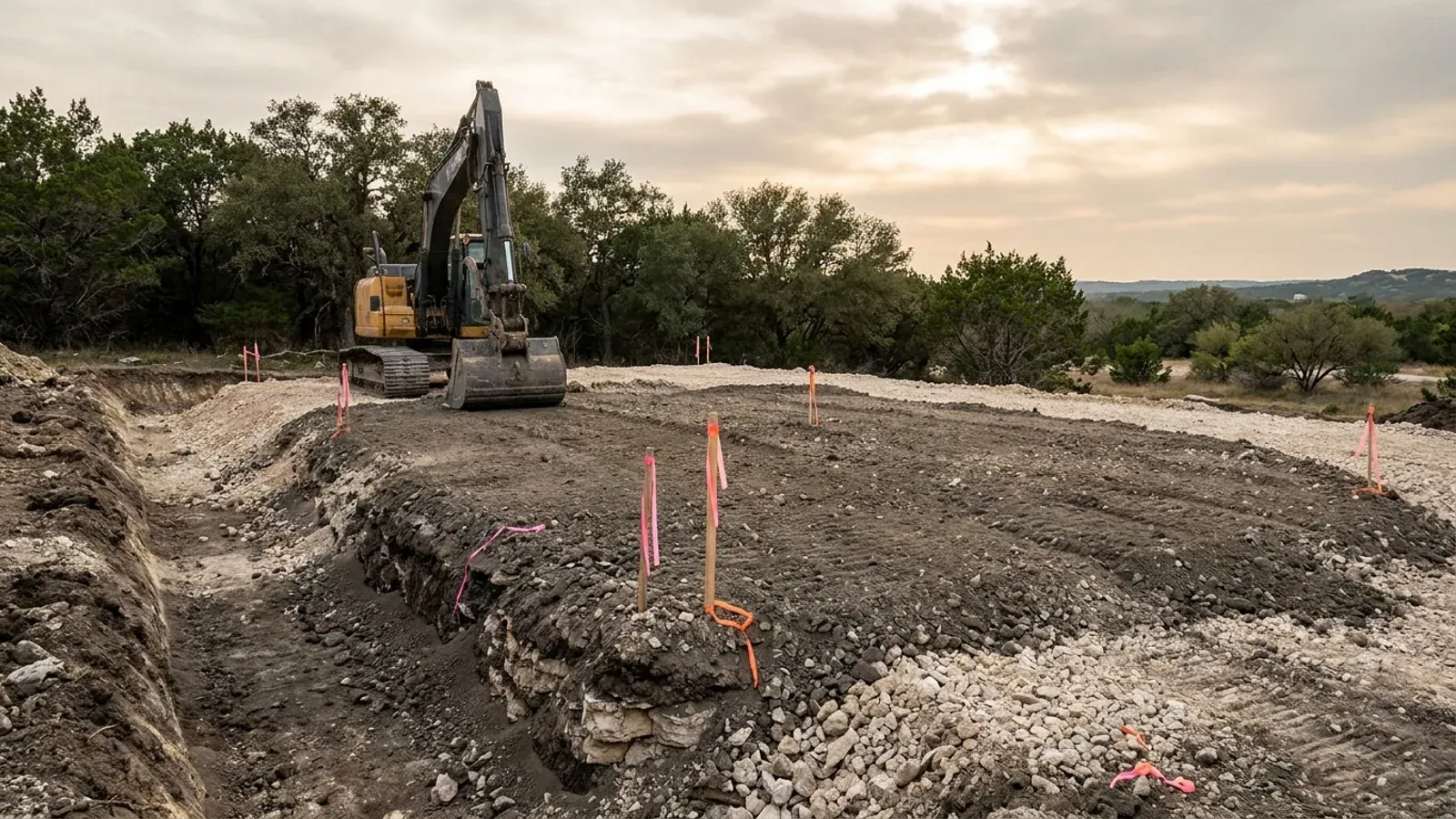
What moves a Texas budget is usually below grade, and it is soil rather than rock: shrink-swell clay. The Blackland Prairie and the Gulf Coast clays move enough between a wet season and a dry one to drive the foundation design across the state's largest markets, which is why several DFW cities require an engineer's seal on the foundation of every new house. Those are the same conditions that decide whether a septic field passes its soil and site evaluation, so the grading plan, the foundation and the drainfield get resolved together rather than one at a time. We price the dirt before we price the building.
What we build in Potter County
All nine of our services — kits, custom plans, post-frame and steel construction, site preparation, permitting and engineering, through to turnkey builds — are available across Potter County. What a project costs depends far more on the parcel than on square footage, so we work from your land rather than from a rate card.
See what we buildWhat a build looks like
Three stages every Potter County project passes through, from a raw parcel to a finished home. Site work first, because that is where the budget is decided.
The parcel
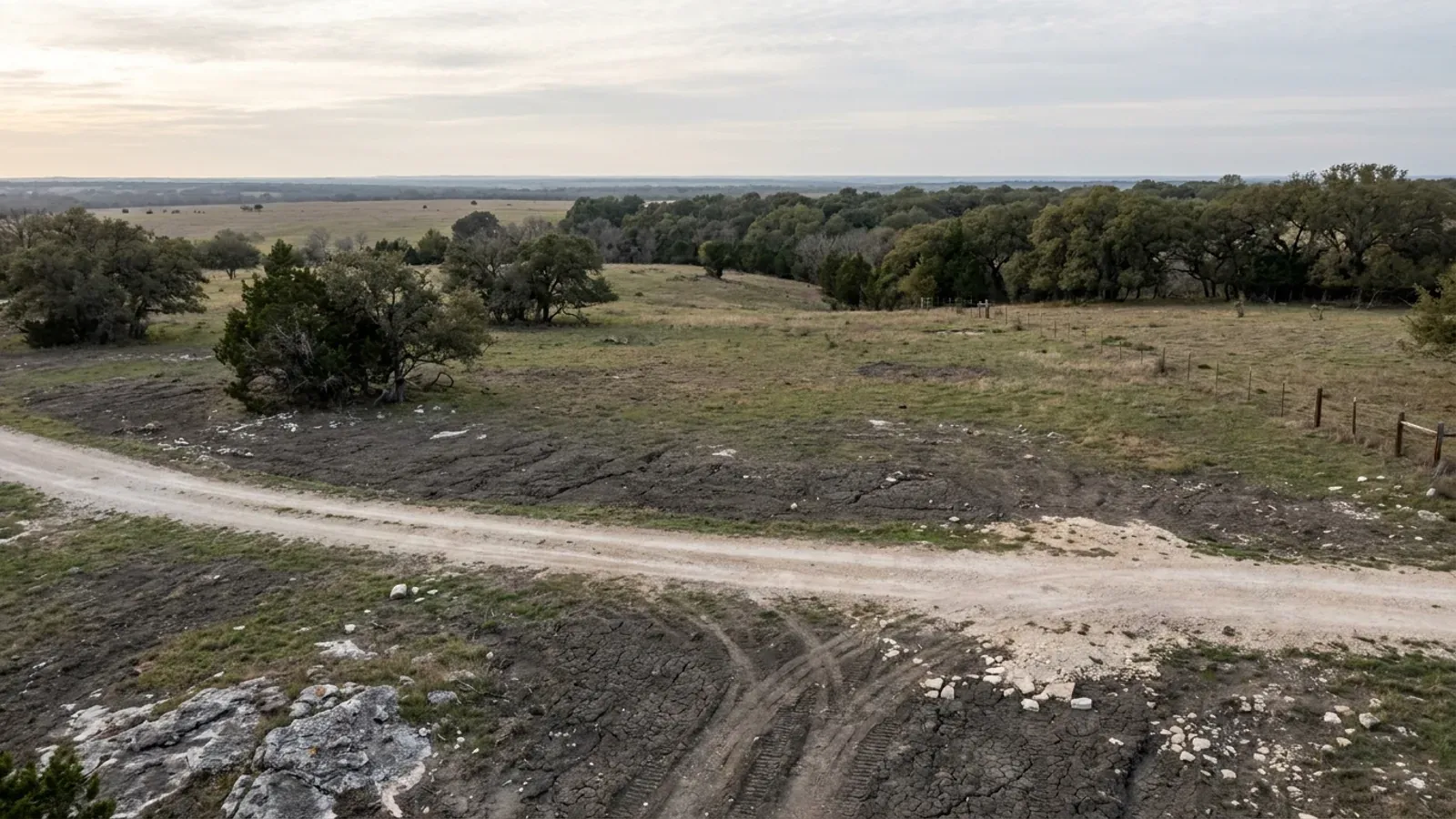
Zoning, setbacks, flood zone and utility access get checked before anything is drawn.
Pad and permit
Clearing, grading and a compacted pad, while the submittal works through Potter County.
Frame to finish
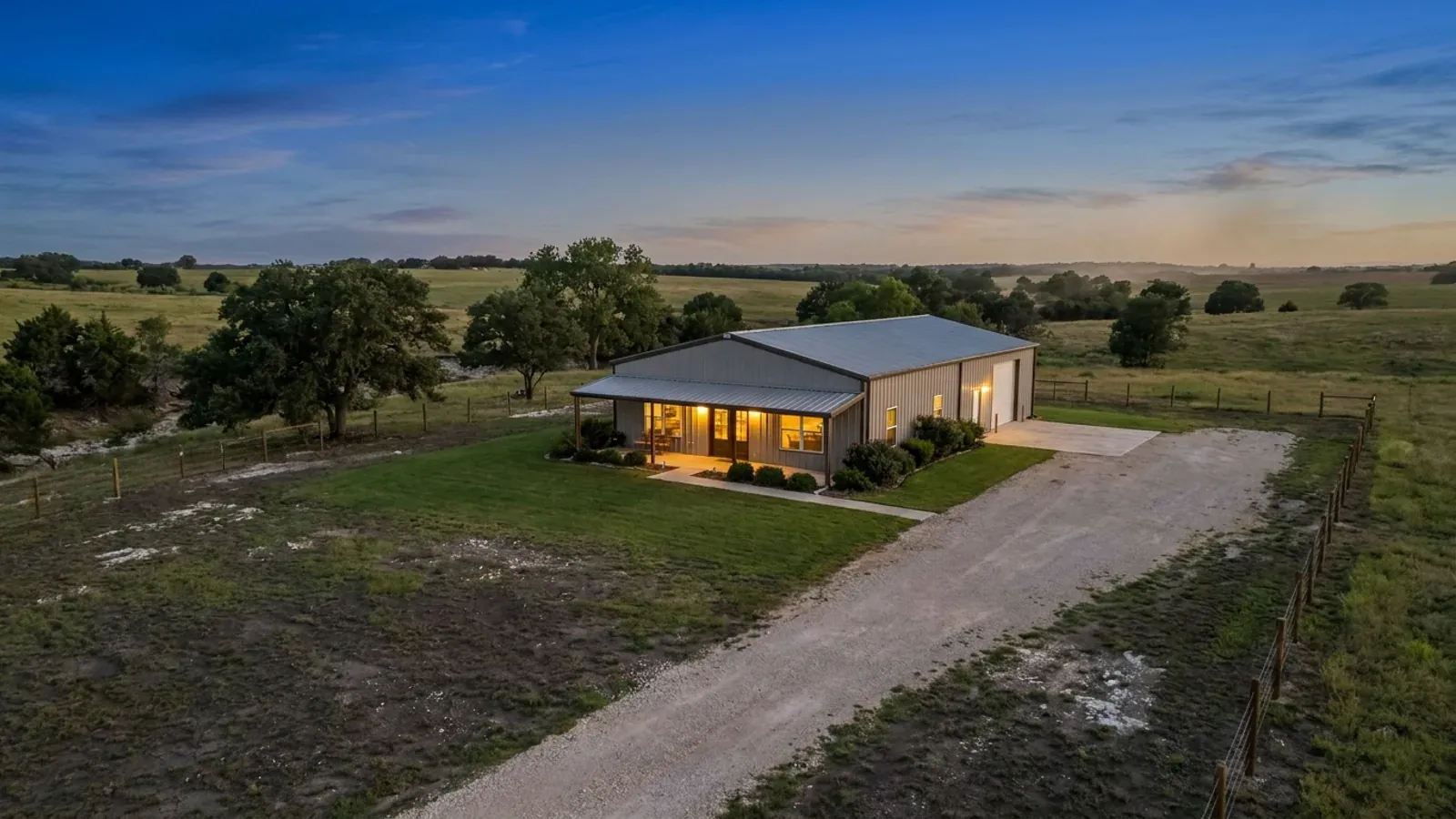
Shell erected and dried in, then systems, insulation and interior finish through to CO.
Those are the rules for Potter County. Tell us what you want to build and we will draw it to them.
Where we build around Potter County
Potter County and the rural land around it. The buildable acreage for a project this size usually sits outside the city limits, which is frequently what changes who issues your permit.
Keep reading
The questions that usually come next once you know what Potter County allows.
Barndominium Cost Guide
Sourced per-square-foot ranges by tier and by size, with a calculator built on the same figures.
Read itIs It Legal in Texas?
Classification, zoning, the HOA gate, and why "nonresidential farm building" does not cover a home.
Read itHow Long Does It Take?
Census build-duration data, and what actually sets the permit clock where you are building.
Read itNearby areas we build in
Others we cover in this part of Texas. The permitting authority, the adopted design criteria and the zoning can all differ from one to the next.
Building in Potter County: common questions
12 questions we get asked most often about building in Potter County. If yours is not on the list, ask it directly.
Does Potter County require a building permit for a barndominium on unincorporated land?
So what does actually gate a build in unincorporated Potter County?
Is the shop bay counted when the septic system is sized?
Does the ten-acre septic exemption apply in Potter County?
Will I need an engineer for the foundation?
Is my water well exempt from the groundwater district's rules?
Does the county check the drainage on my site?
What climate zone is Potter County, and what does that change?
What is the freeboard requirement if my tract is in a flood zone?
Does renting the barndominium out change anything here?
Who owns the minerals under Panhandle land, and can a driller put a well next to my house?
Is Potter County or Randall County the better side of Amarillo to buy land in?
Building in Potter County?
Start with the plan. Tell us what you want to build and we will draw it, then confirm what Potter County will actually let you put on the parcel and what wind load it has to meet. That conversation costs nothing.