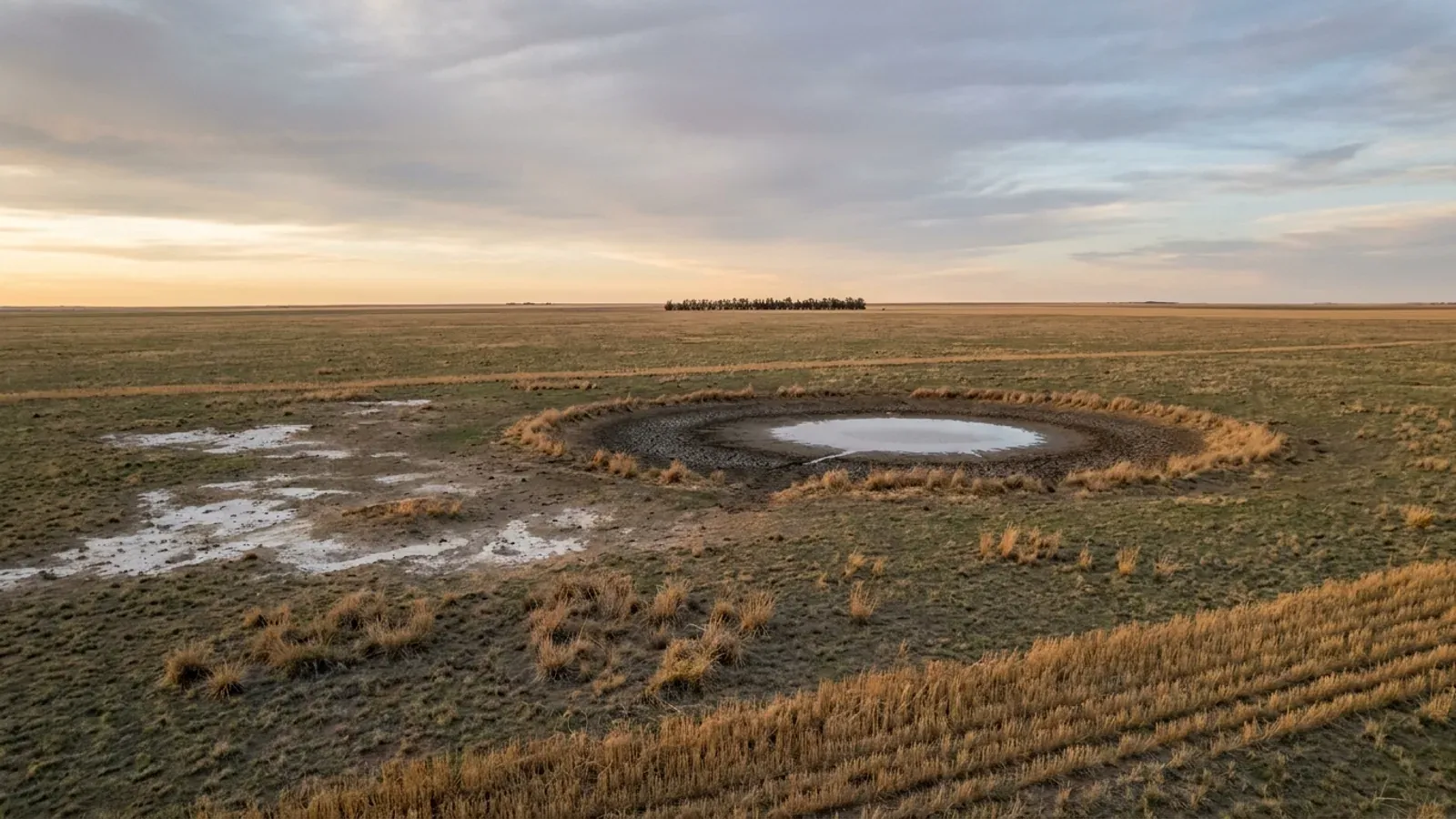
Barndominium Builders in Randall County, TX
South Amarillo and Canyon both sit in Randall County, and the county itself runs no building department, no building inspector and no adopted residential code. What it does run is a development permit system: Road and Bridge in Canyon issues a Class B permit for property in the mapped 100-year floodplain and a Class A permit for everything outside it, so the gate reaches land FEMA has mapped as dry. Septic is stranger still. Randall County holds the TCEQ authorised agent designation but does not administer it. The Amarillo Area Public Health District does, from an office on South Buchanan Street in Amarillo, for Potter and Randall counties together, and the county's own order kills the ten-acre exemption in plain words. The ground is the real surprise. This is not caliche at the surface. Pullman clay loam covers 41 percent of the county, and in the playa basins the Randall series runs 60 percent clay.
Randall County at a glance
- County
- Randall County
- Population
- 152,351
- Where we build
- Canyon, Amarillo, Potter County
- Site visits
- We meet you on the tract, Canyon or anywhere else in Randall County
ZIPs 79015, 79016, 79042, 79091, 79098, 79103, 79106, 79109 and more
Building conditions in Randall County
What actually changes from one Texas jurisdiction to the next: who issues the permit, whether the residential code is enforced there at all, what the structure has to be engineered to, and what the ground is like. These are the numbers your drawings have to satisfy.
TCEQ Online Authorized Agent Reporting System, county code 191, www6.tceq.texas.gov/oars, with the Amarillo Area Public Health District OSSF application and OSSF Application Checklist, October and December 2024
Order Adopting Rules of Randall County, Texas for On-Site Sewage Facilities, sections 8(B)(1) and 8(B)(2), passed and approved 22 September 2020, approved by the TCEQ Executive Director 7 May 2021
Randall County Road & Bridge, Floodplain Management page and Floodplain Management FAQ, randallcounty.gov, read 1 September 2026
Randall County Flood Damage Prevention Order, Article 5, adopted 2010 and effective 4 June 2010, citing Texas Water Code section 16.315 and 44 CFR 60.3(d)
High Plains Underground Water Conservation District No. 1 Management Plan 2024 and Panhandle Groundwater Conservation District Management Plan 2024, both as filed with the Texas Water Development Board
USDA NRCS Soil Data Access, SSURGO survey area TX381 Randall County, mapunit, component, chorizon and chaashto tables
Also worth knowing before you build in Randall County
- The playa soil is named after this county, and it is a Vertisol
- Randall clay, 0 to 1 percent slopes, frequently ponded, covers 5,139 acres and is classified Very-fine, smectitic, thermic Ustic Epiaquerts, soil order Vertisols, poorly drained, hydrologic group D. Representative clay content is about 60 percent from the surface to two metres and linear extensibility runs 11.4 to 12.6, with a plasticity index of 46 and a liquid limit of 78. Counting Randall, McLean, Lockney, Lazbuddie and Lofton together, 40,676 acres of the county sit in map units the survey describes as occasionally or frequently ponded
- Climate zone 4B, and nowhere else we build is colder
- The Department of Energy's county climate zone attribute table gives Randall County, GEOID G48381, IECC zone 4 with moisture regime B on both the 2015 and the 2021 maps, and a Building America region of Mixed-Dry on both. It sits outside the 1A to 3B range that covers the rest of this site, and the moisture regime is dry rather than humid, which changes the insulation and vapour answer, not just the R-value
- Amarillo, not the county, approves plats in Amarillo's ETJ
- Randall County's Road and Bridge office states that the City of Amarillo and the counties in which Amarillo's ETJ falls, Armstrong, Carson, Potter and Randall, have official agreements that the city will oversee platting in the ETJ, and that the city has the exclusive authority to approve or deny plats and required plans for streets, alleys and storm water drainage facilities there, in accordance with city standards. It also warns that city approval of infrastructure does not commit Randall County to accept it for maintenance
- The acreage exemption changes at the city line
- The same county page records that Amarillo acknowledges the city exception of greater than 5 acres in its ETJ because it is less restrictive than the counties' 10 or more acres exemption. In the county proper, section 1.04(C) of the 2023 Subdivision Regulations applies the Local Government Code section 232.0015 exception to a division of land into parts greater than 10 acres where each part has access and no public improvement is dedicated
- No approved plat, no street number
- Section 1.04(B)(2) of the county's subdivision regulations provides that no address, that is, street number, shall be issued for the erection of any building in the County or ETJ on any piece of property without an approved plat, except where the exemptions apply. Section 1.04(B)(1) also lets the county withhold approval and acceptance of public improvements from any addition whose platting the Commissioners Court has not approved
- A signed groundwater certification goes on every final plat
- Section 3.01(2) of the subdivision regulations requires a signed and sealed groundwater availability certification with the final plat, complying with 30 Texas Administrative Code sections 230.1 to 230.11. Section 3.01(1) additionally requires every plat to be signed off by the 9-1-1 Director and the Bi-City County Health Department before it reaches Commissioners Court
- There is a plat type that exists only to get you a septic permit
- Section 3.07 creates an OSSF Plat whose stated purpose is to provide basic documentation required by the Amarillo Area Public Health District for the On-Site Sewage Facility application, and which the owner of an unplatted lot may request. The Road Superintendent reviews it and must act within thirty calendar days of the official submittal date, failing which the plat as submitted is deemed approved
- The county cannot adopt a fire code even though it runs a fire department
- Randall County Fire Department operates three stations, on East Loop 335 South, FM 2186 and at Umbarger. But Local Government Code section 233.061(a) opens county fire-code power only to a county over 250,000 or one adjacent to such a county, and population there means the decennial figure. The 2020 census counted 140,753 in Randall and 118,525 in Potter, with every other neighbour under 20,000, so the bracket is shut. Section 233.062(a) would in any case cap such a code at commercial establishments, public buildings and multifamily of four units or more, which cannot reach a house
- Steep ground is a real category here
- The soil survey maps 21,278 acres of Potter-Mobeetie association at 8 to 45 percent slopes and 10,418 acres of Knoco-Quinlan-Burson association at 5 to 50 percent slopes. Adding every map unit whose dominant component reaches 20 percent or steeper gives about 52,066 acres, roughly 9 percent of the county. That is the canyon country: Texas Parks and Wildlife calls Palo Duro Canyon the second largest canyon in the country, and it cuts through this county
- An exempt well escapes the spacing table as well as the permit
- In High Plains district territory, Rule 4.1(b)(1) exempts from permitting a well completed or equipped to produce less than 25,000 gallons a day, or 17.5 gallons a minute. Rule 4.9(a) applies the minimum spacing tables to wells permitted after the rule's enactment, and the lowest row of both tables begins at 17.5 gallons a minute, so a household well below that threshold has no spacing row to meet. Rule 4.2 provides that such a well may be registered, which is permissive rather than mandatory
- Where the spacing does bite, it bites in yards
- For a permitted well in the Ogallala or Edwards-Trinity High Plains aquifer, the district's Table 1 requires 100 yards from the nearest valid well or proposed well site and 25 yards from the nearest property line at 17.5 to 70 gallons a minute, rising to 540 yards and 278 yards above 800 gallons a minute. The Dockum table is stricter at the top: 1,760 yards from the nearest well above 500 gallons a minute
- The septic form measures the whole building, not the living area
- The Amarillo Area Public Health District's application asks for square feet of House slash Building and converts it by bracket: 1500 to 2500 equals 3 bedrooms, 2501 to 3500 equals 4, 3501 to 4500 equals 5 and 4501 to 5500 equals 6. The state table in 30 TAC section 285.91 keys off number of bedrooms or living area of home instead. The county's own order does not redefine either term, so a barndominium owner should ask the district in writing how a shop bay is counted before sizing a system
- Five feet from the shop, a hundred from the well
- The setback grid on the district's own application requires a septic tank 5 feet and a drainfield 5 feet from foundations, buildings and surface improvements; 50 and 100 feet from your own and neighbours' wells; 50 and 150 feet from public wells; 50 and 75 feet from lakes, streams, ponds and creeks including dry ones; and 5 and 25 feet from sharp slopes where seeps may occur. Any box answered no requires a signed variance request and a design by a registered sanitarian or professional engineer
- Inside Canyon the answer changes completely
- The City of Canyon has adopted the 2021 International Residential Code, the 2021 International Building, Mechanical, Plumbing, Fuel Gas, Existing Building and Fire Codes, the 2015 International Energy Conservation Code and the 2023 National Electrical Code, and points builders at the Panhandle Residential Foundation Manual. That manual's foundation tables run to an effective plasticity index of 25 and hand any residence over 5,000 square feet to a design professional licensed in Texas as an architect or engineer
- The county is urban and its balance is not
- Of 152,351 residents estimated for 2025, 106,621 live inside the City of Amarillo's Randall County portion and 16,518 in Canyon, leaving 27,650 in the balance of the county. Take the whole footprint of every incorporated place that touches the county, at most 116.3 square miles, off the county's 912.7 square miles of land and at least 796 square miles are unincorporated, so the balance runs at no more than about 35 people per square mile
- Randall is growing while Potter is shrinking
- Randall County went from a 2020 base of 140,670 to an estimated 152,351 in 2025, up 8.3 percent, while Potter County across the line fell from 118,622 to 114,453, down 3.5 percent. The Amarillo metro's growth is almost entirely on the Randall side, which is also where the buildable acreage south of the city lies
- A licensed plumber is required even with no building code
- The rural plumbing exemption expressly excludes plumbing performed in connection with new construction, so a licensed plumber is required on a rural Randall County build even where nobody will inspect the framing. The same pattern holds for well drillers and for any engineer whose seal a plan carries
- Which Water Code section the county's own order names
- The Flood Damage Prevention Order recites that under Section 16.315 of the Texas Water Code all political subdivisions are authorised to take all necessary and reasonable actions to comply with the requirements and criteria of the National Flood Insurance Program, and that the Legislature has in the Flood Control Insurance Act delegated the responsibility of local governmental units to adopt regulations designed to minimize flood losses. It names that section alone, where McLennan County's order names three
USDA NRCS Soil Data Access, SSURGO survey area TX381, mapunit and component tables with taxonomic classes and chorizon values
US Department of Energy and Pacific Northwest National Laboratory, ClimateZones shapefile attribute table accompanying PNNL-33270, record G48381
Randall County Road & Bridge, Platting in the Extraterritorial Jurisdiction, randallcounty.gov, citing Texas Attorney General Opinion GA-139 (2004)
Randall County Road & Bridge, Platting in the Extraterritorial Jurisdiction, with the 2023 Randall County Subdivision Regulations section 1.04(C)
2023 Randall County Subdivision Regulations, section 1.04(B), adopted after a public hearing noticed on the Commissioners Court agenda of 7 November 2023
2023 Randall County Subdivision Regulations, section 3.01(1) and (2)
2023 Randall County Subdivision Regulations, section 3.07
Texas Local Government Code sections 233.061(a) and 233.062(a), Government Code section 311.005(3), and the US Census Bureau 2020 Census centers of population file CenPop2020_Mean_CO48
USDA NRCS Soil Data Access, SSURGO survey area TX381, component slope values by map unit acreage, with Texas Parks and Wildlife Department, Palo Duro Canyon State Park
High Plains Underground Water Conservation District No. 1, Rules as amended by House Bill 2443, 15 November 2023, Rules 4.1, 4.2 and 4.9
High Plains Underground Water Conservation District No. 1 Rules, Rule 4.9(a), Tables 1 and 2
Amarillo Area Public Health District, Application to install or alter an On-Site Sewage Facility in Potter or Randall County, October 2024, read against 30 Texas Administrative Code section 285.91
Amarillo Area Public Health District, On-Site Sewage Facility application, setback table and variance instructions, October 2024
City of Canyon, Planning & Development, Building Codes page, canyontx.gov, with the Panhandle Residential Foundation Manual, April 2017 edition, Tables R401.2(a) and R401.2(b)
US Census Bureau Vintage 2025 sub-county population estimates, sub-est2025.csv, and the 2024 Census Gazetteer county and place files
US Census Bureau, Vintage 2025 county population estimates, co-est2025-alldata.csv, rows 48381 and 48375
Texas Occupations Code section 1301.052
Randall County Flood Damage Prevention Order, preamble and Article I section A
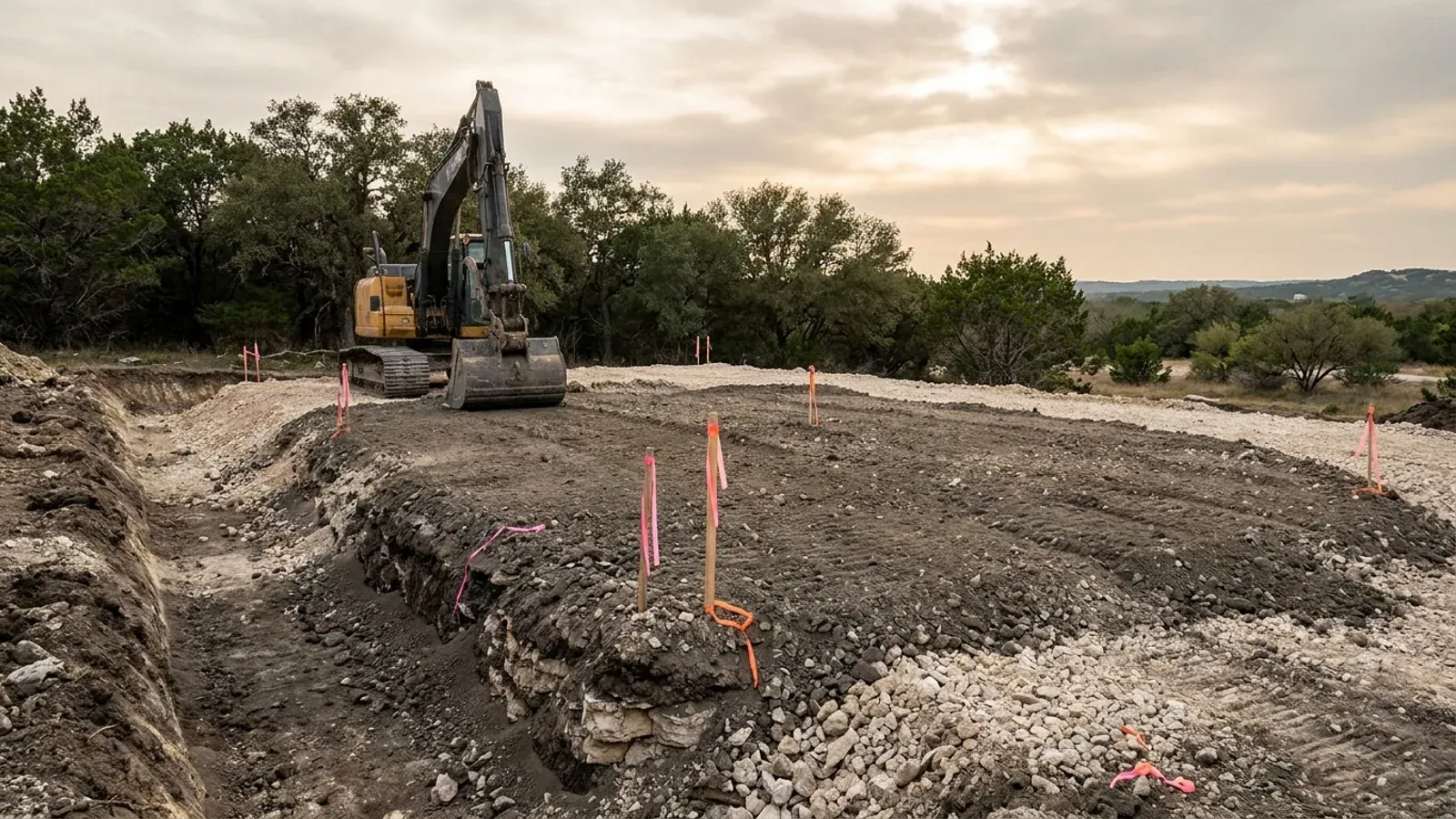
The expensive surprises are in the ground, not the building
What moves a Texas budget is usually below grade, and it is soil rather than rock: shrink-swell clay. The Blackland Prairie and the Gulf Coast clays move enough between a wet season and a dry one to drive the foundation design across the state's largest markets, which is why several DFW cities require an engineer's seal on the foundation of every new house. Those are the same conditions that decide whether a septic field passes its soil and site evaluation, so the grading plan, the foundation and the drainfield get resolved together rather than one at a time. We price the dirt before we price the building.
What we build in Randall County
All nine of our services — kits, custom plans, post-frame and steel construction, site preparation, permitting and engineering, through to turnkey builds — are available across Randall County. What a project costs depends far more on the parcel than on square footage, so we work from your land rather than from a rate card.
See what we buildWhat a build looks like
Three stages every Randall County project passes through, from a raw parcel to a finished home. Site work first, because that is where the budget is decided.
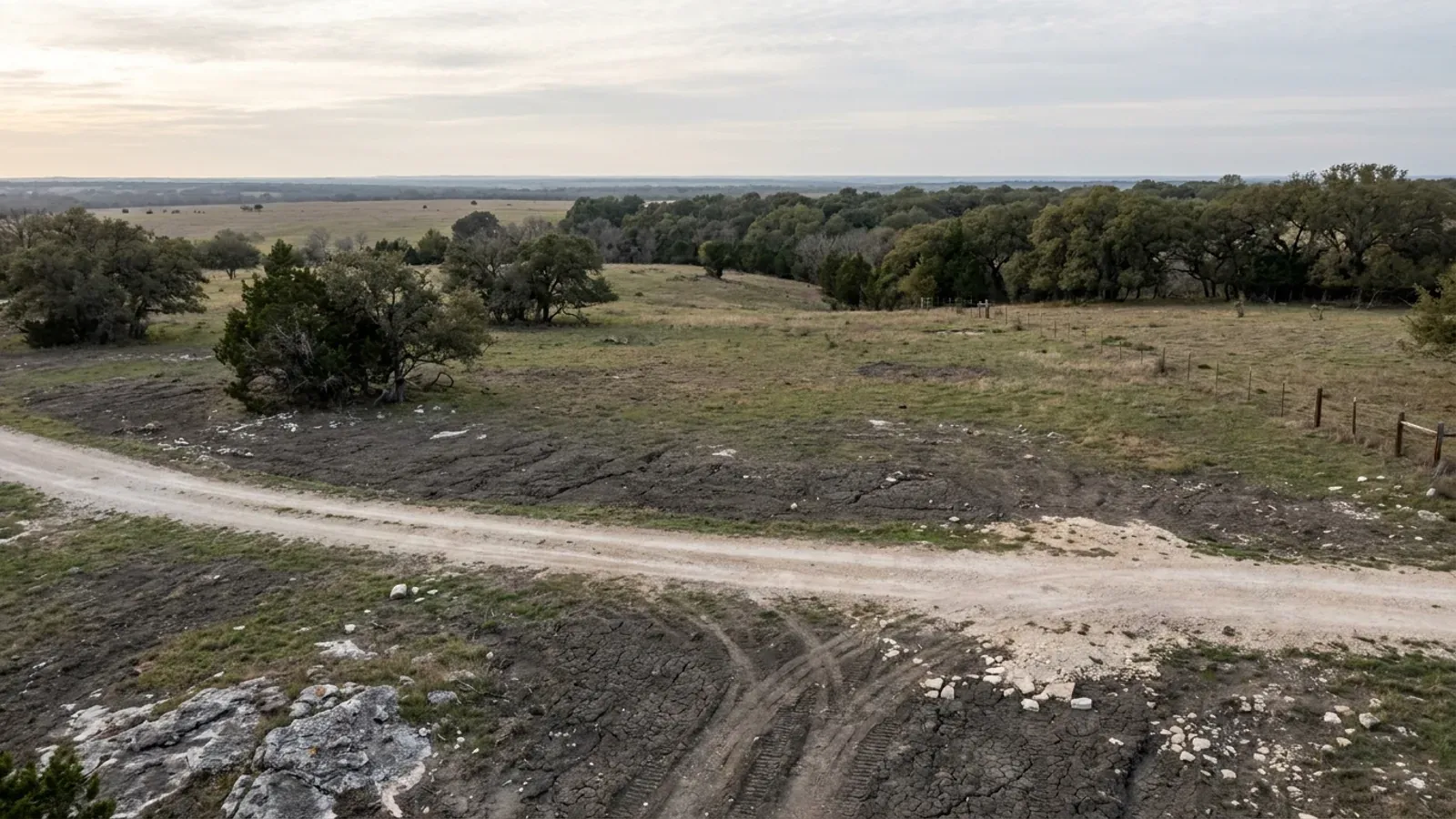
The parcel
Zoning, setbacks, flood zone and utility access get checked before anything is drawn.
Pad and permit
Clearing, grading and a compacted pad, while the submittal works through Randall County.
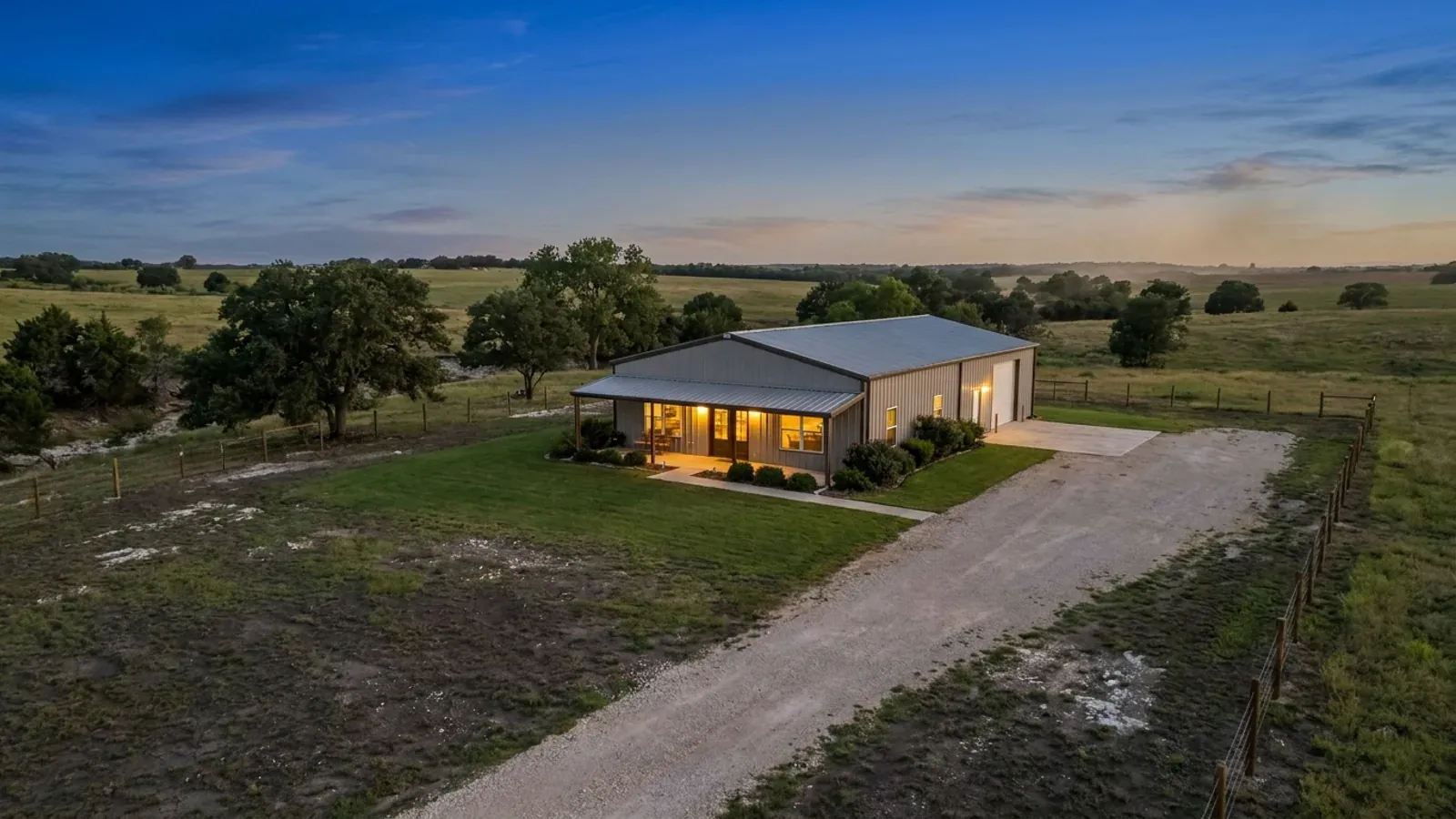
Frame to finish
Shell erected and dried in, then systems, insulation and interior finish through to CO.
Those are the rules for Randall County. Tell us what you want to build and we will draw it to them.
Where we build around Randall County
Randall County and the rural land around it. The buildable acreage for a project this size usually sits outside the city limits, which is frequently what changes who issues your permit.
Keep reading
The questions that usually come next once you know what Randall County allows.
Barndominium Cost Guide
Sourced per-square-foot ranges by tier and by size, with a calculator built on the same figures.
Read itIs It Legal in Texas?
Classification, zoning, the HOA gate, and why "nonresidential farm building" does not cover a home.
Read itHow Long Does It Take?
Census build-duration data, and what actually sets the permit clock where you are building.
Read itNearby areas we build in
Others we cover in this part of Texas. The permitting authority, the adopted design criteria and the zoning can all differ from one to the next.
Building in Randall County: common questions
12 questions we get asked most often about building in Randall County. If yours is not on the list, ask it directly.
Does Randall County have a building code or a building inspector?
So there is nothing to apply for out there?
Who issues the septic permit, and where do I go?
I have more than ten acres. Am I exempt from the septic rules?
Does my shop bay count towards the size of the septic system?
What is the ground actually like? Is it caliche?
Do I need an engineer for the foundation?
Is there a floodplain permit, and how high do I have to build?
What about the playa lakes?
Do I need a permit for a water well?
Amarillo is right there. Does the city reach my land?
What still applies on rural land with no building code?
Building in Randall County?
Start with the plan. Tell us what you want to build and we will draw it, then confirm what Randall County will actually let you put on the parcel and what wind load it has to meet. That conversation costs nothing.