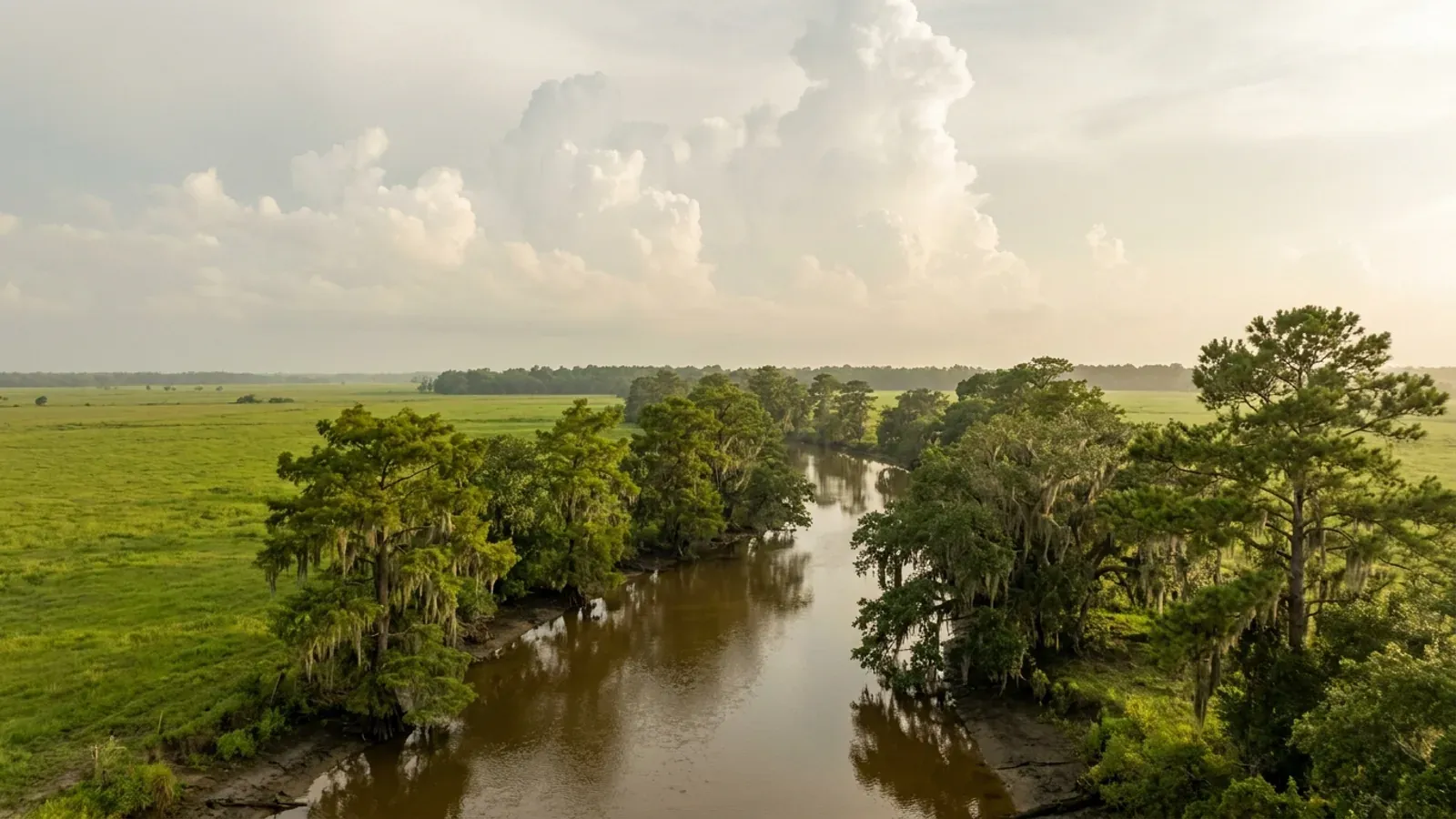
Barndominium Builders in Sugar Land, TX
Sugar Land is a master-planned city in Fort Bend County, and the building code is rarely what decides whether a barndominium can go up here. The city adopted the 2024 International Residential Code by Ordinance 2395 on 20 January 2026. Its zoning code goes further and names the barndominium exterior outright: Land Development Code section 2-317 prohibits corrugated or ribbed metal panels and unpainted metal finishes. Then section 2-310.5 concedes that, under House Bill 2439, compliance with that whole article is voluntary. So the public rule that would have stopped the building is disarmed by the state, and what is left is private and district law — the recorded restrictive covenants of a master-planned subdivision, and the special taxing district. Nine levee improvement districts operate over the majority of Sugar Land, each levying its own property tax on top of city and county.
Sugar Land at a glance
- County
- Fort Bend County
- Population
- 107,726
- Where we build
- Sugar Land, Houston, Fort Bend County, Pearland
- Site visits
- Site visits arranged across Sugar Land and out into Fort Bend County
ZIPs 77478, 77479, 77498
Building conditions in Sugar Land
What actually changes from one Texas jurisdiction to the next: who issues the permit, whether the residential code is enforced there at all, what the structure has to be engineered to, and what the ground is like. These are the numbers your drawings have to satisfy.
Sugar Land Land Development Code, Chapter 7, Article VIII, sections 7-46 to 7-48 and the editor's note to Article VIII (Municode, Supp. 14, read 1 September 2026)
Sugar Land Land Development Code, Chapter 2, Article X, section 2-317 (Ord. No. 2237, sections 21 and 31, adopted 20 July 2021)
Sugar Land Land Development Code, Chapter 2, Article X, section 2-310.5 (Ord. No. 2187, section 3, adopted 7 January 2020)
Texas Government Code sections 3000.001, 3000.002 and 3000.004, added by Acts 2019, 86th Leg., R.S., Ch. 1289 (H.B. 2439), amended by S.B. 1090 (2021) and S.B. 783 (2025)
City of Sugar Land, Levee Improvement Districts, sugarlandtx.gov/1726/Levee-Improvement-Districts, read 1 September 2026
Texas Water Code sections 49.452(a) and 49.4521(a)
Also worth knowing before you build in Sugar Land
- No notice, and the buyer can terminate
- Water Code section 49.452(f) requires the notice to be given to the prospective purchaser prior to execution of a binding contract of sale and purchase, and provides that where a contract is entered into without it, the purchaser shall be entitled to terminate the contract. If the seller furnishes it at or before closing and the purchaser closes anyway, the statute conclusively presumes the right to terminate was waived. Subsections (b) through (e), which used to carry the notice forms, were repealed in 2023 and the wording moved to section 49.4521, so older material citing them is out of date.
- Signs at two principal entrances
- Water Code section 49.451 requires a district subject to the section 49.452 notice requirements to post signs indicating the existence of the district at two principal entrances to the district, within 30 days after the district is created, with the size and exact location of the information determined by the executive director. It is the one disclosure a buyer can see from the road before anyone hands them paperwork.
- The legislature protected solar and shingles, not metal walls
- Property Code Chapter 202 overrides covenants restricting solar energy devices, certain shingles, flags, standby generators, firearms, religious items, pool enclosures, security measures and rooftop displays. There is no section protecting metal exterior cladding, none limiting a minimum square footage covenant, and none addressing living in a building that is also a shop. Section 202.003(a) says restrictive covenants shall be liberally construed to give effect to their purposes, and section 202.002(a) applies the chapter regardless of when the covenant was created.
- Chapter 209 protects fewer owners than people assume
- The architectural-review protections at Property Code section 209.00505 apply only to a property owners' association with more than 40 lots, and not during the development period. Below that threshold, or while the declarant still controls the association, what remains is section 202.004(a), which presumes an association's exercise of discretionary authority reasonable unless the owner proves it arbitrary, capricious or discriminatory by a preponderance of the evidence. Section 202.004(c) allows a court to assess up to 200 dollars per day of violation.
- You cannot put the shop up first
- Land Development Code section 2-192(B) provides that an accessory structure must not be established on any lot prior to the establishment of the principal building, and section 2-54(B) says the same of an accessory use. Section 2-192(F)(4) caps a private garage or carport on a lot over 6,000 square feet at 10 percent of the lot area, counting all garages together. In R-1E, other accessory structures in the required rear yard are capped at 1,563 square feet or 25 percent of the required rear yard, whichever is greater.
- Minimum lot area, district by district
- Table 2-72.1 sets minimum lot area at 1.5 acres in R-1E Residential Estate, 9,500 square feet in R-1R and R-2, 6,600 square feet in R-1, 5,000 square feet in R-1Z, 3,500 square feet in R-3 and 2,178 square feet per dwelling unit in R-4. R-1E also carries a 125-foot minimum lot width, 50-foot front and rear setbacks, 40 percent maximum lot coverage and a maximum floor area ratio of 0.71. Every residential district caps principal structures at two and one-half stories and 35 feet.
- The city says there is no licence for the builder
- Sugar Land's permits FAQ answers the question directly: plumbing and mechanical contractors must be licensed under the Texas Plumbing License Law or the Texas Mechanical License Law, electrical work must be performed by a licensed electrician, and a license is not required for general building work on your own property. What the city does require is at Land Development Code section 7-48, adding IRC R105.10, under which a contractor must certify workers' compensation cover, general liability of at least 100,000 dollars for property damage per accident and 300,000 dollars per person for injuries or death, and 5,000 dollars for medical expenses per person, as a condition of the permit issuing.
- The state district database does not search by address
- TCEQ's Water Districts Database offers a search by water district name or number, a list of documents by type, a report request and a district map. It is a name and number search, not a parcel search, so it does not answer whether a particular tract is inside a district. The parcel-level routes are the information form and boundary map every district must file with the county clerk under Water Code section 49.455, which sellers and title companies are entitled to rely on and which the statute makes conclusively presumed correct as a matter of law; the title commitment; and the Fort Bend Central Appraisal District record, which lists the taxing jurisdictions for the account.
- The covenants show up on Schedule B of the title commitment
- Restrictive covenants are recorded in the real property records of the county where the land lies, and Property Code section 202.006(b) says a dedicatory instrument has no effect until it is filed. On a Texas title commitment they appear on the Texas Department of Insurance promulgated Form T-7, Schedule B, Exceptions from Coverage, item 1, the following restrictive covenants of record itemized below. For a Sugar Land parcel that means the Fort Bend County Clerk's real property records.
- Fort Bend County is climate zone 2A on both maps
- Fort Bend County is assigned climate zone 2A, moisture regime A, in both the pre-2021 county assignments and the 2021 and 2024 assignments. Eight Texas counties changed between the two maps and Fort Bend is not among them, so the insulation zone here does not depend on which code edition applies — unlike Dallas and Tarrant, which moved from 3A to 2A.
- A permit lapses in 180 days if work never starts
- The city states that building permits are good for 180 days, and that the permit expires when the work has not begun in that time period. A permit application is also treated as withdrawn if the applicant fails to respond to a request for information, a resubmittal or a fee within the specified time or 180 days, whichever is earlier, after which the city closes the file and will not reopen, reconsider or extend it. Where a contractor is found working without a permit, a building inspector issues a stop work order and some work may have to be uncovered for inspection and redone.
- Post-tension foundations need a sealed design
- The city's ground-up single-family submittal list requires a plot plan identifying all property lines, building lines and utility easements, a foundation plan on which post tension designs must be signed and sealed by a professional engineer, construction plans covering floor, framing, electrical, plumbing and exterior elevations, and documentation verifying energy code compliance.
Texas Water Code section 49.452(a-1) and (f); repeals by Acts 2023, 88th Leg., R.S., Ch. 1009 (H.B. 2815), Sec. 32(3) and Ch. 1010 (H.B. 2816), Sec. 6(1)
Texas Water Code section 49.451
Texas Property Code Chapter 202, section headings and sections 202.002(a), 202.003(a) and 202.010 to 202.024
Texas Property Code sections 209.00505, 202.004(a) and 202.004(c)
Sugar Land Land Development Code, Chapter 2, sections 2-54(B) and 2-192 (Municode, Supp. 14, read 1 September 2026)
Sugar Land Land Development Code, Chapter 2, Table 2-72.1, Bulk Regulations for Residential Zoning Districts (Ord. No. 2201, section 4, Exh. C, adopted 21 July 2020)
City of Sugar Land permits FAQ, sugarlandtx.gov/Faq.aspx?TID=16, read 1 September 2026; Land Development Code section 7-48, amended IRC R105.10
TCEQ, Search the Water Districts Database, www14.tceq.texas.gov/iwud/index.cfm; Texas Water Code section 49.455
Texas Property Code section 202.006; Texas Department of Insurance promulgated Form T-7, Schedule B
DOE/PNNL-33270 climate zone assignments and the published IRC county tables, as compiled in the project build-conditions appendix
City of Sugar Land permits FAQ, sugarlandtx.gov/Faq.aspx?TID=16, and Residential permits page, sugarlandtx.gov/2364/Residential, both read 1 September 2026
City of Sugar Land, Residential permits, sugarlandtx.gov/2364/Residential, read 1 September 2026
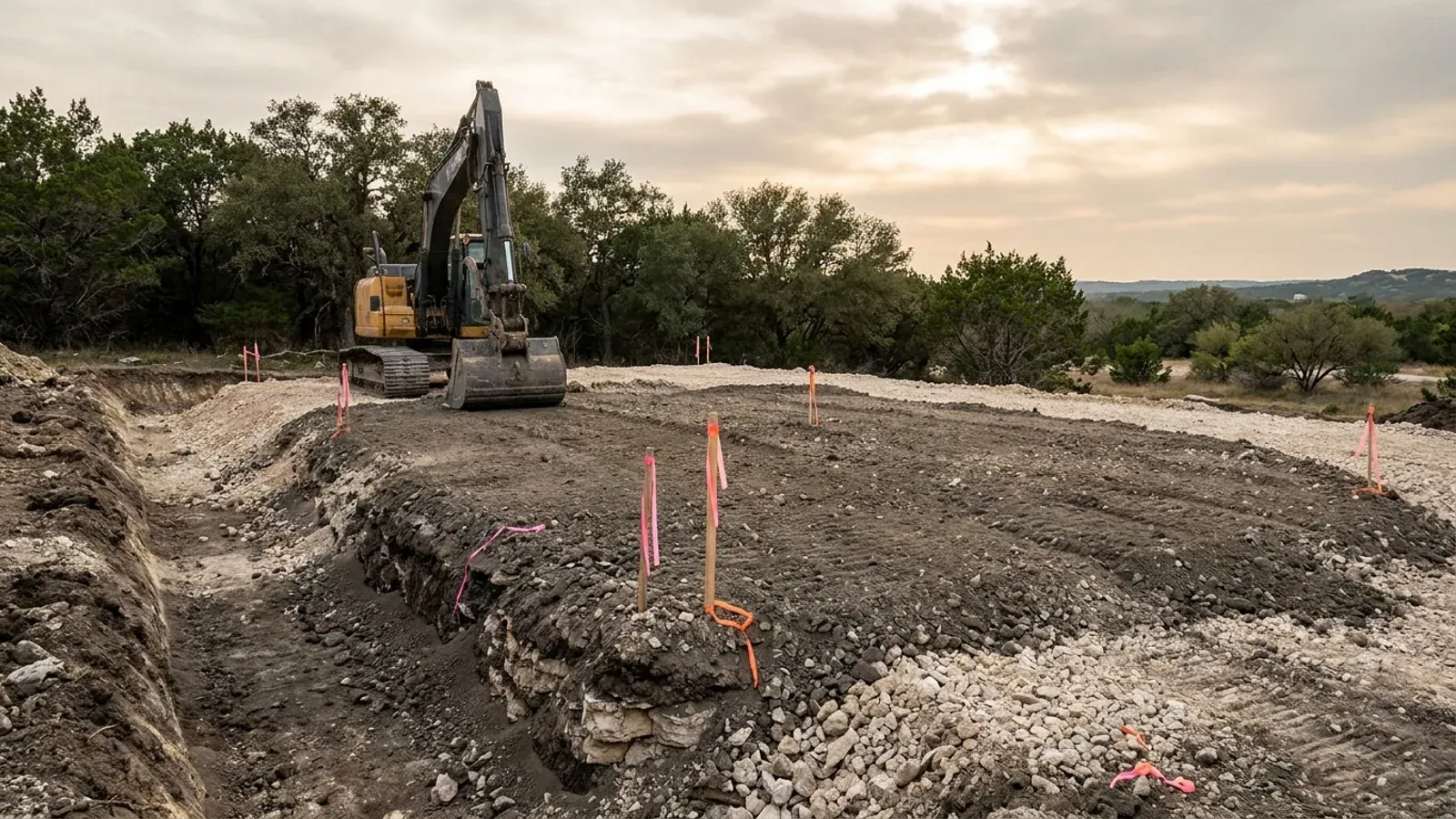
The expensive surprises are in the ground, not the building
What moves a Texas budget is usually below grade, and it is soil rather than rock: shrink-swell clay. The Blackland Prairie and the Gulf Coast clays move enough between a wet season and a dry one to drive the foundation design across the state's largest markets, which is why several DFW cities require an engineer's seal on the foundation of every new house. Those are the same conditions that decide whether a septic field passes its soil and site evaluation, so the grading plan, the foundation and the drainfield get resolved together rather than one at a time. We price the dirt before we price the building.
What we build in Sugar Land
All nine of our services — kits, custom plans, post-frame and steel construction, site preparation, permitting and engineering, through to turnkey builds — are available across Fort Bend County. What a project costs depends far more on the parcel than on square footage, so we work from your land rather than from a rate card.
See what we buildWhat a build looks like
Three stages every Sugar Land project passes through, from a raw parcel to a finished home. Site work first, because that is where the budget is decided.
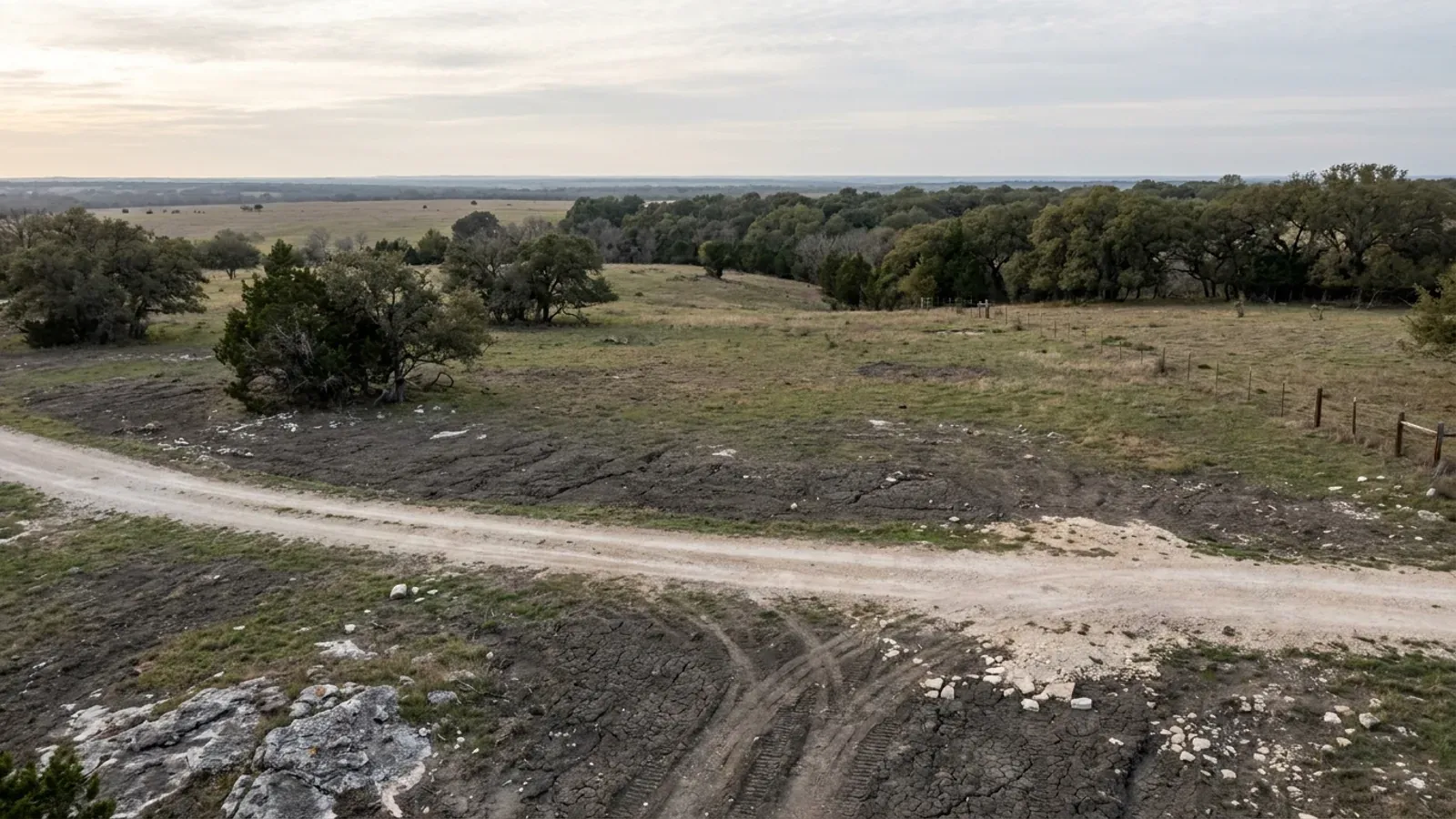
The parcel
Zoning, setbacks, flood zone and utility access get checked before anything is drawn.
Pad and permit
Clearing, grading and a compacted pad, while the submittal works through Fort Bend County.
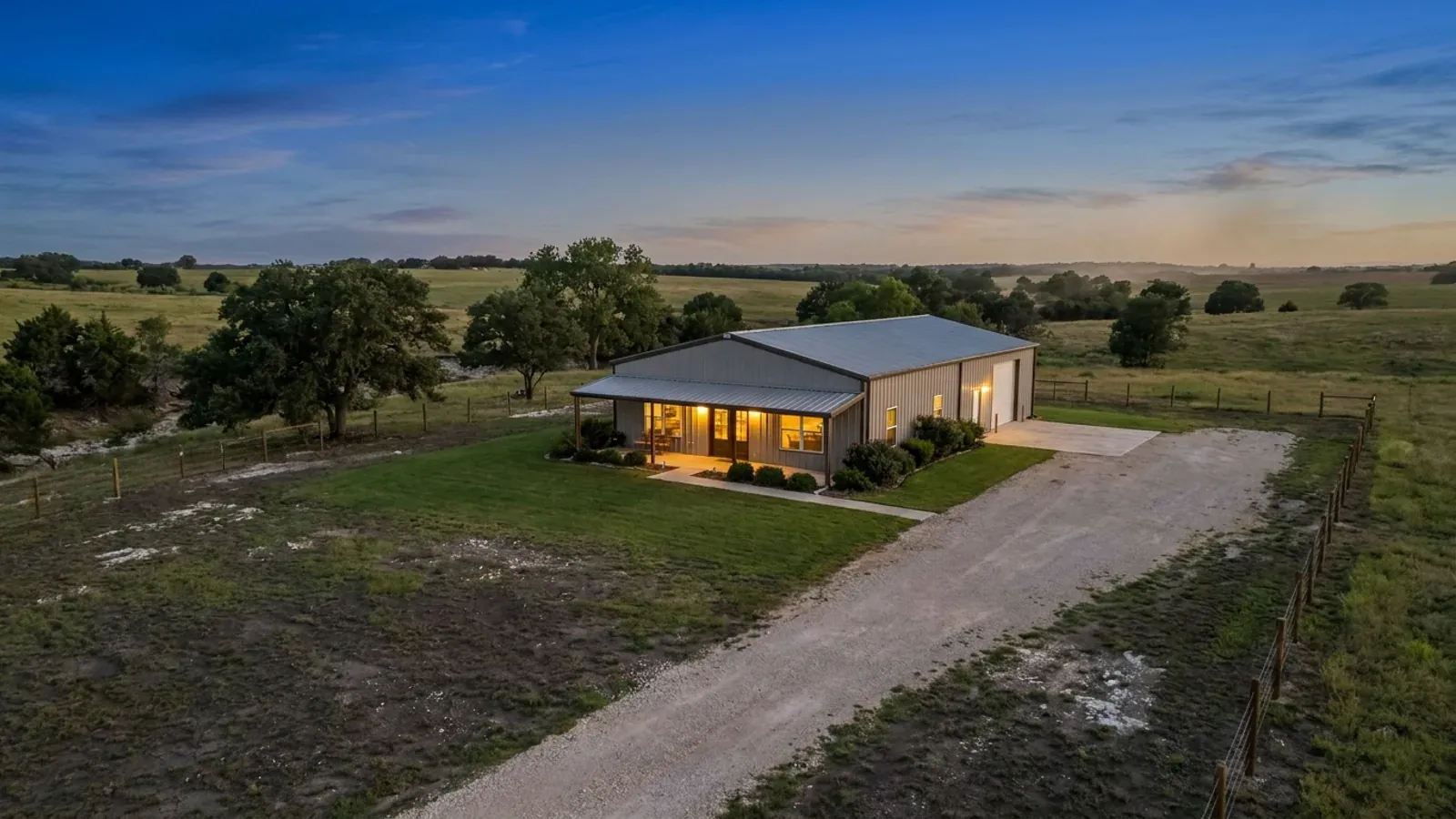
Frame to finish
Shell erected and dried in, then systems, insulation and interior finish through to CO.
Those are the rules for Fort Bend County. Tell us what you want to build and we will draw it to them.
Where we build around Sugar Land
Fort Bend County and the rural land around it. The buildable acreage for a project this size usually sits outside the city limits, which is frequently what changes who issues your permit.
Keep reading
The questions that usually come next once you know what Sugar Land allows.
Barndominium Cost Guide
Sourced per-square-foot ranges by tier and by size, with a calculator built on the same figures.
Read itIs It Legal in Texas?
Classification, zoning, the HOA gate, and why "nonresidential farm building" does not cover a home.
Read itHow Long Does It Take?
Census build-duration data, and what actually sets the permit clock where you are building.
Read itNearby areas we build in
Others we cover in this part of Texas. The permitting authority, the adopted design criteria and the zoning can all differ from one to the next.
Building in Sugar Land: common questions
9 questions we get asked most often about building in Sugar Land. If yours is not on the list, ask it directly.
Is there anywhere in Sugar Land to build a barndominium?
Sugar Land's code bans metal siding. Does that settle it?
Why does a deed restriction bind when the city ordinance does not?
What is a MUD, and is my Sugar Land lot in one?
How do I find out which districts my land is in?
What does that purchaser notice actually say?
Doesn't the HOA have to be reasonable about architecture?
Which code does Sugar Land build to, and what did it change?
Can I put the shop up first and live in it while I build?
Building in Sugar Land?
Start with the plan. Tell us what you want to build and we will draw it, then confirm what Fort Bend County will actually let you put on the parcel and what wind load it has to meet. That conversation costs nothing.