Barndominium Builders in Brazos County, TX
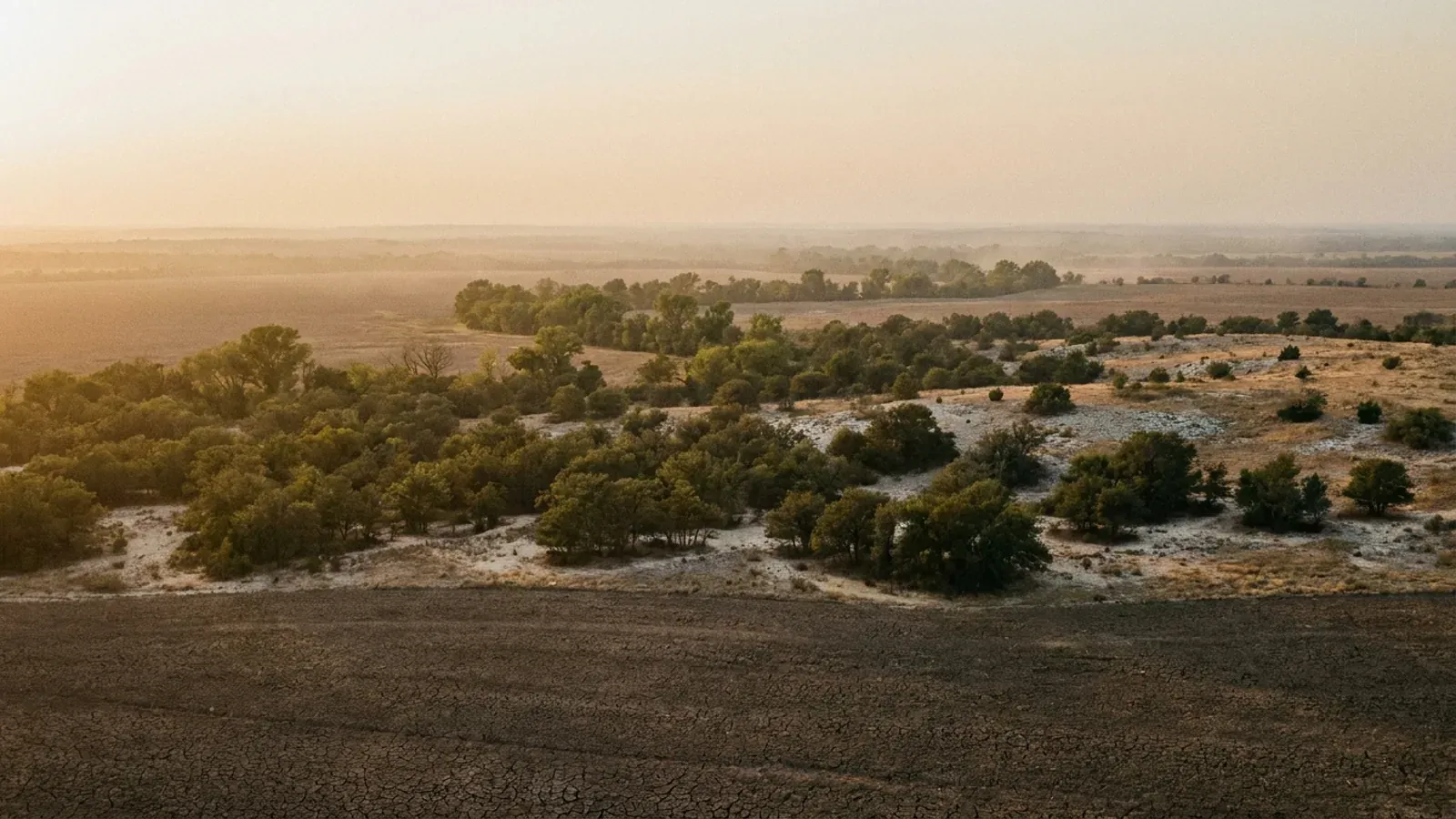
Brazos County is Bryan, College Station and Texas A&M in the middle, with about 473 square miles of open country wrapped around them. Roughly 29,000 people live outside every city limit — about 61 to the square mile against 425 countywide — and that is where the acreage is. The county also did something most Texas counties never did: on 1 September 2009 it adopted the 2003 International Residential Code and the 2002 National Electrical Code for its unincorporated area. That still means no county building permit, no county fee, no county inspector and no zoning. What actually gates a build here is the septic permit from the Brazos County Health District and the floodplain development permit from Road and Bridge — and you deal with the floodplain office whether or not your land is in the floodplain.
Brazos County at a glance
- County
- Brazos County
- Population
- 249,088
- Where we build
- Bryan, College Station, Grimes County
- Site visits
- On-site visits across Brazos County, Bryan and the land beyond it
ZIPs 77801, 77802, 77803, 77807, 77808, 77840, 77843, 77845 and more
Building conditions in Brazos County
What actually changes from one Texas jurisdiction to the next: who issues the permit, whether the residential code is enforced there at all, what the structure has to be engineered to, and what the ground is like. These are the numbers your drawings have to satisfy.
Brazos County Road and Bridge Department, Verification Letter — Building Codes, Certificates of Occupancy, and Zoning Ordinances, published at brazoscountytx.gov/DocumentCenter/View/1330 and linked from the county's Land Development page; Brazos County FAQ, Road & Bridge, brazoscountytx.gov/faq.aspx?qid=98; Texas Local Government Code Secs. 233.153, 233.154
Brazos County Floodplain Development Permit Application, Road and Bridge Department form 53, brazoscountytx.gov/FormCenter/Road-and-Bridge-Department-2/FLOODPLAIN-DEVELOPMENT-APPLICATION-53; Brazos County Floodplain page, brazoscountytx.gov/264/Floodplain
Order Adopting Rules of Brazos County, Texas for On-Site Sewage Facilities, Sec. 10(B), adopted 12 June 2001 and amended 11 September 2007, published by the Brazos County Health District at health.brazoscountytx.gov/wp-content/uploads/2025/11/OnsiteSewageFacility_Order_BrazosCounty-accessible.pdf; TCEQ 2023 amendment preamble to 30 TAC Sec. 285.3(f)(2)
Brazos County Health District, On-Site Sewage Facility Permit Application, revised 9 September 2025, health.brazoscountytx.gov/wp-content/uploads/2025/11/OSSF-Application-2025-09-10-fillable-accessible.pdf; Order Adopting Rules of Brazos County, Texas for On-Site Sewage Facilities, Sec. 10; 30 TAC Sec. 285.91 Table III
USDA-NRCS Soil Data Access, SSURGO survey area TX041 (Brazos County) — laoverlap MLRA records and chorizon representative values queried 1 September 2026 at sdmdataaccess.sc.egov.usda.gov; NRCS Official Series Descriptions for ZACK, KURTEN, BOONVILLE and TABOR at soilseries.sc.egov.usda.gov; Texas Occupations Code Sec. 1001.056(c)(2)
U.S. Census Bureau Vintage 2025 population estimates, sub-est2025.csv and co-est2025-alldata.csv (Brazos County 249,088; Balance of Brazos County 28,997 against 28,759 in 2020); 2025 Census Gazetteer county and place files for Texas (Brazos County 586.15 sq mi land; Bryan 55.728; College Station 51.160; Kurten 4.553; Wixon Valley 1.794)
Also worth knowing before you build in Brazos County
- You need the floodplain office even when you are not in the floodplain
- The Brazos County Health District's own instructions for getting a septic permit say a flood plain development permit "must be included with planning materials when application for any new construction is made", and the submission checklist spells out the alternative: a complete copy of the floodplain permit from Brazos County Road and Bridge, or a letter from that same department exempting you from the requirement, or a letter exempting you from connecting to sewer from Bryan or College Station. There is no fourth option. Whether your land is in a Special Flood Hazard Area or nowhere near one, you leave the Road and Bridge office holding a piece of paper before the septic permit moves. The office asks for an appointment and is closed on Fridays.
- One acre for a septic system — or an engineer's stamp instead
- Section 10(D) of the county's septic order sets the minimum lot for any on-site sewage facility installed after the order at "at least one acre in size or the application for a license for such system must be accompanied by a site-specific plan stamped by a registered professional engineer or professional sanitarian." The state floor under 30 TAC Section 285.4(a)(1) is half an acre on a public water supply and one acre on a private well, so Brazos doubles it for anyone on public water. But the "or" is doing real work: a sub-acre tract is a stamped-design problem here, not an automatic refusal. Two other local rules bite on area — a drainage easement inside a platted lot "shall not count toward the minimum Lot size for OSSF permitting purposes", and cluster systems are simply not permitted.
- No certificate of occupancy — and it is still unlawful to move in without a permit
- The county's verification letter states flatly that "The County does not issue certificates of occupancy." Its Flood Damage Prevention Ordinance, in Article 4 Section C(4), says something that sounds like the opposite and is not: "It shall be unlawful to use, occupy or permit the use or occupancy of any building, development, or premises or part thereof hereafter created, erected, changed, converted, altered, or enlarged in its use or structure until a Floodplain Development Permit has been issued by the Floodplain Administrator stating that the use of the development conforms to the requirements of this court order." No building inspector ever looks at the house. The floodplain permit is what stands between finishing it and lawfully living in it.
- The flood ordinance cites Water Code Section 16.315, and asks for two feet of freeboard
- Article I of the Brazos County Flood Damage Prevention Ordinance opens: "The Legislature of the State of Texas has in the Flood Control Insurance Act, Texas Water Code, Section 16.315, delegated the responsibility of local governmental units to adopt regulations designed to minimize flood losses." Article 5 Section A(5) then sets the standard: "All new construction or substantial improvements shall be constructed with a Freeboard height of two (2) feet." Section A(8) adds that on-site waste disposal systems must be sited to avoid impairment or contamination during flooding, which is where the septic and floodplain rules meet. A development permit is good for two years and lapses automatically if the work is unfinished.
- Skipping the plat does not cost you the address or the septic permit here
- Article 3 Section B of the Brazos County Subdivision Regulations tracks the state platting exemptions in Local Government Code Section 232.0015: agricultural, farm, ranch, wildlife-management or timber use; four or fewer parts all going to relatives within the third degree; all lots over ten acres; Veterans Land Board sales; and a few others. Section C then says what taking one of those exemptions still leaves you with: "The applicable portions of the County's current Regulations and Development permit procedures including but not limited to rules for driveway permits, OSSF, Floodplain hazard management, and 9-1-1 addressing." Some Texas counties make an exempt split ineligible for an emergency address or a septic permit outright. Brazos does the opposite — the exemption relieves you of the plat and of nothing else.
- Published septic fees, and the county clerk step people forget
- The Brazos County Health District publishes its environmental health fees: a new residential on-site sewage facility application is $445, a new commercial one $570, a modification or repair $100, a re-inspection $100, a subdivision review $25, and there is a $100 expedite fee for a guaranteed review within three business days. Transfer of ownership as a name change is free. If the system includes an aerobic treatment unit, an affidavit acknowledging a permanent service contract must be signed, notarised and filed with the Brazos County Clerk before the application goes in, and the clerk charges $26 to file it. Materials are reviewed within thirty days, and the licence to operate — which the district describes as approval to occupy the home — is posted within seven business days of the final inspection passing.
- Every address in the county except one goes through the Health District
- TCEQ's authorised agent register lists two records for Brazos County: the Brazos County authorised agent, serving the "entire County except City of Wixon Valley", and TCEQ Region 9 in Waco, which picks up what is left. The Health District says the same in its own words: "ALL OSSF IN BRAZOS COUNTY (WITH EXCEPTION OF THOSE WITHIN THE CITY LIMITS OF WIXON VALLEY) MUST BE PERMITTED THROUGH THE BRAZOS COUNTY HEATH DISTRICT." The septic order explains how a county agent ends up covering the cities too — its rules reach every area of the county except incorporated cities, and then extend to "those incorporated cities that have executed intergovernmental contracts with Brazos County." College Station confirms its side of that in its own unified development ordinance, which requires an OSSF to meet the Health District's requirements and a district permit to build one. The order also names the district as the county's Designated Representative for enforcement, and makes fees payable to it while the Commissioners Court sets them.
- Even an exempt well gets registered
- Groundwater in Brazos County is under the Brazos Valley Groundwater Conservation District, which covers Brazos and Robertson counties. The district classes as exempt any well used solely for domestic or livestock use that is drilled, completed or equipped so that it cannot produce more than 50,000 gallons a day — and anything used for another purpose that cannot produce more than 25,000 gallons a day. Exempt does not mean invisible: "Drill or Register an Exempt well" is one of the district's own permit applications, alongside a pump installation report, an ownership transfer form for exempt wells and an exempt well variance request. Anyone putting a barndominium on acreage without a public water connection deals with this district, not with the county.
- Brazos County has no fire code — and is about 900 people short of being able to have one
- Local Government Code Section 233.061 lets a commissioners court adopt a fire code only in a county with a population over 250,000, or one adjacent to such a county. Brazos County's Vintage 2025 population estimate is 249,088, and its neighbours are all small rural counties. The county's own consultants put it plainly in a report to the Commissioners Court: "Based on population growth, Brazos County will soon reach the statutory threshold for being able to appoint a Fire Marshal and adopt a Fire Code." So the arrangement some Texas counties have — where renting a house out routes it through a commercial office and a fire marshal enforcing a commercial code — does not exist here. What letting does cost you is the Section 233.157(c) defence, which is only available to an owner who intends the building as their own primary residence.
- Two extraterritorial jurisdictions cover a lot of the middle of the county
- College Station's Vintage 2025 population of 127,472 puts it over the 100,000 mark, so under Local Government Code Section 42.021(a) its extraterritorial jurisdiction reaches five miles beyond the city limits. Bryan at 91,996 falls in the 50,000 to 99,999 band and reaches three and a half miles. Between them that is a wide ring around two adjoining cities in the middle of a 586-square-mile county, and the county's own verification letter tells you to check with the city for anything inside it. A city cannot zone in its extraterritorial jurisdiction — Section 212.003(a) bars it — but it can regulate platting, street and drainage specifications, and, where it has opted in, require a development plat before any new construction.
Brazos County Health District, How To Obtain An OSSF Permit In Brazos County, revised 1 September 2025, items 2 and the Submission Requirements checklist, health.brazoscountytx.gov/wp-content/uploads/2025/11/Obtain-OSSF-PERMIT-2025-09-10-accessible.pdf
Order Adopting Rules of Brazos County, Texas for On-Site Sewage Facilities, Secs. 10(D) and 10(F); Brazos County Subdivision Regulations effective 5 July 2016, Art. 7 Sec. H(4), brazoscountytx.gov/DocumentCenter/View/2045; 30 TAC Sec. 285.4(a)(1)
Brazos County Road and Bridge Department verification letter; Brazos County Flood Damage Prevention Ordinance, Art. 4 Sec. C(4), as amended by the Commissioners Court on 9 August 2022, brazoscountytx.gov/DocumentCenter/Home/View/897
Brazos County Flood Damage Prevention Ordinance, Art. I Sec. A, Art. 4 Sec. C(2)(j) and Art. 5 Secs. A(5) and A(8), amended by the Commissioners Court 9 August 2022, brazoscountytx.gov/DocumentCenter/Home/View/897
Brazos County Subdivision Regulations effective 5 July 2016, Art. 3 Secs. B, C and D, brazoscountytx.gov/DocumentCenter/View/2045; Texas Local Government Code Sec. 232.0015
Brazos County Health District Environmental Health Services fee schedule, revised August 2025, health.brazoscountytx.gov/wp-content/uploads/2025/09/EH-Fee-Schedule-9-18-2025-2-accessible.pdf; How To Obtain An OSSF Permit In Brazos County, revised 1 September 2025, items 3, 6 and 7
TCEQ On-Site Sewage Facility authorized agent search, county code 21, run 1 September 2026 at www6.tceq.texas.gov/oars; Brazos County Health District, How To Obtain An OSSF Permit In Brazos County, revised 1 September 2025; Order Adopting Rules of Brazos County, Texas for On-Site Sewage Facilities, Secs. 6, 11 and 12; City of College Station, On-Site Sewage Facilities page citing Appendix A: UDO, Article 8, Section 4, cstx.gov/business-development/engineering/on-site-sewage-facilities
Brazos Valley Groundwater Conservation District, Permits & Affidavits page, brazosvalleygcd.org/permits-fees/, read 1 September 2026
Freese and Nichols, Inc., Brazos County Subdivision Regulations Diagnostic Report, final 18 November 2024, brazoscountytx.gov/DocumentCenter/View/5359; Texas Local Government Code Secs. 233.061 and 233.157(c); U.S. Census Bureau Vintage 2025 population estimates
U.S. Census Bureau Vintage 2025 population estimates; Texas Local Government Code Secs. 42.021(a), 212.003(a) and 212.041–212.049; Brazos County Road and Bridge Department verification letter
The expensive surprises are in the ground, not the building
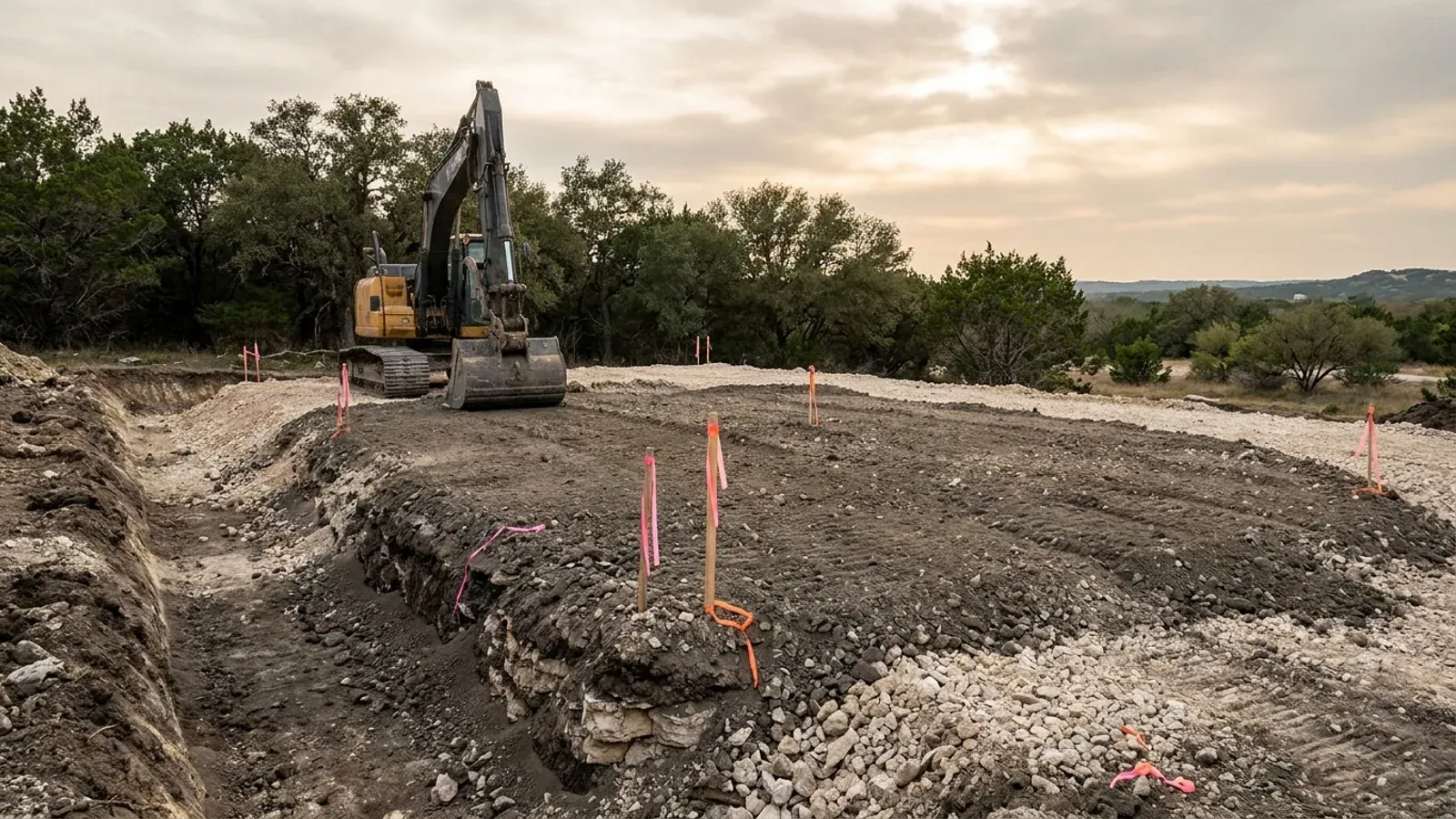
What moves a Texas budget is usually below grade, and it is soil rather than rock: shrink-swell clay. The Blackland Prairie and the Gulf Coast clays move enough between a wet season and a dry one to drive the foundation design across the state's largest markets, which is why several DFW cities require an engineer's seal on the foundation of every new house. Those are the same conditions that decide whether a septic field passes its soil and site evaluation, so the grading plan, the foundation and the drainfield get resolved together rather than one at a time. We price the dirt before we price the building.
What we build in Brazos County
All nine of our services — kits, custom plans, post-frame and steel construction, site preparation, permitting and engineering, through to turnkey builds — are available across Brazos County. What a project costs depends far more on the parcel than on square footage, so we work from your land rather than from a rate card.
See what we buildWhat a build looks like
Three stages every Brazos County project passes through, from a raw parcel to a finished home. Site work first, because that is where the budget is decided.
The parcel
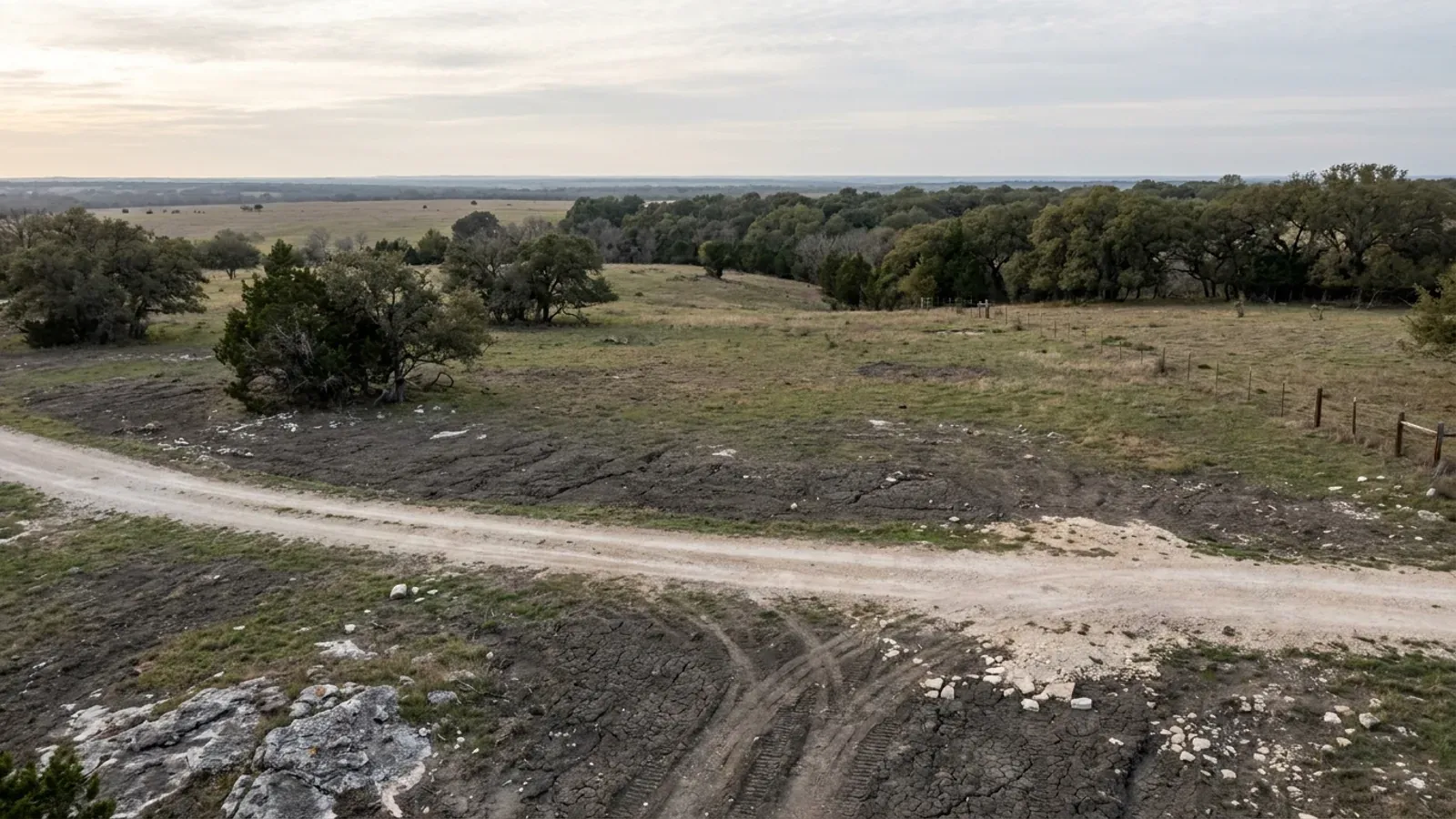
Zoning, setbacks, flood zone and utility access get checked before anything is drawn.
Pad and permit
Clearing, grading and a compacted pad, while the submittal works through Brazos County.
Frame to finish
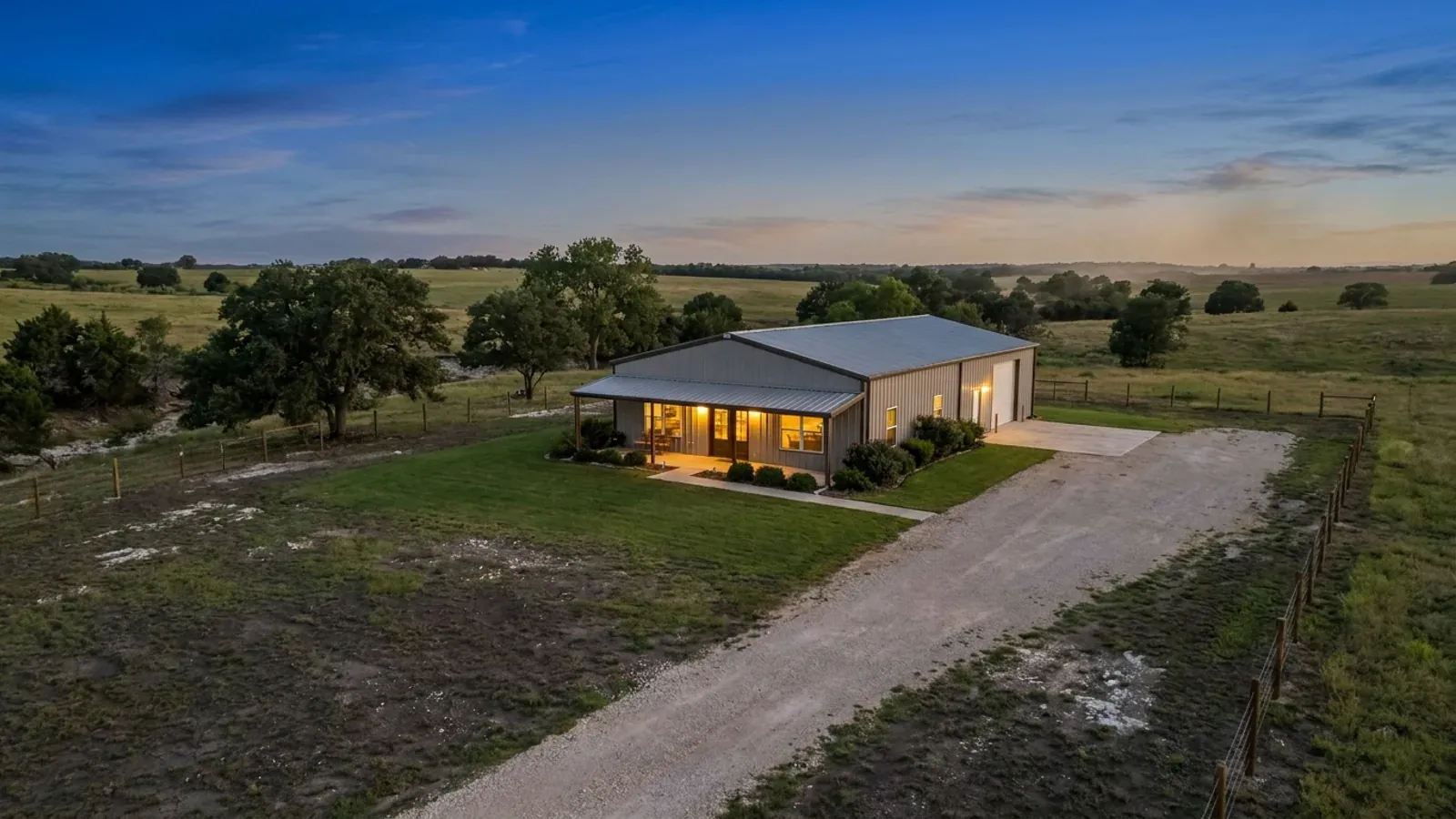
Shell erected and dried in, then systems, insulation and interior finish through to CO.
Those are the rules for Brazos County. Tell us what you want to build and we will draw it to them.
Where we build around Brazos County
Brazos County and the rural land around it. The buildable acreage for a project this size usually sits outside the city limits, which is frequently what changes who issues your permit.
Keep reading
The questions that usually come next once you know what Brazos County allows.
Barndominium Cost Guide
Sourced per-square-foot ranges by tier and by size, with a calculator built on the same figures.
Read itIs It Legal in Texas?
Classification, zoning, the HOA gate, and why "nonresidential farm building" does not cover a home.
Read itHow Long Does It Take?
Census build-duration data, and what actually sets the permit clock where you are building.
Read itNearby areas we build in
Others we cover in this part of Texas. The permitting authority, the adopted design criteria and the zoning can all differ from one to the next.
Building in Brazos County: common questions
8 questions we get asked most often about building in Brazos County. If yours is not on the list, ask it directly.
Does Brazos County require a building permit for a barndominium?
Do I need a floodplain permit if my land is not in the floodplain?
I want to rent the barndominium out. Does that change anything in Brazos County?
How big does the lot have to be for a septic system in Brazos County?
Does my shop bay count against the septic system size?
What is the ground like in Brazos County, and will I need an engineered foundation?
If I split off a few acres for family, do I have to plat it?
Where is the acreage in Brazos County, given how much of it is Bryan and College Station?
Building in Brazos County?
Start with the plan. Tell us what you want to build and we will draw it, then confirm what Brazos County will actually let you put on the parcel and what wind load it has to meet. That conversation costs nothing.