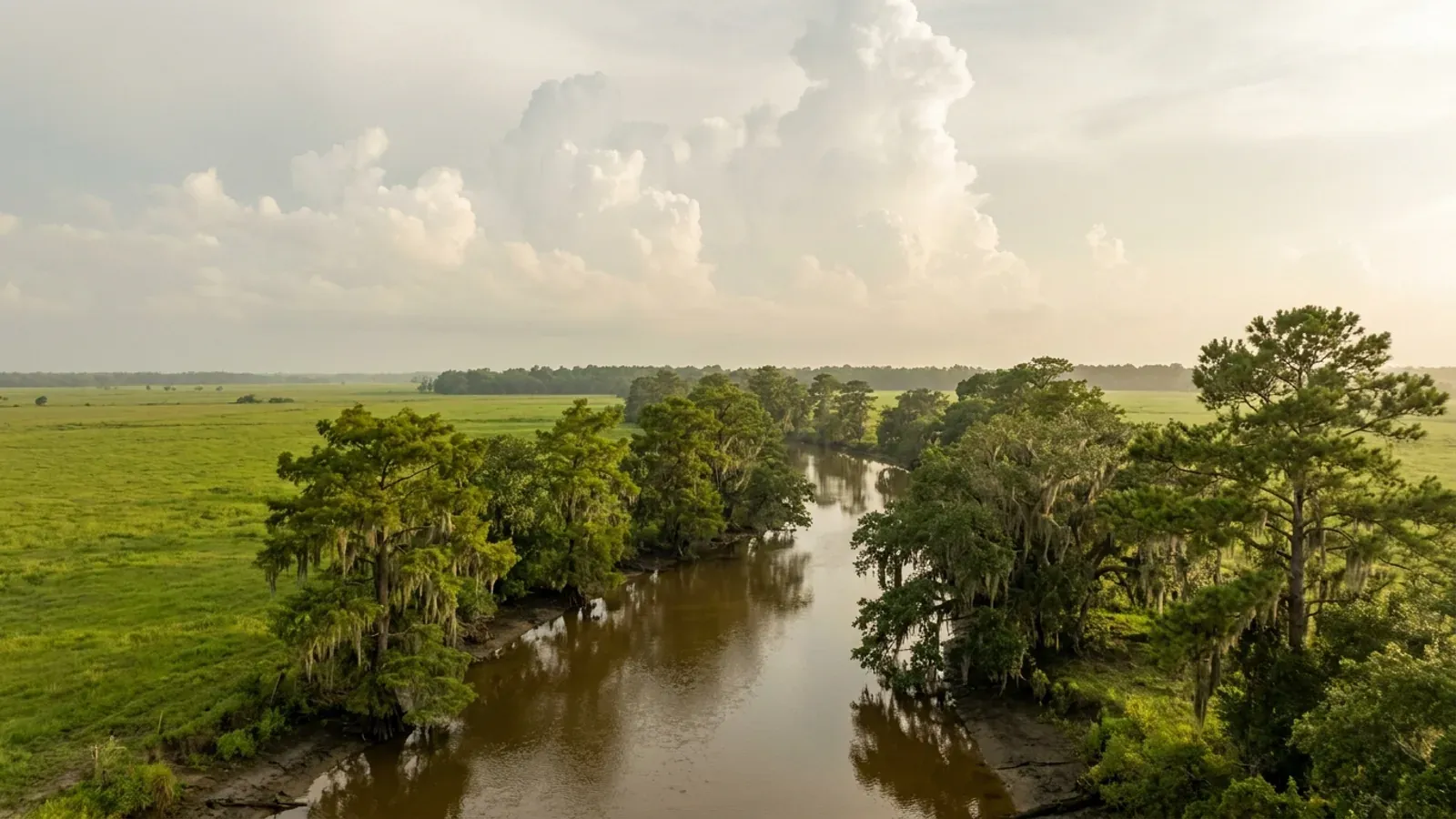
Barndominium Builders in Conroe, TX
Conroe is the one place in our Houston service area where the land question has a yes in it. The city grew past 119,000 while Montgomery County passed 781,000, and that growth is running north and east into open Piney Woods acreage rather than filling in the last quarter-acre lots. Three different rule sets sit within a few miles of each other. Inside the city limits Conroe runs an adopted residential code with permits, plan review and inspections, but no zoning ordinance at all. Its five-mile extraterritorial jurisdiction is a platting regime, not a building-code one. And in unincorporated Montgomery County the Permit Department states in writing that building codes are not enforced on single-family homes, which leaves septic, floodplain and the licensed trades doing the work instead. Which of the three your tract falls in changes the whole sequence, and it is the first thing to settle.
Conroe at a glance
- County
- Montgomery County
- Population
- 119,564
- Where we build
- Conroe, Montgomery County, Houston, Liberty County
- Site visits
- Site visits arranged across Conroe and out into Montgomery County
ZIPs 77301, 77302, 77303, 77304, 77306, 77384, 77385
Building conditions in Conroe
What actually changes from one Texas jurisdiction to the next: who issues the permit, whether the residential code is enforced there at all, what the structure has to be engineered to, and what the ground is like. These are the numbers your drawings have to satisfy.
City of Conroe Code of Ordinances Ch. 14, Art. II, Div. 2, Secs. 14-61 and 14-62, and the City of Conroe Adopted Codes sheet published by Building Inspections and Permits
City of Conroe, Land Use & Area Plans, Community Development / Planning, and the Building Inspections and Permits FAQ
Montgomery County Permit Department letter, Building Codes/Fire Codes/Zoning in Unincorporated Areas of Montgomery County, signed T. Scott Nichols, Director, revised 14 May 2025
City of Conroe Code of Ordinances Sec. 14-62 amending IRC R403.1.7.3, and the Montgomery County Environmental Health permitting FAQ
U.S. Census Bureau, Vintage 2025 sub-county and county population estimates (sub-est2025 and co-est2025-alldata)
Montgomery County Environmental Health Services OSSF pages and Permitting Fee Schedule effective 2 June 2025, and the TCEQ order authorising Montgomery County to implement its own OSSF order
Also worth knowing before you build in Conroe
- What the city permit costs
- Conroe charges residential building permit fees on the total square footage of the building area or work area at $0.64 per square foot, plus a non-refundable plan review fee of $0.32 per square foot covering the first three submittals. The certificate of occupancy for new construction is included with the construction permit.
- No impact fees
- Conroe's Building Inspections and Permits FAQ states that the city does not have any impact fees at this time. Water and sewer tap fees are charged separately under Appendix A, starting at $1,875 for a three-quarter-inch water tap and $1,875 for a four-inch sewer tap.
- Climate zone does not depend on the edition
- Montgomery County sits in climate zone 2A on both the pre-2021 and the 2021 climate maps, so the insulation basis is the same whichever code edition is being quoted. Conroe adopts the energy efficiency chapter of the IRC as it existed on 1 May 2015 for single-family construction.
- The county permit that does exist
- A development permit is required for all proposed development in unincorporated Montgomery County, including clearing, grading and filling as well as buildings. A new residential structure over 200 square feet outside the floodplain is $200, or $300 inside it, and the permit expires 180 days after it enters the county system. There are no county final inspections on a home built outside the floodplain.
- The five-mile ring around the city
- Conroe is over 100,000 people, so its extraterritorial jurisdiction reaches five miles beyond the city limits under Local Government Code Sec. 42.021. Texas courts have held that a city cannot enforce its building codes out there, in Town of Lakewood Village v. Bizios and Collin County v. City of McKinney, but the McKinney court confirmed in the same breath that a city can require a landowner to plat. So the ETJ is a platting regime, not a building-code one.
- Licensed trades, in the city ordinance itself
- Conroe writes the trades into its own code: Sec. 14-62 adds P2501.3 requiring all plumbing work to be done under the supervision of a master plumber licensed by the State of Texas, and M1401.5 requiring all air conditioning and heating work to be supervised by a state-licensed air conditioning contractor. The plumbing requirement carries onto rural land too, because the Occupations Code rural exemption expressly excludes plumbing done in conjunction with new construction.
- Trees are a permit item here
- Piney Woods ground comes with a clearing ordinance. Conroe charges $25 per lot for residential lot clearing, $200 per tree for a protected tree removal permit and $250 for a forest management permit, and the city asks that the Permit Department be called before a site is cleared or altered.
- Foundations are decided by the soil test, not by the city
- Conroe does not amend IRC R403.1.8, so the adopted code's expansive-soil provisions apply as written and hand a slab on expansive soil to an engineer. Unlike Arlington, Conroe does not require an engineered foundation on every new home, so the trigger here is what the soil report says about the particular tract rather than a blanket city rule.
City of Conroe Code of Ordinances, Appendix A Fee Schedule, Chapter 14 Buildings and Building Regulations, as amended by Ord. No. 2756-25, 13 November 2025
City of Conroe Building Inspections and Permits FAQ, and Code of Ordinances Appendix A Fee Schedule, Chapter 70 Utilities, Sec. 70-74
City of Conroe Code of Ordinances Sec. 14-41 (Ord. No. 2343-16, 13 October 2016), with the IRC and IECC county climate zone tables, on which Montgomery County reads 2A on both the pre-2021 and the 2021 maps
Montgomery County Environmental Health permitting FAQ and Residential Permitting page, with the Permitting Fee Schedule effective 2 June 2025
Local Government Code Sec. 42.021, Town of Lakewood Village v. Bizios, 493 S.W.3d 527 (Tex. 2016), and Collin County v. City of McKinney, No. 05-17-00546-CV (Tex. App.—Dallas 2018)
City of Conroe Code of Ordinances Sec. 14-62, and Texas Occupations Code Sec. 1301.052
City of Conroe Code of Ordinances Appendix A Fee Schedule, Chapter 102 Vegetation, and the city's Land Use & Area Plans page
City of Conroe Code of Ordinances Ch. 14, Art. II (no amendment to R403.1.8 appears in the article), with Texas Occupations Code Sec. 1001.056(c)(2)
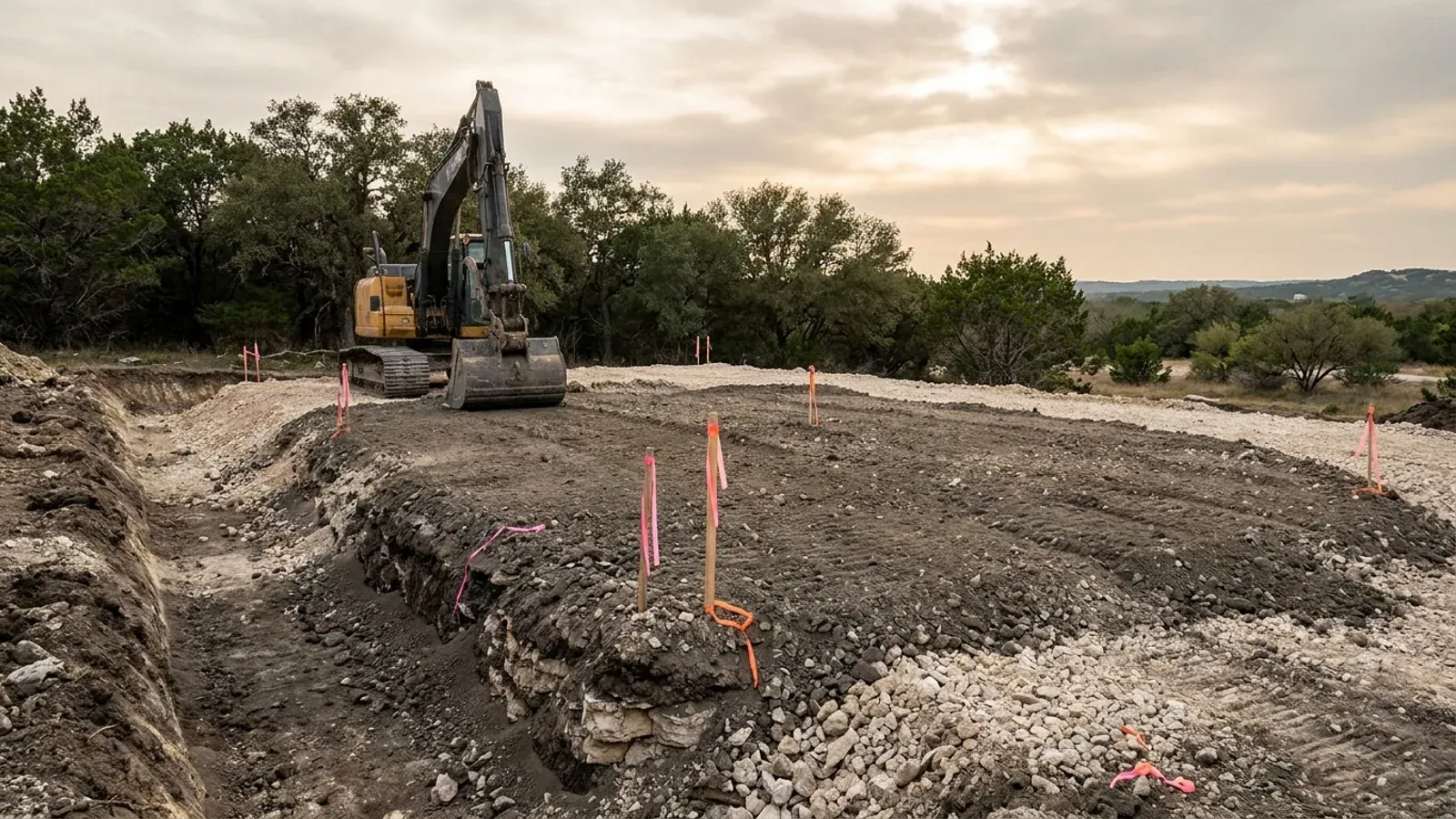
The expensive surprises are in the ground, not the building
What moves a Texas budget is usually below grade, and it is soil rather than rock: shrink-swell clay. The Blackland Prairie and the Gulf Coast clays move enough between a wet season and a dry one to drive the foundation design across the state's largest markets, which is why several DFW cities require an engineer's seal on the foundation of every new house. Those are the same conditions that decide whether a septic field passes its soil and site evaluation, so the grading plan, the foundation and the drainfield get resolved together rather than one at a time. We price the dirt before we price the building.
What we build in Conroe
All nine of our services — kits, custom plans, post-frame and steel construction, site preparation, permitting and engineering, through to turnkey builds — are available across Montgomery County. What a project costs depends far more on the parcel than on square footage, so we work from your land rather than from a rate card.
See what we buildWhat a build looks like
Three stages every Conroe project passes through, from a raw parcel to a finished home. Site work first, because that is where the budget is decided.
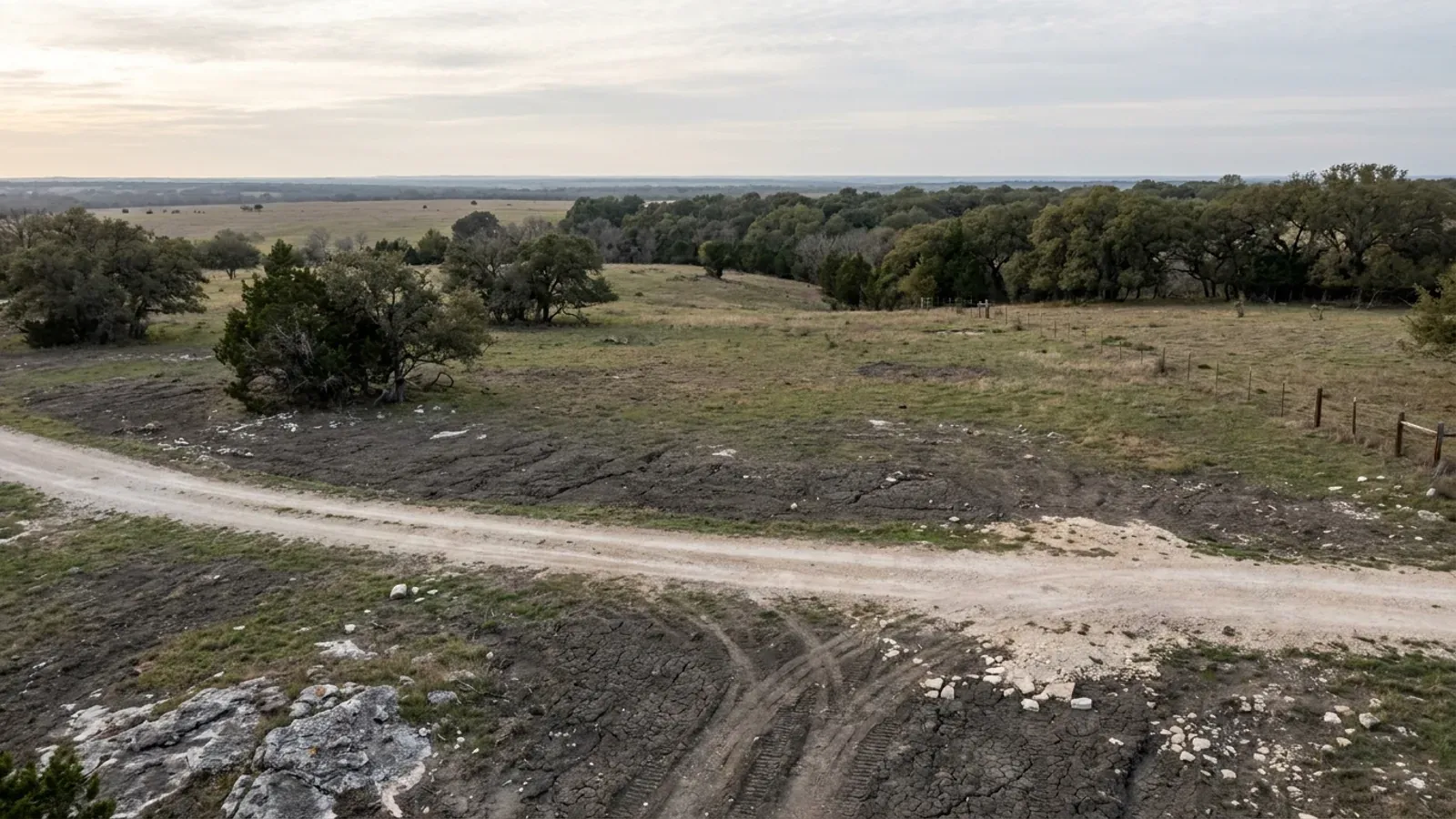
The parcel
Zoning, setbacks, flood zone and utility access get checked before anything is drawn.
Pad and permit
Clearing, grading and a compacted pad, while the submittal works through Montgomery County.
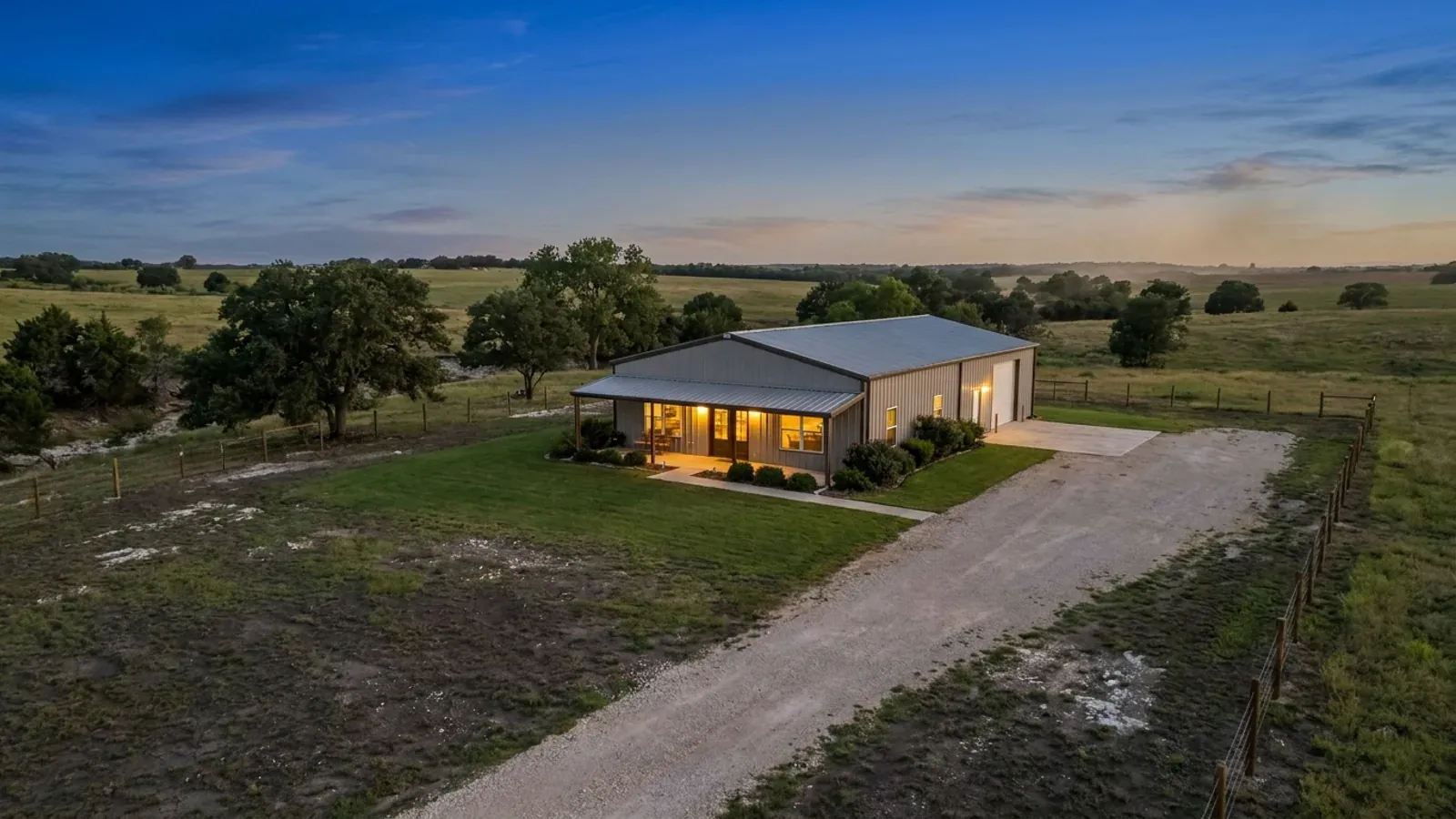
Frame to finish
Shell erected and dried in, then systems, insulation and interior finish through to CO.
Those are the rules for Montgomery County. Tell us what you want to build and we will draw it to them.
Where we build around Conroe
Montgomery County and the rural land around it. The buildable acreage for a project this size usually sits outside the city limits, which is frequently what changes who issues your permit.
Keep reading
The questions that usually come next once you know what Conroe allows.
Barndominium Cost Guide
Sourced per-square-foot ranges by tier and by size, with a calculator built on the same figures.
Read itIs It Legal in Texas?
Classification, zoning, the HOA gate, and why "nonresidential farm building" does not cover a home.
Read itHow Long Does It Take?
Census build-duration data, and what actually sets the permit clock where you are building.
Read itNearby areas we build in
Others we cover in this part of Texas. The permitting authority, the adopted design criteria and the zoning can all differ from one to the next.
Building in Conroe: common questions
8 questions we get asked most often about building in Conroe. If yours is not on the list, ask it directly.
Do I need a building permit for a barndominium near Conroe?
If Montgomery County does not enforce a building code, what still applies?
How does septic sizing work for a barndominium with a big shop?
Conroe has no zoning. Does that mean I can build anything?
How high does the finished floor have to sit?
What design wind speed should the frame be engineered to?
Will the foundation need an engineer?
What does the city charge, and are there impact fees?
Building in Conroe?
Start with the plan. Tell us what you want to build and we will draw it, then confirm what Montgomery County will actually let you put on the parcel and what wind load it has to meet. That conversation costs nothing.