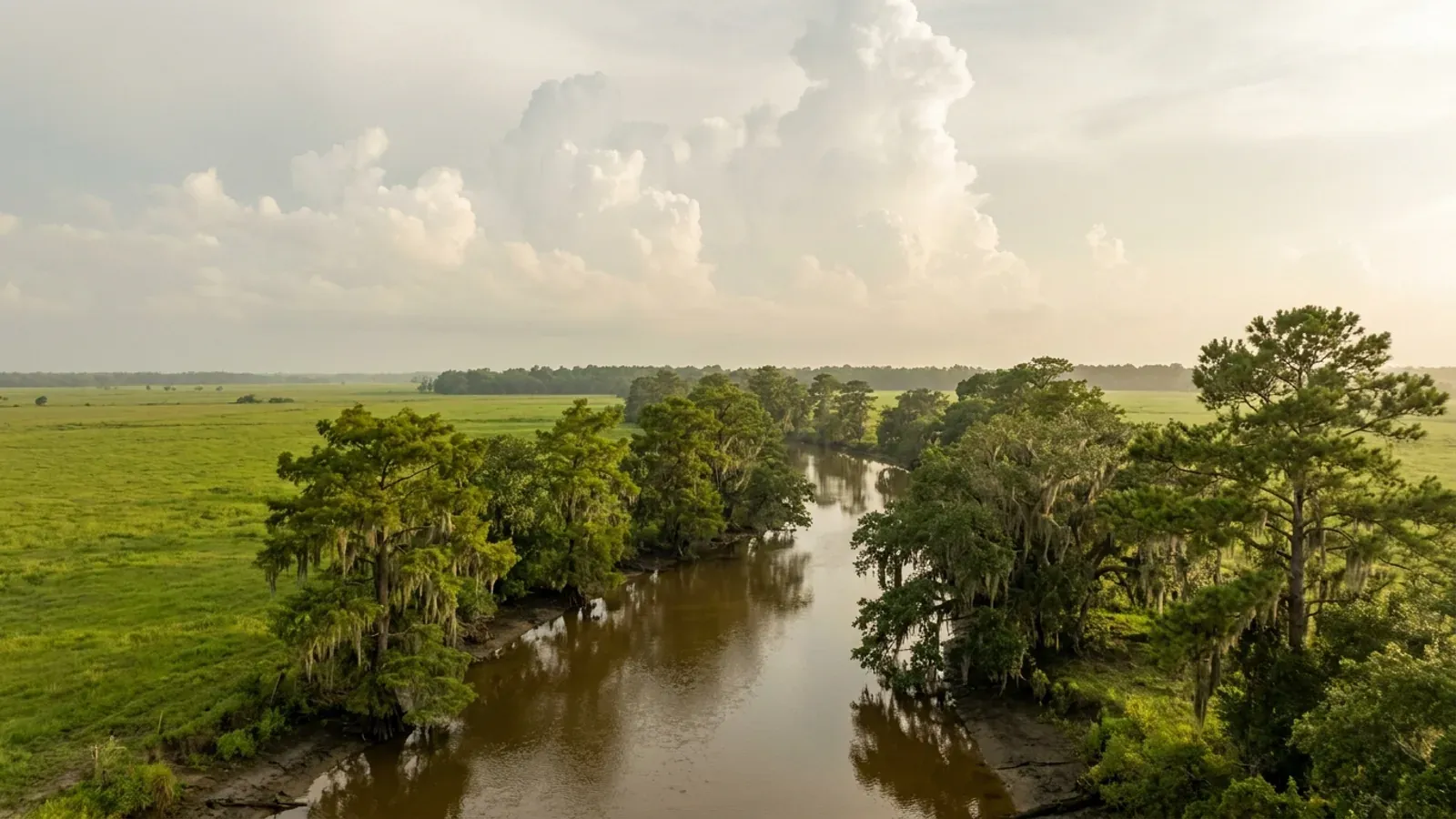
Barndominium Builders in Montgomery County, TX
Montgomery County is the biggest genuine acreage market in the Houston ring, and it is where the lazy version of the Texas story gets corrected. The Permit Department states in its own signed letter that building codes are not enforced for single-family residential structures here, that the county has no zoning, and that it issues no certificates of occupancy. The same letter then lists the permits it does require, and one catches every build: a development permit, $200 for a new residential structure over 200 square feet and $300 in the floodplain, expiring after 180 days. The county says on its own permit pages what that permit is for, and it is not the building. It enforces floodplain regulations under a county court order and FEMA, and nothing structural is reviewed or inspected under it. On the one design number the county does publish it is the stricter of the two jurisdictions here, at two feet above base flood elevation against Conroe's one.
Montgomery County at a glance
- County
- Montgomery County
- Population
- 781,194
- Where we build
- Conroe, Houston, Liberty County, Grimes County
- Site visits
- On-site visits across Montgomery County, Conroe and the land beyond it
ZIPs 77301, 77302, 77303, 77304, 77306, 77316, 77318, 77354 and more
Building conditions in Montgomery County
What actually changes from one Texas jurisdiction to the next: who issues the permit, whether the residential code is enforced there at all, what the structure has to be engineered to, and what the ground is like. These are the numbers your drawings have to satisfy.
Montgomery County Permit Department letter, T. Scott Nichols, Director, revised 14 May 2025
Montgomery County Permitting Fee Schedule effective 2 June 2025, and the county's Residential Permitting page
Montgomery County Permitting, standing notice on each residential permit page, and Montgomery County Flood Plain Management Regulations, Article I Section A
Montgomery County Environmental Health permitting FAQ, and Conroe Code of Ordinances section 14-62, R403.1.7.3(c)
U.S. Census Bureau Vintage 2025 subcounty population estimates, sub-est2025.csv
U.S. Census Bureau Vintage 2025 county population estimates, co-est2025-alldata.csv
Also worth knowing before you build in Montgomery County
- Septic in the floodway is prohibited outright
- Installing a new septic system, or repairing or replacing an existing one, in the floodway is strictly prohibited by the On-Site Sewage Facility Regulations of Montgomery County
- The county's own form separates living area from structure area
- On a shop with nobody living in it the county tells you to enter zero for square footage of living area while still reporting square footage of structure; on a barn it says the two figures are the same
- Anything you rent out is permitted as commercial
- Rental homes, model homes, apartments and any structure used for business purposes must go through the commercial permit office, where a new structure under 5,000 square feet costs $500 rather than $200
- Twelve exemptions, and a house is not one of them
- The county exempts barbed wire fence, limited clearing and fill outside the flood hazard area, storm debris, stored RVs, agricultural maintenance, and fences and swimming pools outside the flood hazard area, but no exemption covers building a dwelling
- No final inspection on a house outside the floodplain
- The county states there are no final inspections on residential homes located outside the floodplain; final inspections are required only for septic and fire code, plus an elevation certificate in or within 100 feet of the flood hazard area
- The Woodlands is not a city
- The county's own jurisdiction test says a city listed on your appraisal district record means that city's jurisdiction, with the exception of The Woodlands Township, whose residents sit in unincorporated county for permitting purposes
- Covenants do the work zoning does elsewhere
- The Woodlands covenants require prior written approval from the Residential Design Review Committee for the placement, construction, alteration or repair of any structure on a lot with an existing single-family dwelling, under neighbourhood criteria that vary street by street
- Septic is the county's own programme
- Montgomery County Environmental Health Services is the TCEQ-authorised agent, under a county order adopted 8 December 2020 that TCEQ found at least equivalent to state standards; the development permit and the septic permit must be pulled together
- No percolation test in Texas
- Texas classifies soil by texture class rather than percolation rate, with loading rates running from Class Ia sandy soils above 0.50 gallons per square foot per day down to Class IV clay at 0.10
- Ten acres does not exempt you
- TCEQ recorded that its old wording had been misinterpreted as meaning single-family dwellings on ten acres or more were exempt from the entirety of chapter 285
- This is not Blackland clay country
- The county's most extensive soil, Conroe loamy fine sand at 77,161 acres, is kaolinitic with a subsoil linear extensibility of 4.5 percent, while 35,327 acres of Woodville are smectitic and Vertic at 50 percent clay and 7.5 percent
- A tenth of the county is forest or reservoir
- 47,609 acres of the Sam Houston National Forest lie in Montgomery County, and Lake Conroe covers about 19,640 acres at its conservation pool of 201 feet, across Montgomery and Walker counties
- No county permit for a roof, a sign or irrigation
- The county requires no residential roof permit and no sign permit, and states that it does not permit or inspect irrigation systems and has no requirement for backflow devices
Montgomery County Floodplain Administration page, citing the county's own OSSF regulations
Montgomery County Permitting, Shop - Residential and Barn permit instruction pages
Montgomery County Residential Permitting page, and the Permitting Fee Schedule effective 2 June 2025
Montgomery County, Section D Exemptions From Development Permits, sheet dated 1 October 2025
Montgomery County Environmental Health permitting FAQ
Montgomery County Environmental Health permitting FAQ, jurisdiction question
The Woodlands Township, Covenant Administration Permitting Process page
TCEQ Order approving the Montgomery County OSSF Order, and the county's Septic Permit - Residential page
30 Texas Administrative Code chapter 285, soil texture class loading rates
TCEQ, stated basis for the 2023 amendment to 30 TAC section 285.3(f)(2)
USDA NRCS Soil Data Access, survey area TX339 Montgomery County
Texas Parks and Wildlife Department Sam Houston National Forest WMA page, and Texas Water Development Board Lake Conroe reservoir page
Montgomery County Environmental Health permitting FAQ
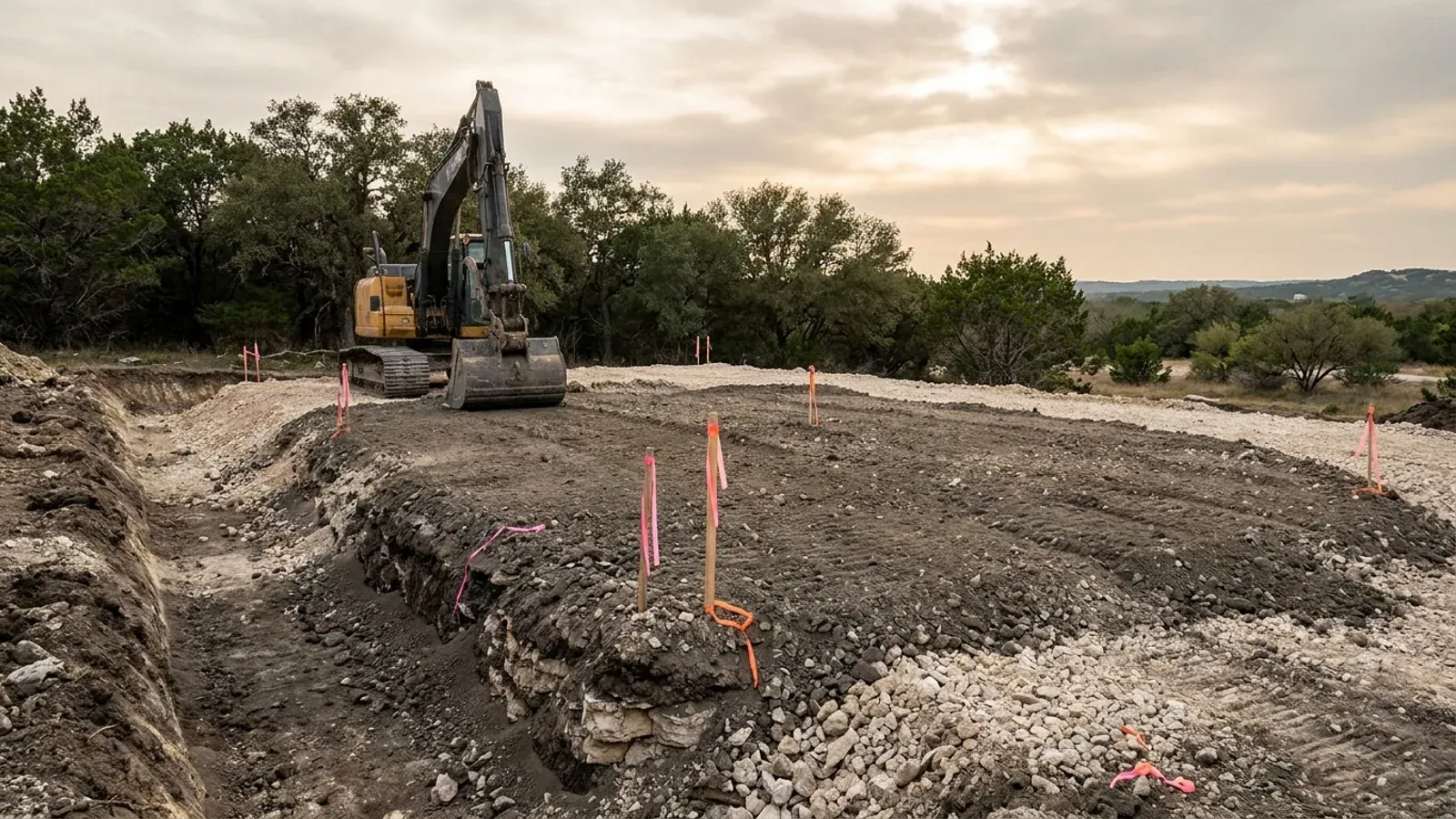
The expensive surprises are in the ground, not the building
What moves a Texas budget is usually below grade, and it is soil rather than rock: shrink-swell clay. The Blackland Prairie and the Gulf Coast clays move enough between a wet season and a dry one to drive the foundation design across the state's largest markets, which is why several DFW cities require an engineer's seal on the foundation of every new house. Those are the same conditions that decide whether a septic field passes its soil and site evaluation, so the grading plan, the foundation and the drainfield get resolved together rather than one at a time. We price the dirt before we price the building.
What we build in Montgomery County
All nine of our services — kits, custom plans, post-frame and steel construction, site preparation, permitting and engineering, through to turnkey builds — are available across Montgomery County. What a project costs depends far more on the parcel than on square footage, so we work from your land rather than from a rate card.
See what we buildWhat a build looks like
Three stages every Montgomery County project passes through, from a raw parcel to a finished home. Site work first, because that is where the budget is decided.
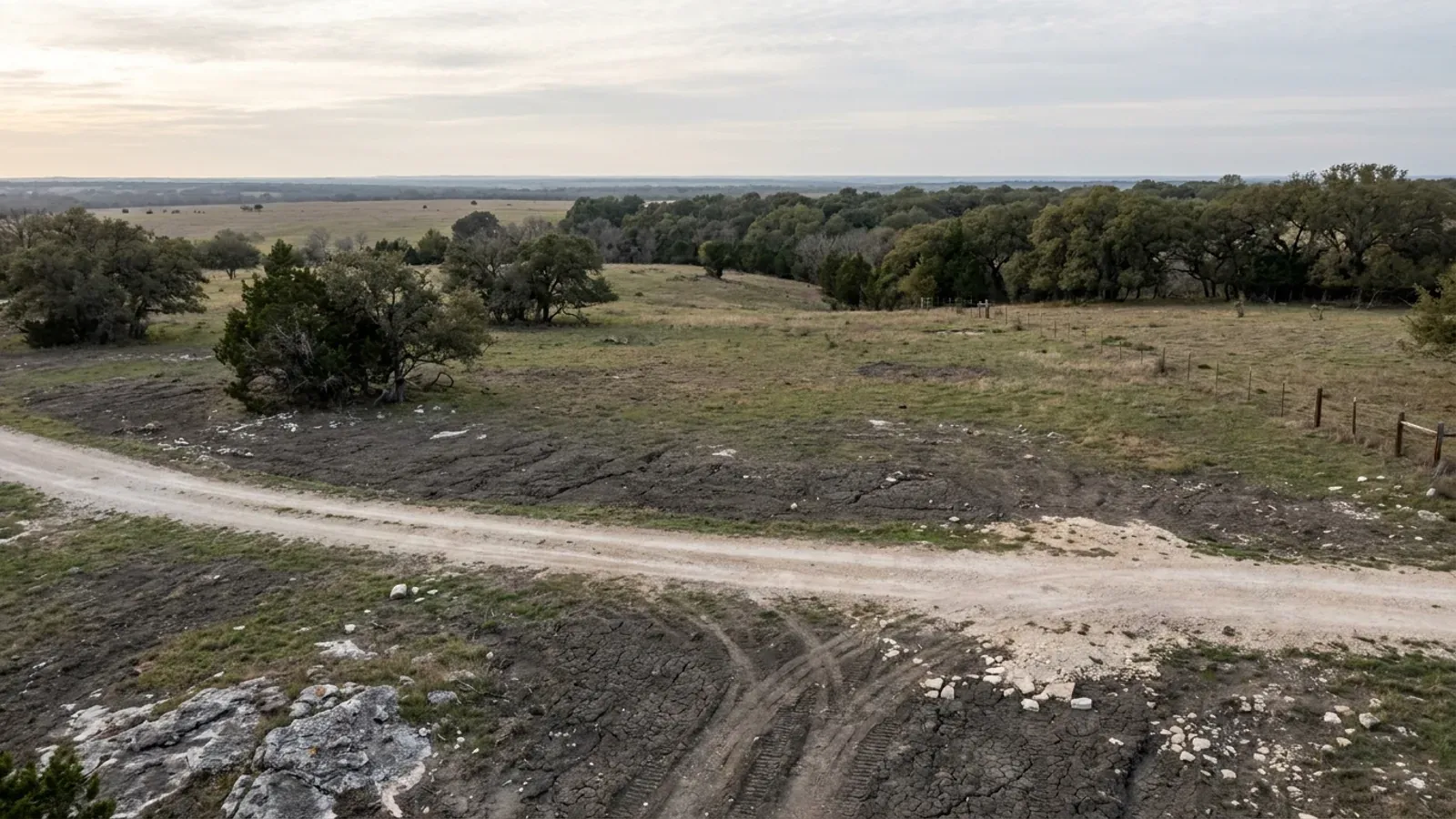
The parcel
Zoning, setbacks, flood zone and utility access get checked before anything is drawn.
Pad and permit
Clearing, grading and a compacted pad, while the submittal works through Montgomery County.
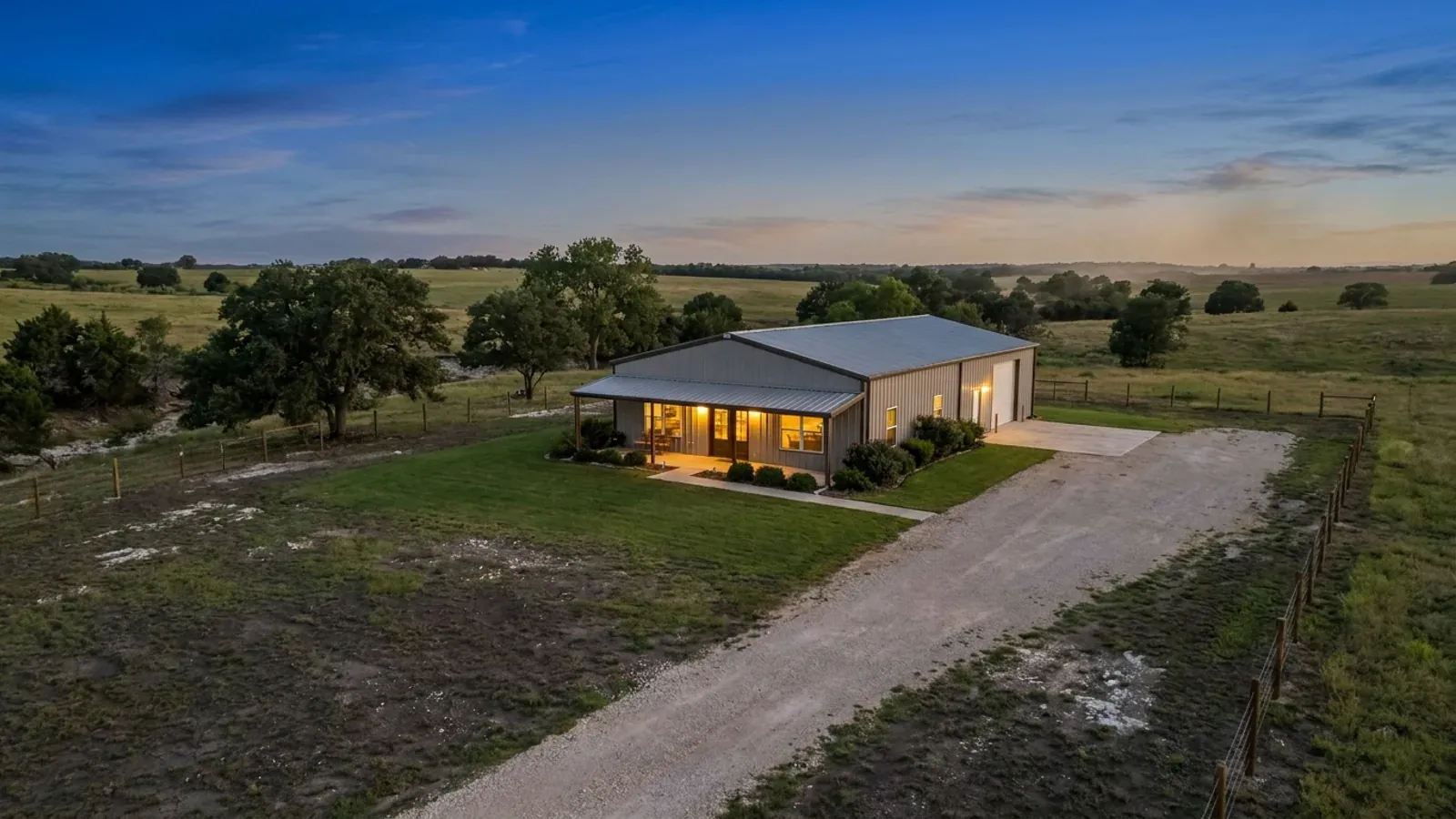
Frame to finish
Shell erected and dried in, then systems, insulation and interior finish through to CO.
Those are the rules for Montgomery County. Tell us what you want to build and we will draw it to them.
Where we build around Montgomery County
Montgomery County and the rural land around it. The buildable acreage for a project this size usually sits outside the city limits, which is frequently what changes who issues your permit.
Keep reading
The questions that usually come next once you know what Montgomery County allows.
Barndominium Cost Guide
Sourced per-square-foot ranges by tier and by size, with a calculator built on the same figures.
Read itIs It Legal in Texas?
Classification, zoning, the HOA gate, and why "nonresidential farm building" does not cover a home.
Read itHow Long Does It Take?
Census build-duration data, and what actually sets the permit clock where you are building.
Read itNearby areas we build in
Others we cover in this part of Texas. The permitting authority, the adopted design criteria and the zoning can all differ from one to the next.
Building in Montgomery County: common questions
12 questions we get asked most often about building in Montgomery County. If yours is not on the list, ask it directly.
Is there a building code on unincorporated land in Montgomery County?
Then why does the county say a permit is required?
What does the development permit cost and how long does it last?
How high does the county make me build in the floodplain?
Will anyone inspect the house?
How is the septic system sized on a barndominium?
Is there land here where septic simply will not work?
Do I need an engineered foundation on Montgomery County soil?
Does the answer change if I rent the building out?
Does any of this change inside a city, or in The Woodlands?
What controls what I can build if there is no zoning?
Where in the county is the buildable acreage?
Building in Montgomery County?
Start with the plan. Tell us what you want to build and we will draw it, then confirm what Montgomery County will actually let you put on the parcel and what wind load it has to meet. That conversation costs nothing.