Barndominium Builders in Lubbock, TX
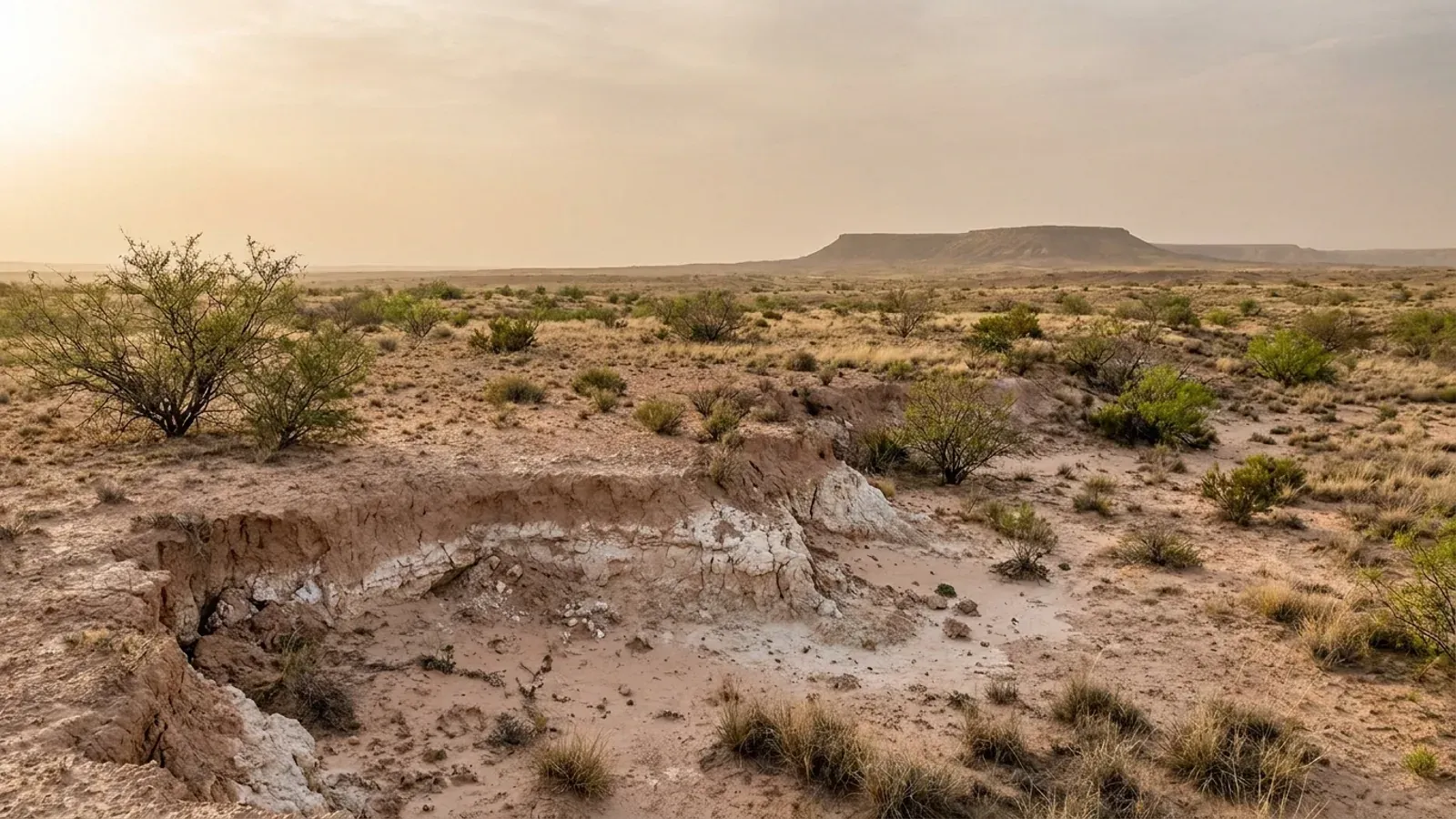
Lubbock is one of the few Texas cities that publishes a filled-in Table R301.2, and that changes what this page can tell you. The city enforces the 2021 International Residential Code, adopted by Ordinance No. 2024-O0029 and amended by Ordinance No. 2025-O0019, and Code section 28.14.004(b) deletes the model table and replaces it: 115 mph design wind speed, 15 psf ground snow load, Seismic Design Category A, a 12-inch frost line, moderate to heavy termite pressure. Those are Lubbock's own numbers, not borrowed ones. The same section deletes the sprinkler requirement at R313, then adds what the model code does not have: a City of Lubbock Residential Foundation Details document pulled in by reference, exterior footings at least 12 inches below undisturbed ground, and a minimum floor elevation measured against the street curb. All of that stops at the city limit. The Unified Development Code reaches the five-mile extraterritorial jurisdiction for subdivision standards and signs only.
Lubbock at a glance
- County
- Lubbock County
- Population
- 273,071
- Where we build
- Lubbock, Lubbock County, Amarillo, Abilene
- Site visits
- We come to the land — the city and the rest of Lubbock County alike
ZIPs 79401, 79403, 79404, 79407, 79410, 79411, 79412, 79413 and more
Building conditions in Lubbock
What actually changes from one Texas jurisdiction to the next: who issues the permit, whether the residential code is enforced there at all, what the structure has to be engineered to, and what the ground is like. These are the numbers your drawings have to satisfy.
City of Lubbock Code of Ordinances sec. 28.14.004(b), adopted by Ordinance No. 2024-O0029 (second reading 26 March 2024); ordinance text read from the city's own PDF at mylubbock.us and cross-checked against the codified article
City of Lubbock Code of Ordinances secs. 28.14.004(a), (i), (l) and (m); Ordinance No. 2024-O0029
City of Lubbock Code of Ordinances secs. 28.05.061 and 28.05.062 (Ordinance No. 2024-O0034, adopted 26 March 2024); Unified Development Code sec. 39.02.020b.3
City of Lubbock Unified Development Code sec. 39.02.020b.3, subsections A, C, D and E (Ordinance No. 2023-O0054, adopted 9 May 2023, effective 1 October 2023)
City of Lubbock Unified Development Code secs. 39.05.013(b)(1) and 39.05.013(b)(2) (Ordinance No. 2023-O0054)
USDA-NRCS Soil Data Access, survey area TX303 Lubbock County, Texas: corestrictions, chorizon and cogeomordesc tables queried 1 September 2026
Also worth knowing before you build in Lubbock
- The city's ETJ reaches subdivision standards and signs, and nothing else
- Unified Development Code section 39.01.003 says all provisions of the code apply within the corporate limits, and that the provisions in Article 39.04 subdivision standards and Division 3.5 signs apply within the extraterritorial jurisdiction, which is currently five miles as defined by state law. That is the same answer Texas courts have given: in Town of Lakewood Village v. Bizios the Supreme Court of Texas held a general-law city has no extraterritorial building-code authority, and in Collin County v. City of McKinney the Dallas Court of Appeals held the same of a home-rule city while confirming a city can require a landowner to plat. Lubbock's five-mile ring follows Local Government Code section 42.021(a) for a municipality of 100,000 or more. Land can also leave an ETJ: the city publishes a release petition form for the Senate Bill 2038 route.
- The permit fee counts the shop bay; the septic rule does not
- Code section 28.05.103(a) charges the residential building permit on gross building area under roof, inclusive of all stories, unheated attached garages, covered porches and balcony areas, and the Building Safety Fee Schedule for the 2025-26 fiscal year prices that at $0.15 per square foot with a $75 minimum permit fee. Detached accessory buildings are charged at the same rate. Septic capacity works the other way: TCEQ's sizing table keys off living area, and its own form asks for bedrooms and living area in square feet, so the shop bay does not enlarge the drainfield the way it enlarges the permit fee. Same building, two regulators, opposite treatment of the same square footage.
- Lubbock has adopted impact fees and collects none of them
- Chapter 41 of the Code of Ordinances took effect on 1 June 2021, adopts the May 2025 impact fee study and its service area maps, puts water and wastewater in a single service area and divides the city into eight roadway service areas. Section 41.02.003 then publishes two columns for every fee: a maximum impact fee and a collection rate. The maximums run from $562 for wastewater and $576 for water on a one-inch meter up to $42,712 and $43,776 on a ten-inch. Every single collection rate cell, across water, wastewater and all eight roadway service areas, reads $0.00. The fees are adopted and the amount actually collected is zero, which is a position a city can revisit at any budget adoption, so it is worth confirming rather than assuming.
- Lubbock County requires a septic permit regardless of acreage, and it says so in its own order
- The ten-acre septic exemption people repeat is not a Texas constant. Lubbock County's Amended Order Adopting Rules for On-Site Sewage Facilities adopts 30 Texas Administrative Code 285.1 to 285.91 and all future amendments, and then states that the county excludes from adoption Section 366.052 of the Texas Health and Safety Code, and that regardless of the acreage a permit is required for all on-site sewage facilities. The order also explains how the city fits in: it applies to all areas in the county except areas within incorporated cities, and to those cities that have executed intergovernmental contracts with the county. TCEQ's authorised agent register lists the City of Lubbock's own designation as administered by Lubbock County, which is what that contract produces.
- The well exemption out here has no acreage test at all
- Lubbock County lies wholly inside High Plains Underground Water Conservation District No. 1, created by petition in 1951 and covering roughly 11,850 square miles. The Water Code's own domestic exemption is conjunctive: more than ten acres and a well incapable of producing more than 25,000 gallons a day. The district's Rule 4.1(b)(1), in rules adopted 14 November 2023 and effective 1 December 2023, exempts a well completed or equipped to produce less than 25,000 gallons a day, or 17.5 gallons a minute, and says nothing about acreage. A district may exempt more than the statutory floor, and this one does. An exempt well is not permitted; the district's Rule 4.2 provides for registering it on a district form. Ring the district before siting a well, because the answer is theirs and not the county's.
- The production limit and the spacing table both start where the exemption stops
- The district's Rule 5.1 says the requirements of Rule 5 apply to all permitted wells, and Rule 5.2(a) sets the maximum allowable production rate for permitted wells at 1.50 acre-feet per contiguous acre per year. Its management plan puts the same point in one sentence: an annual production limit also limits total withdrawals from non-exempt wells. The minimum spacing tables at Rule 4.9(a) are written the same way, for all wells permitted after the rule's enactment, and Table 1 for the Ogallala and Edwards-Trinity aquifer begins at the 17.5 to 70 gallons a minute band, requiring 100 yards from the nearest valid well or proposed well site and 25 yards from the nearest property line. Whether anything below that band is spaced is a question for the district rather than a matter of inference.
- A playa lake on the tract is a plat-designated easement, not a puddle
- Division 5.3 of the Unified Development Code, sections 39.05.017 to 39.05.019, is given over to playa lake development and ownership. It applies to all zoning districts and to all structures and uses on lands containing a playa lake, and states that the city shall not issue approvals or permits without full compliance. Playa lakes must be designated on plats as a stormwater drainage and impoundment easement regardless of who ends up owning them, and shown as a separate lot or tract on the final plat. A facilities maintenance agreement gets filed with the Official Public Records of Lubbock County, the basin is graded to the city's Drainage Criteria Manual, and an erosion control plan goes to the City Engineer. Two of the six freeboard limbs are playa limbs, and one of them is a 500-year standard.
- Metal is not the problem here; the front-facing door is what the ordinance is about
- No masonry percentage and no exterior wall material standard appears in the Unified Development Code's zoning district standards, land use standards or residential building type design standards. What does appear is section 39.03.005a, which requires garage doors on the House building type to be subordinate to the principal facade: either detached and entirely in the rear yard, or extending no more than 50 percent of the principal facade width or 28 feet whichever is greater, or set back at least 10 feet from the principal facade, or oriented perpendicular to the street or away from it. The same subsection caps outbuildings at two stories and 750 square feet of habitable space and sets a nine-foot minimum first floor height. Government Code Chapter 3000 is the statewide backdrop on materials; ask the planning counter and read the recorded restrictions, which Chapter 3000 does not touch.
- Lubbock registers every contractor and publishes what it asks of them
- There is no Texas licence for a residential building contractor. What Lubbock does have is a registration: the Building Safety Fee Schedule lists an annual fee of $65 for all contractors other than mechanical, electrical and plumbing, whose fees the schedule says are waived by state law under Occupations Code sections 1301.551, 1302.304 and 1305.201. The registration period runs 1 January to 31 December, and the schedule states the liability coverage requirement as a $20,000 compliance bond or $100,000 general liability insurance. Fort Worth registers building contractors at $168.75 and Waco registers only the state-licensed trades at no fee, so this varies sharply between Texas cities. It is a checkable thing to ask any builder for before signing.
- There is more Lubbock mailing address than there is City of Lubbock
- The city covers 143.19 square miles of land. The thirteen ZIP code areas that make up the Lubbock postal footprint cover about 459 square miles between them, with ZCTA 79403 alone at 131.34 square miles and 79407, 79415 and 79423 each above 64. That leaves roughly 316 square miles carrying a Lubbock address and sitting outside the city's jurisdiction. Some of it is inside the five-mile extraterritorial jurisdiction, where the city reaches subdivision standards and signs only, and the rest is plain unincorporated Lubbock County. On that ground there is no city building permit, the county's septic order applies without the city contract, and the groundwater district's well rules matter more than either. Establish which side of the line a tract is on before anything else.
- The energy code here is the city's, not the state default, and slab edge insulation is zero
- Health and Safety Code section 388.003(a) puts single-family construction on the IRC energy chapter as it existed on 1 May 2015 where a city has adopted nothing newer. Lubbock has. Code section 28.14.004(ff) deletes IRC Chapter 11 entirely and substitutes the 2021 International Energy Conservation Code as amended, adopted at Article 28.16 by Ordinance No. 2024-O0031. The city then replaces the IECC's own tables with tables headed for Climate Zone 3, giving ceiling R-38, wood frame wall R-13, mass wall R-8 or 13, floor R-19, basement wall R-0 and a slab R-value and depth of zero. On a slab-on-grade barndominium, which is what almost all of them are, that last cell is the one worth knowing.
City of Lubbock Unified Development Code sec. 39.01.003; Texas Local Government Code sec. 42.021(a); Town of Lakewood Village v. Bizios, 493 S.W.3d 527 (Tex. 2016); Collin County v. City of McKinney, No. 05-17-00546-CV (Tex. App.-Dallas 2018)
City of Lubbock Code of Ordinances sec. 28.05.103(a); City of Lubbock Building Safety Fee Schedule, fiscal year 1 October 2025 to 30 September 2026 (Budget Ordinance No. 2024-O0111); 30 Texas Administrative Code ch. 285 Table III and TCEQ form TCEQ-0235
City of Lubbock Code of Ordinances secs. 41.02.001, 41.02.002 and 41.02.003 (Ordinance No. 2020-O0136 adopted 27 October 2020; Ordinance No. 2022-O0068 adopted 26 April 2022; Ordinance No. 2025-O0096 adopted 18 August 2025)
Amended Order Adopting Rules of Lubbock County, Texas for On-Site Sewage Facilities, Lubbock County Clerk vol. 58 pp. 26-29, dated 12 August 2002, secs. 6, 8 and 11; TCEQ OSSF authorised agent register, Lubbock County, county code 152
Rules of the High Plains Water District, adopted 14 November 2023, effective 1 December 2023, Rules 4.1(b)(1), 4.1(d) and 4.2; Texas Water Code sec. 36.117(a) and (b)(1); High Plains UWCD No. 1 Groundwater Management Plan approved by TWDB 6 November 2024
Rules of the High Plains Water District, effective 1 December 2023, Rules 4.9(a) Table 1, 5.1 and 5.2(a); Texas Water Code sec. 36.117(c); High Plains UWCD No. 1 Groundwater Management Plan sec. 6, approved by TWDB 6 November 2024
City of Lubbock Unified Development Code Division 5.3, secs. 39.05.017 to 39.05.019, and sec. 39.05.013(b)(1) (Ordinance No. 2023-O0054, adopted 9 May 2023)
City of Lubbock Unified Development Code sec. 39.03.005a (Ordinance No. 2023-O0054); Texas Government Code secs. 3000.002 and 3000.004
City of Lubbock Building Safety Fee Schedule, fiscal year 1 October 2025 to 30 September 2026, contractor registration fees and information; Texas Occupations Code secs. 1301.551, 1302.304 and 1305.201
US Census Bureau 2024 Gazetteer place file for Texas, GEOID 4845000; US Census Bureau 2024 ZCTA Gazetteer, land area by ZIP Code Tabulation Area; City of Lubbock Unified Development Code sec. 39.01.003
City of Lubbock Code of Ordinances secs. 28.14.004(ff) and 28.16.001, and the replacement Tables R402.1.2 and R402.1.3 in Ordinance No. 2024-O0031 (second reading 26 March 2024); Texas Health and Safety Code sec. 388.003(a)
The expensive surprises are in the ground, not the building
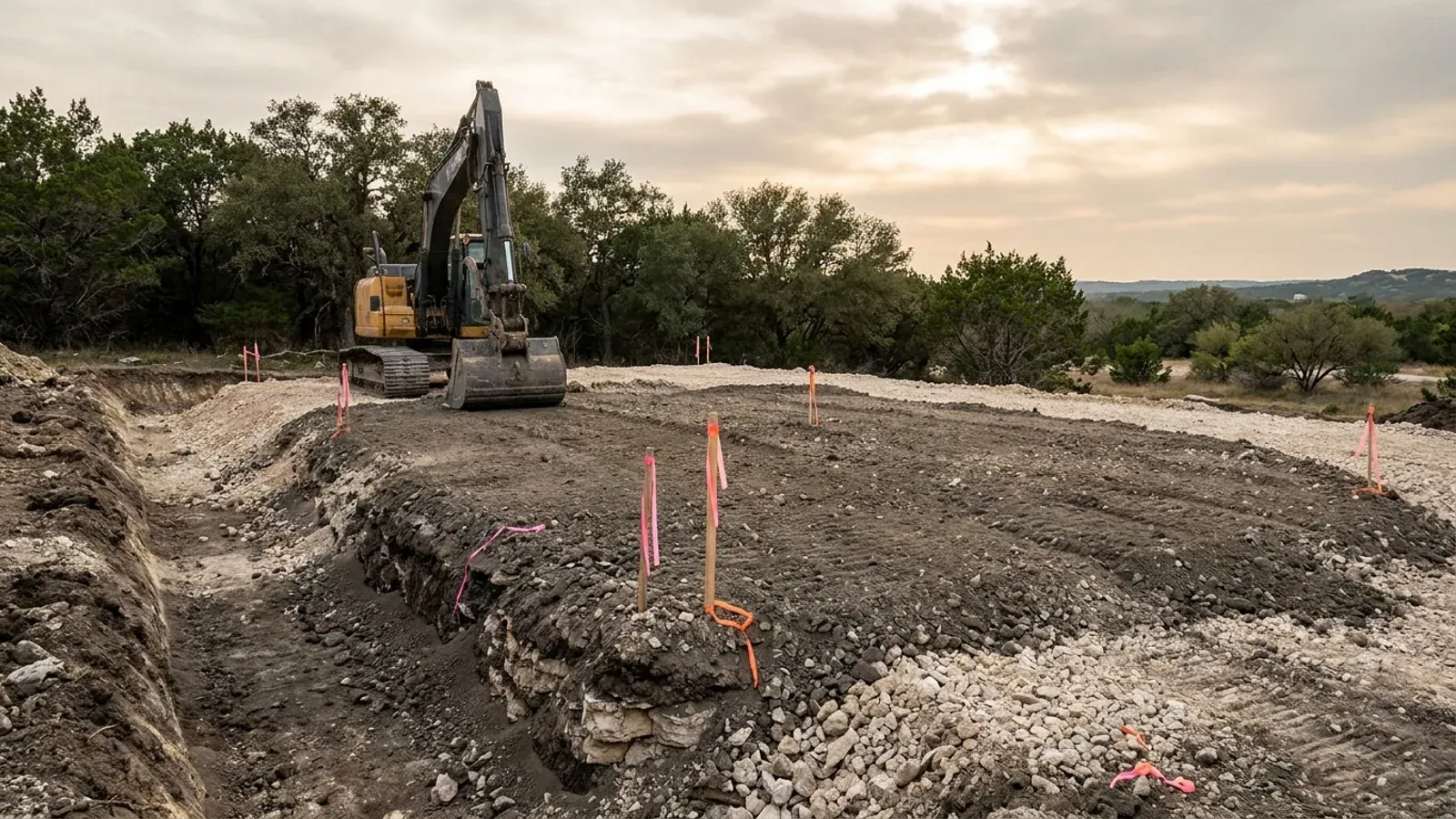
What moves a Texas budget is usually below grade, and it is soil rather than rock: shrink-swell clay. The Blackland Prairie and the Gulf Coast clays move enough between a wet season and a dry one to drive the foundation design across the state's largest markets, which is why several DFW cities require an engineer's seal on the foundation of every new house. Those are the same conditions that decide whether a septic field passes its soil and site evaluation, so the grading plan, the foundation and the drainfield get resolved together rather than one at a time. We price the dirt before we price the building.
What we build in Lubbock
All nine of our services — kits, custom plans, post-frame and steel construction, site preparation, permitting and engineering, through to turnkey builds — are available across Lubbock County. What a project costs depends far more on the parcel than on square footage, so we work from your land rather than from a rate card.
See what we buildWhat a build looks like
Three stages every Lubbock project passes through, from a raw parcel to a finished home. Site work first, because that is where the budget is decided.
The parcel
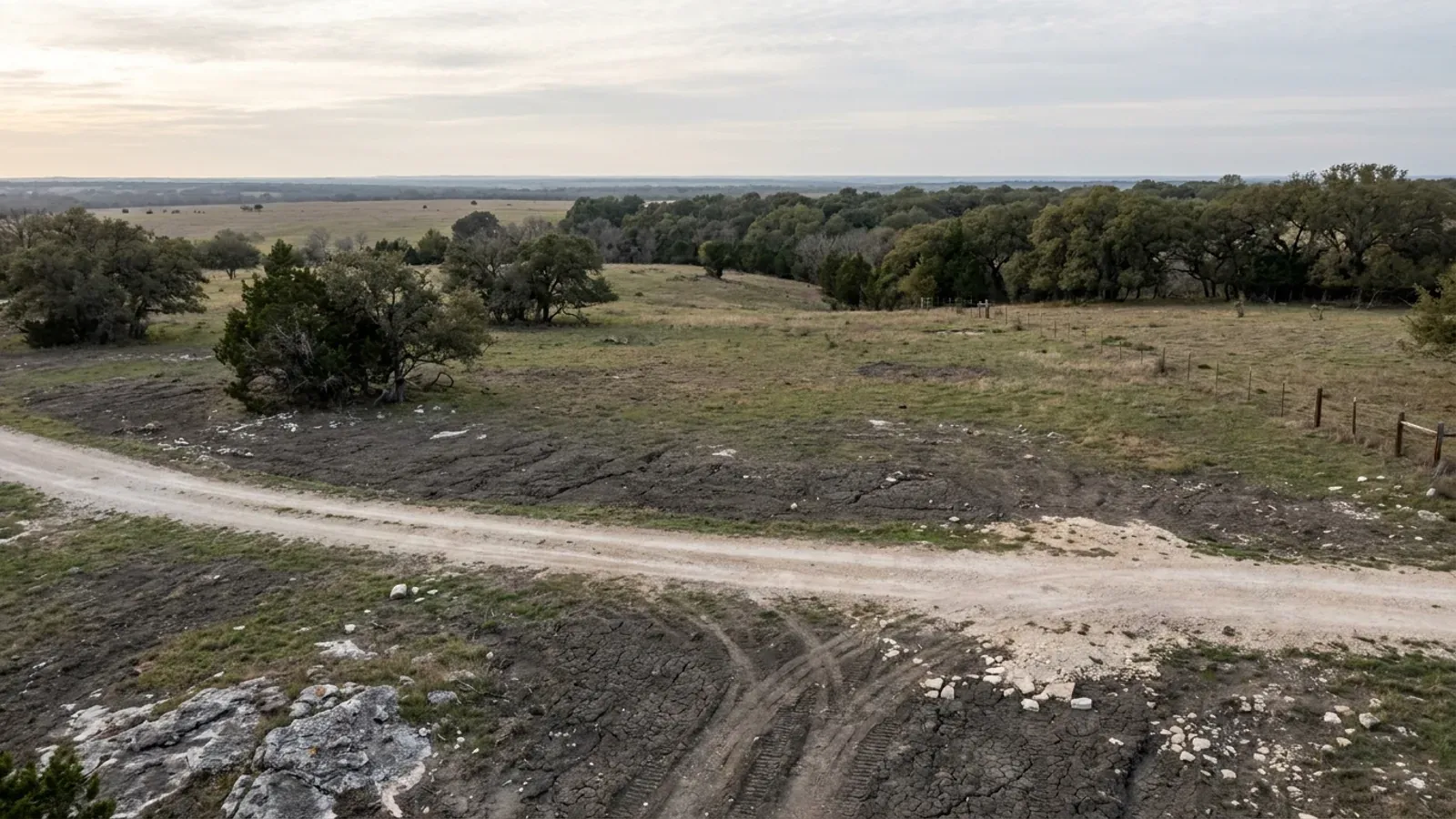
Zoning, setbacks, flood zone and utility access get checked before anything is drawn.
Pad and permit
Clearing, grading and a compacted pad, while the submittal works through Lubbock County.
Frame to finish
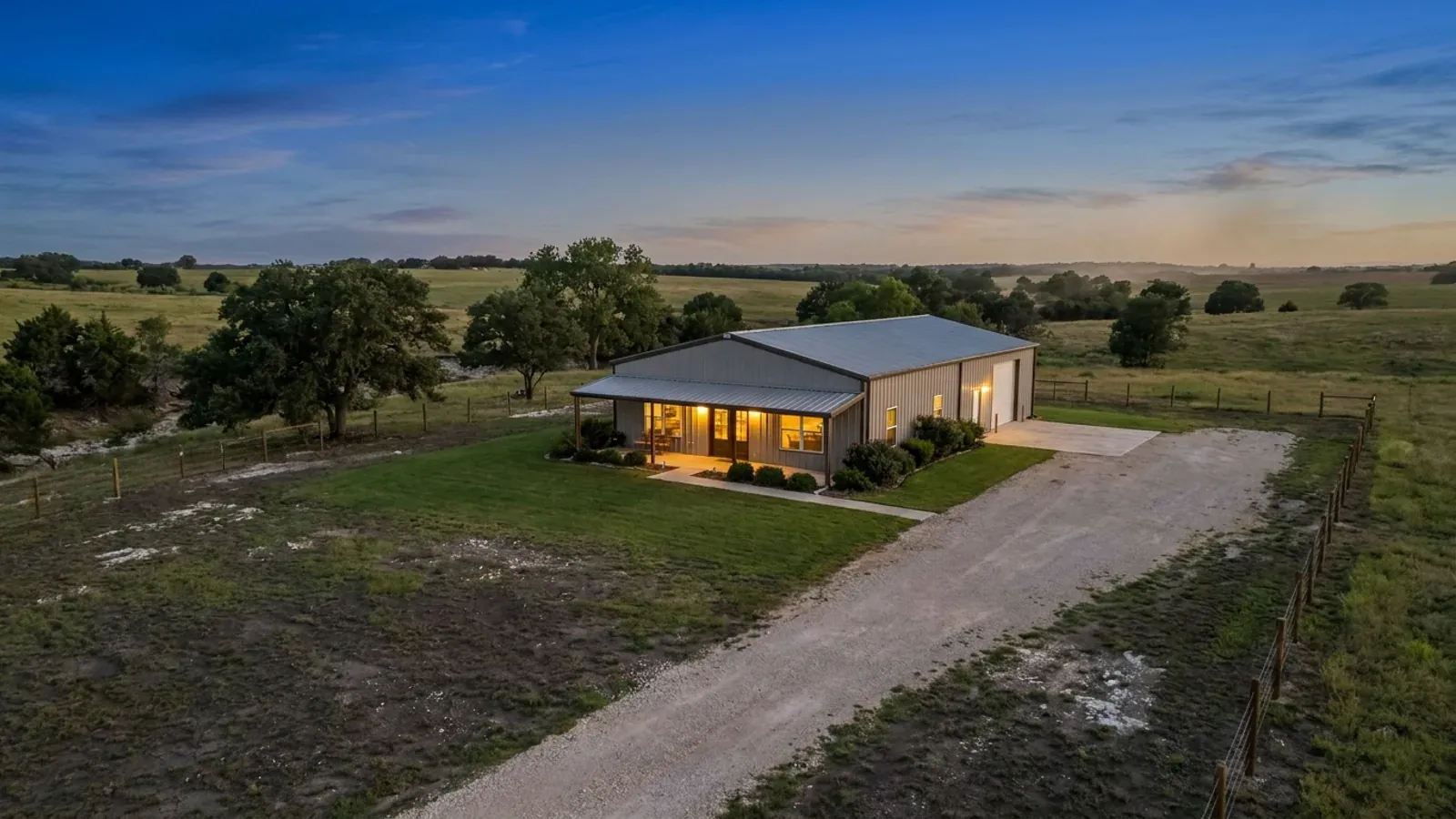
Shell erected and dried in, then systems, insulation and interior finish through to CO.
Those are the rules for Lubbock County. Tell us what you want to build and we will draw it to them.
Where we build around Lubbock
Lubbock County and the rural land around it. The buildable acreage for a project this size usually sits outside the city limits, which is frequently what changes who issues your permit.
Keep reading
The questions that usually come next once you know what Lubbock allows.
Barndominium Cost Guide
Sourced per-square-foot ranges by tier and by size, with a calculator built on the same figures.
Read itIs It Legal in Texas?
Classification, zoning, the HOA gate, and why "nonresidential farm building" does not cover a home.
Read itHow Long Does It Take?
Census build-duration data, and what actually sets the permit clock where you are building.
Read itNearby areas we build in
Others we cover in this part of Texas. The permitting authority, the adopted design criteria and the zoning can all differ from one to the next.
Building in Lubbock: common questions
12 questions we get asked most often about building in Lubbock. If yours is not on the list, ask it directly.
Which building code applies to a barndominium in Lubbock?
What design wind speed does Lubbock use?
How deep do footings have to go, and will I hit caliche?
Is the soil in Lubbock expansive?
Do I need a permit for a detached shop or workshop building?
Can I live in the shop while the house is being built?
What will the building permit cost?
Does Lubbock charge impact fees?
How does the septic permit work in and around Lubbock?
Does the ten-acre septic exemption apply in Lubbock County?
If I put a well on the property, what rules apply?
What is a playa lake and does one on my land matter?
Building in Lubbock?
Start with the plan. Tell us what you want to build and we will draw it, then confirm what Lubbock County will actually let you put on the parcel and what wind load it has to meet. That conversation costs nothing.