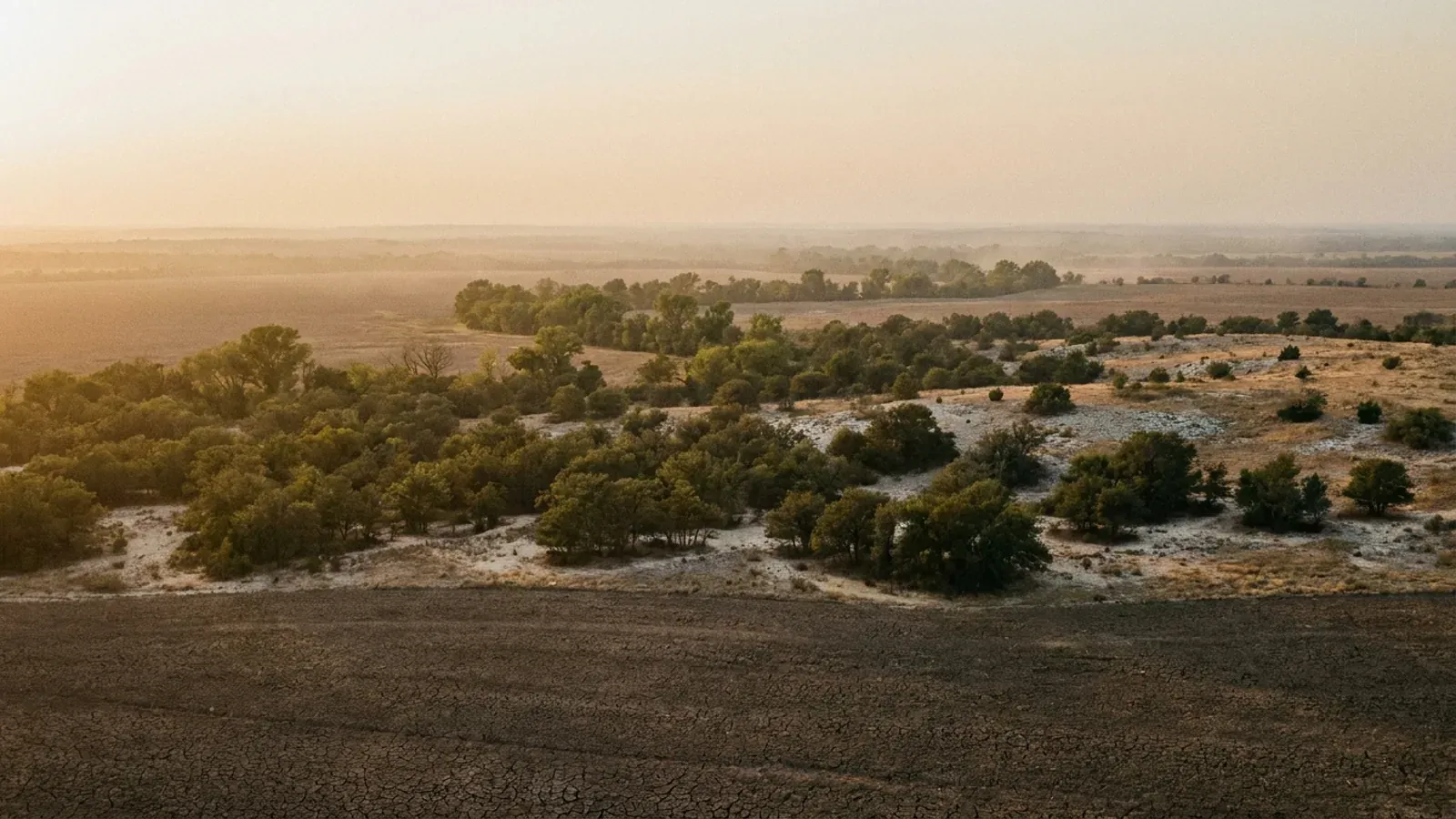
Barndominium Builders in Waco, TX
Waco is our home market, and McLennan County is the county we work in day to day. Inside the city limits Waco runs its own adopted code, and it is more current than most of Texas: the 2024 International Residential Code, with one deliberate exception where the energy chapter stays on the 2018 edition. The land question here is the honest one. Waco covers 91 square miles at roughly 1,600 people to the square mile, so there is real open ground inside the limits — but the zoning ordinance tops out at a 40,000 square foot lot in the R-E estate district, just under an acre. If you want more than that you are looking at Waco's five-mile extraterritorial jurisdiction or at unincorporated McLennan County, and what applies to you changes at both of those lines. Knowing which side of them your tract sits on is the first thing to settle.
Waco at a glance
- County
- McLennan County
- Population
- 147,788
- Where we build
- Waco, McLennan County, Temple, Killeen, Bell County
- Site visits
- First visit set on your parcel, anywhere in McLennan County
ZIPs 76701, 76704, 76705, 76706, 76707, 76708, 76710, 76711 and more
Building conditions in Waco
What actually changes from one Texas jurisdiction to the next: who issues the permit, whether the residential code is enforced there at all, what the structure has to be engineered to, and what the ground is like. These are the numbers your drawings have to satisfy.
City of Waco Code of Ordinances Ch. 6, Art. II, Secs. 6-26 and 6-29(5), and the City of Waco Inspection Services Adopted Codes page
City of Waco Inspection Services, Residential Construction Permits page (Engineered Foundation Requirements) and Submission Checklists, Building Residential (Accessory Structure)
City of Waco Inspection Services Permit Fee Schedules, Building tab, Residential Structures; and 30 TAC Ch. 285 with TCEQ form TCEQ-0235, which asks for bedrooms and living area
City of Waco Code of Ordinances Ch. 28 Zoning, Art. IX, Chart 3 (Lot size requirements by zoning district and use), and the Waco Development Guide zoning classification tables
Local Government Code Sec. 42.021; City of Waco Planning Services, Subdivision Regulations page; Waco Development Guide, Timeline for Platting in Waco's ETJ; Town of Lakewood Village v. Bizios, 493 S.W.3d 527 (Tex. 2016)
Waco-McLennan County Public Health District, Environmental Health, On-Site Sewage Facilities Program (OSSF) page
Also worth knowing before you build in Waco
- Three things the 2024 code requires that Waco does not
- Sec. 6-29 carries ten local amendments to the residential code, and three of them are outright deletions. IRC Section R309.2, automatic sprinkler systems in one- and two-family dwellings, is deleted. The whole of IRC Part VIII, electrical Chapters 34 to 43, is deleted, with the National Electrical Code as adopted by the Texas Department of Licensing and Regulation standing in its place. Section P2903.11, hose bibbs, is deleted. A fourth amendment turns Appendix NE's electric-vehicle power transfer infrastructure from a requirement into something that may be provided. So a general claim that the residential code requires sprinklers, or requires EV-ready parking, is simply not true in Waco.
- Waco's code edition moves by itself
- Sec. 6-26(c) provides that newer versions of most of the adopted codes are automatically adopted twelve months after the International Code Council publishes them, unless the council amends them or declines to adopt them, and that the city's existing exceptions, amendments and deletions survive that change. The energy code is expressly excluded and stays where the council put it. This is unusual and it is worth asking about, because it means the edition in force on the day you pull a permit is a question with a moving answer rather than a fixed one.
- The city publishes no design wind speed
- Waco leaves IRC Chapter 3 untouched apart from the sprinkler deletion, so the ordinance fills in no Table R301.2 climatic and geographic design criteria at all: no ground snow load, no design wind speed, no frost depth, no seismic design category, no termite rating and no winter design temperature. That means the design values are the engineer of record's, working from the code and from the site, and it is a good reason to be sceptical of anyone who quotes you a Waco wind speed as though the city had set one.
- Two size thresholds for a detached workshop
- Waco treats a detached shop as an accessory structure and publishes two thresholds. Under 200 square feet, no permit is required. Over 200 square feet, a Residential Accessory Structure permit is required, along with a site plan showing setbacks and dimensions to the property lines and to existing structures, a floor plan, and a foundation plan showing how columns or posts are embedded or anchored. At 500 square feet and above, those foundation drawings must be engineer-sealed. Prefabricated buildings additionally require tie-downs by an approved method.
- What the foundation inspection actually looks for
- The city publishes its minimum residential foundation requirements rather than leaving them to the code alone. The details are based on footings and beams placed below undisturbed soil with a bearing capacity of 1500 psf. Concrete must reach at least 2500 psi at 28 days, reinforcing steel is minimum grade 40, exterior footings go at least 12 inches below undisturbed soil, exterior beams take four #5 bars and interior beams two, interior beams are spaced no more than 16 feet on centre, the slab is a minimum of 4 inches on a 6-inch sand base with a 6-mil polyethylene vapour barrier, and slab steel is #3 bars at a maximum of 16 inches each way. On an engineered slab the electrical UFER ground has to be installed and inspected before the pour, and the city's building official has put in writing that pouring without it results in a ticket.
- Letting the guest suite is a zoning question here, not just a licence
- Waco regulates short-term rentals by zoning district as well as by licence. In R-E, R-1A, R-1B and R-1C, an owner-occupied Short Term Rental Type I — the city's own example is an owner living in the main house and renting the backyard guest house or garage apartment — is allowed only by Special Permit, not by right. A Type II, where the owner does not stay on the property, has not been allowed even by special permit in those four districts since 15 June 2021. There is also a 500-foot separation rule between licensed homestay establishments in R-E through R-2. If a guest suite or shop apartment is part of the plan, settle this before the plan is drawn rather than after.
- Registering the trades costs nothing, but the licences are checked
- Texas has no state licence for a residential contractor, and Waco does not invent one. What it does require is that plumbing, electrical and mechanical contractors register with Inspection Services before permits can be issued, and the city states plainly that there is no registration fee for contractors. What is checked is the state licence: master plumber, master electrician plus electrical contractor licence, mechanical licence, irrigation licence, each with the holder's identification and a certificate of insurance naming the City of Waco. Subcontractors in those trades must permit their own work.
- The ground under Waco is the reason the engineer keeps appearing
- The city's own foundation requirements say that foundations to be placed on expansive soils, or soils with a plasticity index of 15 or greater, shall be investigated and designed by a registered engineer. That is the same threshold the residential code uses when it hands expansive-soil foundations to the building code's engineered-design provisions. Waco sits in the Blackland Prairie, which the USDA Natural Resources Conservation Service describes as characterised by its shrink-swell nature and names Waco within by name. Two independent routes therefore arrive at the same place here, and the 500 square foot accessory-structure rule arrives there a third way without needing the soil to be expansive at all.
- How the inspection clock actually runs
- Inspections are requested online through the city's self-service portal by 4 p.m. the day before they are needed; a request after 4 p.m. is pushed back a further day, and any document needing approval first requires a minimum of 24 hours. Inspectors are routed geographically each morning rather than given appointment times. The sequence is foundation, then plumbing, electrical and mechanical roughs before any concealment, then framing, then energy before sheetrock and again at final, then final before occupancy. Engineered foundations must be inspected by the engineer of record before the pour, with a sealed letter submitted before the building final. The first reinspection is free; a fee applies from the third site visit onward, at $55, then $100, then $150.
- Waco is not a built-out suburb, and the numbers say so
- The Census Bureau puts Waco at 147,788 people in 2025, up from 140,541 in 2020, a rise of about 5.2 percent. The city covers 91.0 square miles of land, which works out at roughly 1,620 people per square mile — a fraction of the density of the built-out Metroplex suburbs. McLennan County as a whole reached 272,020, and about 44,700 of those people live outside every city limit in the county. So there is open ground both inside Waco and immediately around it, which is not something that can be said of most Texas cities this size.
- Building without the permit doubles the fee
- Waco's fee schedule states that where work requiring a permit is started before the permit is obtained, the fees are doubled, and that paying the doubled fee does not relieve anyone of complying with the chapter or of other penalties. Alongside the $0.35 per square foot residential rate there is a $60 non-refundable residential plan submittal fee and a $15 building technology fee. An accessory dwelling unit is priced at $0.50 per square foot, and the city waives the building permit fee entirely where the applicant uses a City of Waco pre-approved plan for it, though the trade permit fees still apply.
City of Waco Code of Ordinances Sec. 6-29, amendments (1), (4), (9) and (10)
City of Waco Code of Ordinances Sec. 6-26(c), quoted in the codified building chapter
City of Waco Code of Ordinances Ch. 6, Art. II, Secs. 6-26 to 6-29, which contain no amendment to Table R301.2 or to the R301.2 design criteria
City of Waco Inspection Services, Do I Need a Permit? page, item 13 (Accessory Structure, including Detached Carport), and Submission Checklists, Building Residential
City of Waco Inspection Services, Residential Construction Permits page, Minimum Foundation Requirements for Residential Construction and Engineered Foundation Requirements for Residential Construction
City of Waco Planning Services, Schedule of STR uses by zoning district (updated 31 August 2022) and the Short Term Rentals overview and categories pages
City of Waco Inspection Services, Residential Construction Permits and Registering & Applying for a Permit pages
City of Waco Inspection Services Residential Construction Permits page; IRC R403.1.8 with IBC Sec. 1808.6; Texas Occupations Code Sec. 1001.056(c)(2); USDA-NRCS Major Land Resource Area 86A
City of Waco Inspection Services, Inspection Procedures and Residential Construction Permits pages, and the Permit Fee Schedules reinspection table
U.S. Census Bureau Vintage 2025 sub-county and county population estimates (sub-est2025, co-est2025-alldata) and the 2025 TIGER place gazetteer land area file
City of Waco Inspection Services Permit Fee Schedules, Building tab, Residential Structures and Penalty for Working Without a Permit
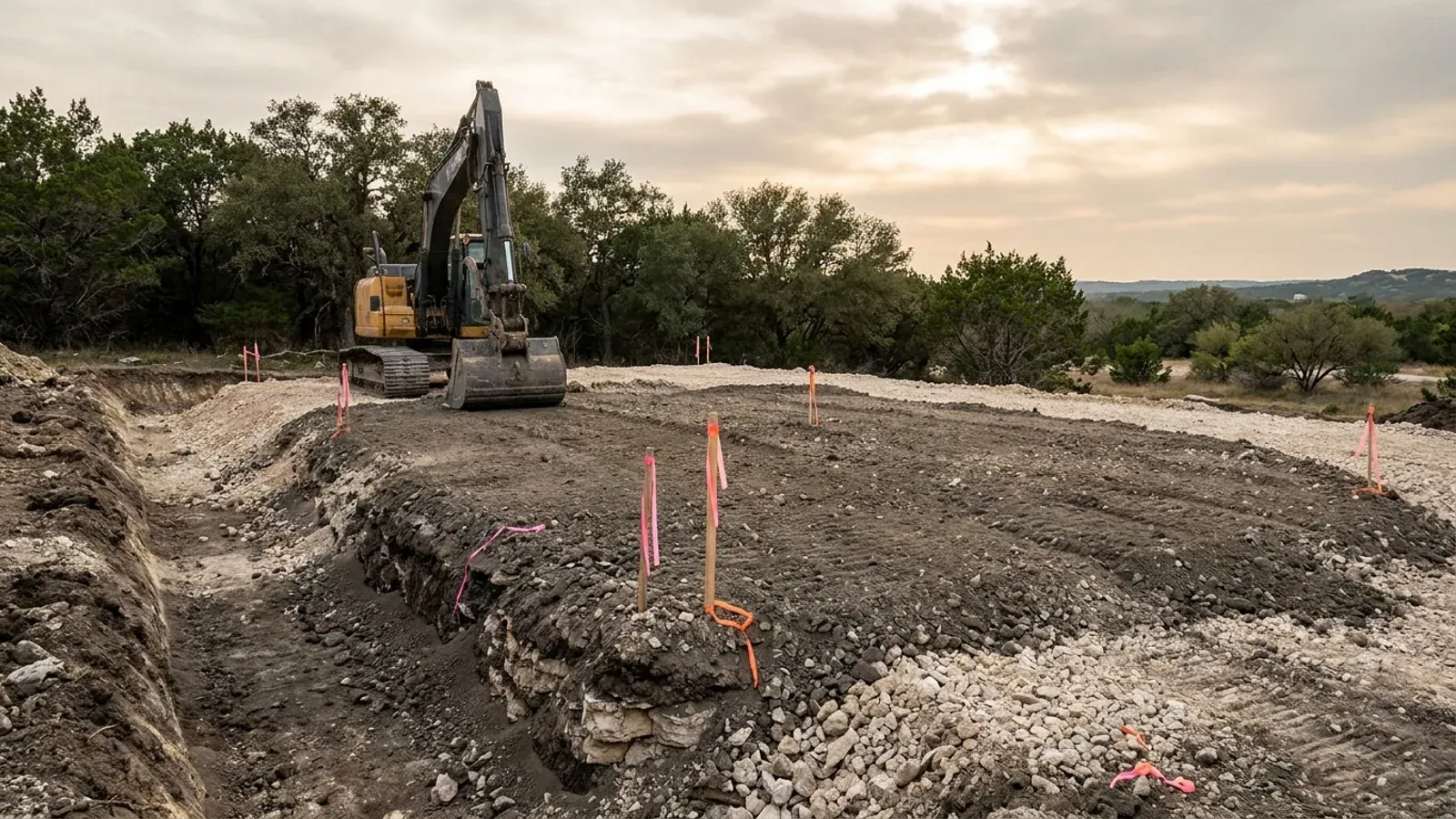
The expensive surprises are in the ground, not the building
What moves a Texas budget is usually below grade, and it is soil rather than rock: shrink-swell clay. The Blackland Prairie and the Gulf Coast clays move enough between a wet season and a dry one to drive the foundation design across the state's largest markets, which is why several DFW cities require an engineer's seal on the foundation of every new house. Those are the same conditions that decide whether a septic field passes its soil and site evaluation, so the grading plan, the foundation and the drainfield get resolved together rather than one at a time. We price the dirt before we price the building.
What we build in Waco
All nine of our services — kits, custom plans, post-frame and steel construction, site preparation, permitting and engineering, through to turnkey builds — are available across McLennan County. What a project costs depends far more on the parcel than on square footage, so we work from your land rather than from a rate card.
See what we buildWhat a build looks like
Three stages every Waco project passes through, from a raw parcel to a finished home. Site work first, because that is where the budget is decided.
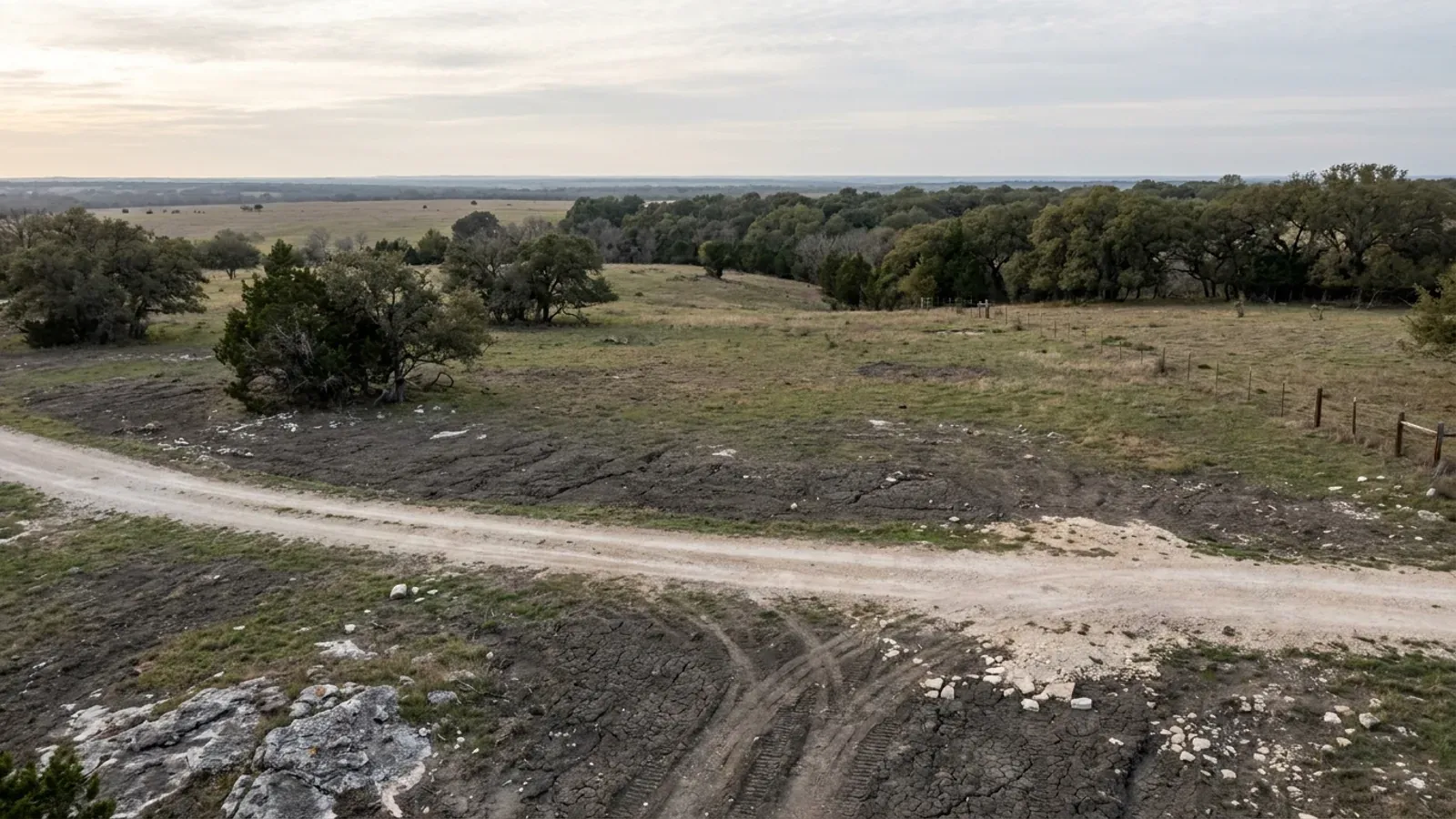
The parcel
Zoning, setbacks, flood zone and utility access get checked before anything is drawn.
Pad and permit
Clearing, grading and a compacted pad, while the submittal works through McLennan County.
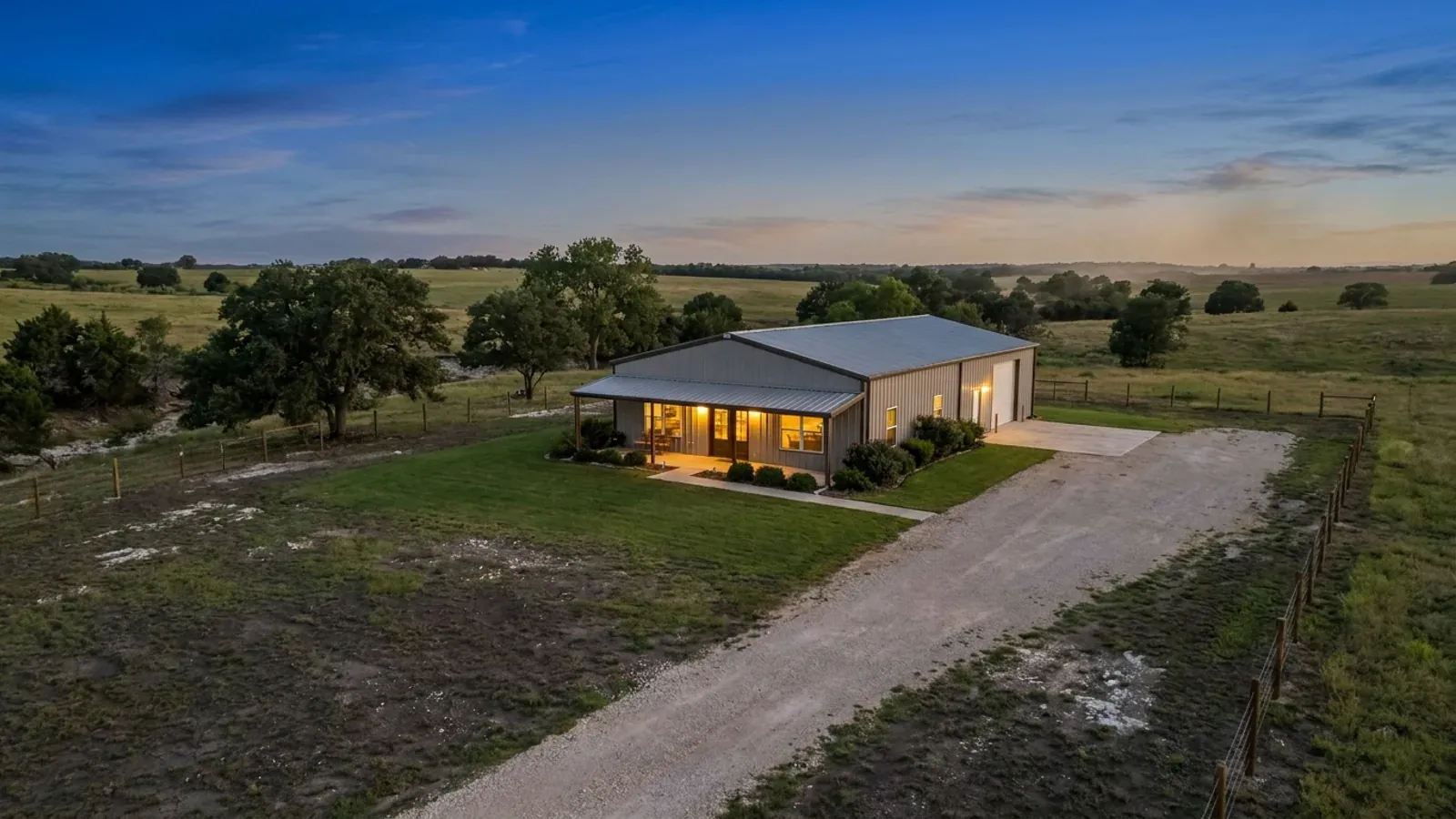
Frame to finish
Shell erected and dried in, then systems, insulation and interior finish through to CO.
Those are the rules for McLennan County. Tell us what you want to build and we will draw it to them.
Where we build around Waco
McLennan County and the rural land around it. The buildable acreage for a project this size usually sits outside the city limits, which is frequently what changes who issues your permit.
Keep reading
The questions that usually come next once you know what Waco allows.
Barndominium Cost Guide
Sourced per-square-foot ranges by tier and by size, with a calculator built on the same figures.
Read itIs It Legal in Texas?
Classification, zoning, the HOA gate, and why "nonresidential farm building" does not cover a home.
Read itHow Long Does It Take?
Census build-duration data, and what actually sets the permit clock where you are building.
Read itNearby areas we build in
Others we cover in this part of Texas. The permitting authority, the adopted design criteria and the zoning can all differ from one to the next.
Building in Waco: common questions
9 questions we get asked most often about building in Waco. If yours is not on the list, ask it directly.
Which code applies to a barndominium in Waco, and is it really the 2024 edition?
Will the shop foundation need an engineer?
How much land can I actually get inside the Waco city limits?
What changes if the land is just outside the city limits?
Do I need a permit for the shop if I build it separately?
What does the city charge, and are there impact fees?
What design wind speed should the frame be engineered to?
Can I let out the guest suite or shop apartment once it is finished?
What are the inspections and how do they get scheduled?
Building in Waco?
Start with the plan. Tell us what you want to build and we will draw it, then confirm what McLennan County will actually let you put on the parcel and what wind load it has to meet. That conversation costs nothing.